

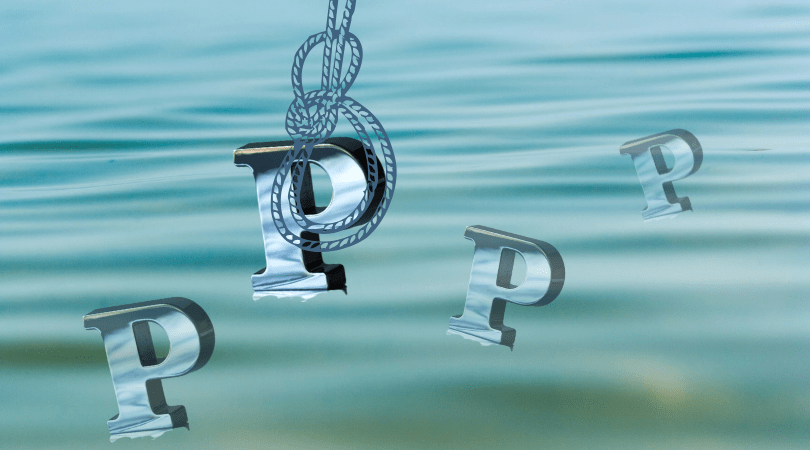
You might wonder what would an advertising professional – a writer at that – know or have to do with the 4Ps of marketing propounded by Philip Kotler decades ago. It’s true, I am not a marketing professional, but having read and studied the 4Ps of marketing as part of my post-graduate one-year course in advertising, marketing and PR before embarking on my advertising career in India over 40 years ago, I do think there is a serious need to discuss this again now.
During my years in the advertising industry in India nobody talked about the 4Ps inside advertising agencies, nor at client meetings. It was just assumed that this was marketing and the responsibility of client organisations and advertising folks needn’t concern themselves with it. Perhaps today, in the digital age, even fewer people discuss it. I hope marketing teams at client organisations are still working with the 4Ps and that business schools everywhere are still teaching it.
Perhaps, it’s time to revisit the 4Ps and examine their relevance in the digital age. Everyone talks about marketing and advertising having changed so much over the past couple of decades thanks to technology, digital marketing and now even AI. I maintain that the fundamental principles of both advertising and marketing remain the same, despite all the changes that technology has brought into the industry. That’s because consumers and customers still buy products and services to fulfill certain needs and they make brand choices the same way that they always have. I have written a blog post on this subject a while ago.
Returning to the 4Ps, they are fundamental to the very definition of what marketing is: making the right product/service available to the consumer at the right place and at the right price, supported by the right promotion (read branding, packaging, advertising and other communication). I think it’s important to also add the right consumer because marketing has become so sophisticated in terms of segmenting the market for a particular product that we need to identify the right consumer/customer.
The 4Ps of marketing developed by Kotler do not just define what marketing is and what it does, they provide a solid basis on which to construct marketing strategy. If you look at it closely, product, pricing, distribution and advertising and promotion are the four pillars of marketing strategy and companies have been building their marketing strategies around these for eons.
Let us look at what has become of each of these in the digital era, to make sense of the so-called changes wrought by digital technology and whether we should just accept them at face value. Of course, I must state up-front that I have been out of the advertising industry in India and out of work for the past 20 years or so and living in Goa with my aged father for all that time, I am quite likely to be out of touch with what is actually going on in the business. It’s true that I haven’t had the benefit of a conversation with anyone from the industry for decades, but I have tried to keep myself informed to some extent by being on LinkedIn and reading posts and articles from industry publications – at least those that aren’t paywalled. And I also keep myself informed by reading the daily newspapers and watching business and regular TV news in English even if these go beyond our industry of advertising and marketing.

For starters, marketing in the digital age is mostly characterized by massive price-offs and discounts, thanks to e-commerce sites and online sales. The whole purpose of marketing seems to now be to sell, sell, sell, at any cost. I don’t think companies selling products through their own websites discount to the same extent that e-commerce sites do, but this is what they are also up against. Therefore, in reality pricing strategy goes out of hand, before marketing can even control it.
Coming to the right place, or markets and distribution matters, the internet has challenged many of the assumptions regarding which markets companies ought to target and why. The geographical location of markets seems to matter less in the age of online sales; where the e-commerce site can deliver has gained greater importance instead. It is for this reason that so many small businesses, often called D2C or direct to consumer, have mushroomed and are thriving. Of course, large companies have to still plan their market launches, expansion and distribution carefully and in the traditional way, but there is no disputing the fact that the internet itself is increasingly becoming a distribution channel for many companies.
I was wondering if large companies gain from using the internet and digital marketing as a distribution channel, as in, are there massive savings to be had on distribution? I would imagine that there could indeed be huge cost savings, even if they vary depending on the type of product and company. Most companies seem to be following an omni-channel approach – present in both online and offline stores – for the time-being. However, it is ironic that even though the internet – and e-commerce to a lesser extent – offered an opportunity to sell directly to the consumer obviating the need for middle-men, there appears to be a new trend emerging of third-party logistics vendors. I happened to read about this online, albeit casually, and a deeper understanding of this new trend is required. From what little I read, these third-party logistics providers take on the inventory, warehousing and distribution, including delivery, for companies. This is distribution being reimagined for the digital age and is very much a work in progress, it appears.
When we consider the promotion P that comprises advertising, branding, packaging and other brand communications for the product being marketed, it would be fair to say that this has perhaps been disrupted the most by digital technology and the social media phenomenon in the past couple of decades. I think that advertising and brand communication has been upended and disrupted the most by digital and social media because these new-age company bosses built their entire business model based on advertising, and then tried to justify their existence and superiority to advertisers. Including luring advertisers with the promise of “more data on consumers”. I have myself written a lot on my blog about this aspect of digital marketing and the serious flaws it suffers from.

Digital marketing or advertising as it stands is nothing more than a sales funnel, offering short-term sales boost but at the cost of engaging better with consumers to build the brand, and also risking discounting the brand. This is very much linked with my previous point about the internet becoming the new distribution channel for companies. It has, unfortunately, also contributed to the short-termism at companies’ marketing departments, that hardly ever look beyond the quarter. I wonder how they actually manage to compete with their industry peers – through more discounts and deals?! Or perhaps through social influencers as Unilever seems to have decided, jettisoning their reliance on good old marketing and advertising principles?
In the discounting process, sales promotion offers have themselves been blunted as a marketing tool. If in the past, companies would resort to price discounts or buy-more-for-less kinds of promotions, it would be to either clear inventory, to generate brand trial or shift, to reward customers at festive occasions, etc. and was always a tactical exercise in specific markets. Now, when it’s raining discounts all through the year and at every website, I don’t suppose consumers care to even notice.
Finally, we come to the product. Can we safely assume that at least the product is still something the company and its marketing function have control over? Perhaps, but only just. And it could just as easily slip out of marketing’s control if their CMOs are given to crowdsourcing product ideas on the internet, seeking feedback on new products directly from consumers and activities of the kind. I remember reading about the launch of Metaverse and how while many companies were using it for gaming purposes, Nike was actually using it to test new product designs with customers. And while I cited it in one of my old blog posts as a better use of Metaverse, I don’t think that products such as sports shoes can be tested online, except from a cosmetic design perspective. They have to be tested with real sports professionals and put through their paces and I hope Nike is going to up its product innovation in the genuine sense, because the brand has been suffering of late.
These are all the questions that digital natives from the advertising and marketing industries will have to seriously grapple with over the coming years. The trouble is that before they decide what best marketing strategy to adopt, the next big thing in technology would have come along. And so, we’re always going to find ourselves reacting to new technology in a hamster-in-the wheel kind of fashion. I am new to digital marketing and advertising and certainly don’t have all the answers just yet. I haven’t read the gurus of digital marketing such as Byron Sharp and Les Binet and am too broke to buy and read their books. Besides, I have been out of the industry for so long, you could say I’ve been living in a bubble of my own.
That said, I have known this industry as an insider for so long, and also been an observer for many years, that I can’t help thinking that in the mad race to acquire more customers, or grow sales, we are actually giving up on what is tried and tested. The 4 Ps of marketing have stood the test of time longer than any new-fangled digital or AI-led capability ever can. And we should do our best to preserve what’s good and worthwhile in it even as we pursue new knowledge in our industry.
For example, digital marketing doesn’t only have to be a sales funnel. It can be a powerful direct response medium, helping companies strengthen their relationships with consumers, as I have been writing on my blog. Digital and social marketing can bring the best of brand-building to the internet and also achieve sales conversion in the process, as I wrote in a blog post not too long ago. This came from my analysing the different kinds of brand communication that companies usually engage in, and discovering that digital could intervene at certain stages as direct marketing and help the entire marketing and sales process along. And then, we also have new products and services that are themselves products of the digital age, which will require a more nuanced approach in marketing, as I wrote quite some time ago.
Finally, I think it’s time that companies took greater responsibility for products and services they create and bring to consumers. How does a company manage its pricing strategy, if it’s always up against a discount onslaught online? How does it manage consistency in brand positioning and communication across media channels, if it is going to deviate in digital? What does an influencer-only communication strategy mean for a company and its brands? Not only is this different from the celebrity-endorsement approach of yore, it means confining all your brands’ communication to testimonials as a creative platform and idea. And in outsourcing distribution, or going completely online for sales, companies ought to be careful not to make the mistake that Nike did when it tried to cut retailers out of its distribution.
To conclude, I think we need to reconcile the traditional world of marketing, advertising and building brands with new digital technology and the benefits it brings.
- Create new products on studying consumers and their needs in the real world
- Devise pricing strategies that minimise price-offs and discounts in order to not short-sell your brand
- Maintain consistency in advertising and brand communication across media channels including in digital, if your brand needs to be there at all
- Relying only on online sales is a dangerous strategy as offline interactions with retailers are necessary in many businesses. Equip your company website with store locators
Until someone comes along with a new and enduring definition and model for marketing strategy in the digital age, the 4Ps of marketing offer us the most comprehensive, time-tested solution. It isn’t time to retire it yet. We must find ways to make it work better with digital instead.


