

As part of my Brandology work analysing and understanding brands’ connections not just with consumers but with companies, I thought I’d devote some time and thought to how businesses ought to think about brands in the context of expanding their business. This would bring my Brandology thinking work to a close for this year, and although I am not sure where my Brandology journey will take me next year, I am hoping that I will finally get a chance to apply all the thinking of the past two decades – and my work experience spanning two decades in the advertising industry in India – to live projects and see how they work.
In my previous blog post on brands, I had explored brands’ connections with companies and consumers and how each of the levels of connection impact the overall strength of the connect that companies have with their brands. In this context, it is also important to see how companies approach brands when they are in the process of expanding their business. What happens to brands when companies decide to expand? How do companies use brands to expand and grow? From diversification, to new organic growth opportunities and mergers and acquisitions, what do brands have to do with growth, and how can they impact expansion plans?
Diversification within the industry
In the case of a company diversifying its business within the same industry and perhaps introducing new product lines or categories, a common practice is to explore brand extensions. The thinking behind this strategy is that it is the easiest way to launch a new product category since the brand is already established and the costs as well as marketing effort required are much lower than if the company were to launch a new brand altogether. Of course, care must be taken to ensure that the brand to be extended has strong associations with values that are going to be extended to the new product category in the minds of consumers. Brand extensions usually work well in product categories that are closely aligned or adjacent.
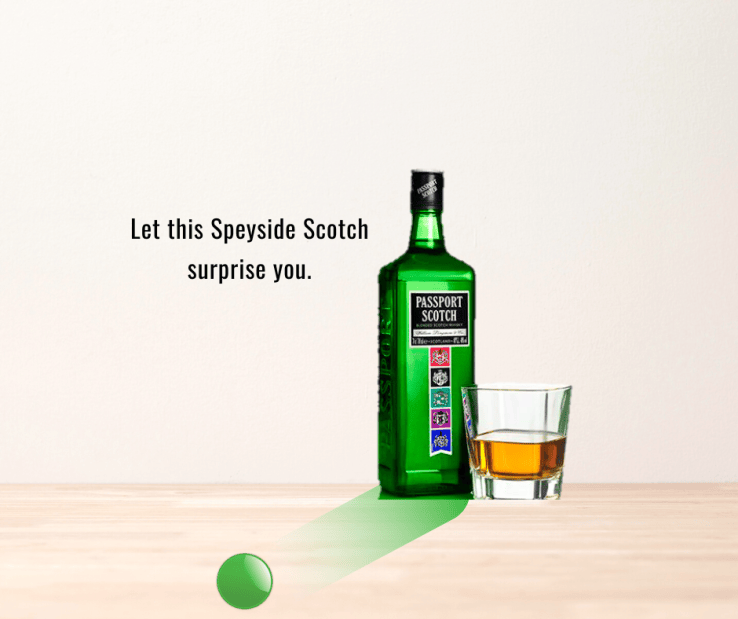
From my own work experience in advertising in Ogilvy Delhi, I have seen how the Seagram brand was extended across a range of whiskies – Scotch whisky and IMFL – for the Indian market. Perhaps the company chose this same strategy in some other markets as well. To this day, I notice that the company – now Pernod Ricard – has retained the Seagram brand for each of these whiskies. It obviously adds something unique to each of the whisky brands, and I would put it down to age-old expertise and tradition of whisky making that Seagram has come to be associated with over decades. The Seagram brand was also used for their gin that was launched in India decades ago. Of course, it helped that in India we had created an umbrella corporate campaign for Seagram that communicated the company’s deep expertise and understanding of the wines and spirits industry across a wide range of products and this helped anchor the Seagram brand and all that it stood for around the world.
Now, it’s important to remember that corporate brands are the easiest to extend and brand extensions of this kind always work well. Why this should be so, when conventional marketing wisdom has always advised caution in exploring brand extensions especially across diverse categories, is still a bit of a mystery. I think that this is because corporate brands or companies are large tents, capable of accommodating as many diverse brands and businesses and still making sense to millions of customers across different markets.
In my own industry of advertising, for example, when Ogilvy in India decided to diversify into other related communication disciplines in the mid-1990s, each new division or company was branded with Ogilvy in order to leverage all that the Ogilvy brand already stood for, and to also suggest that these new communication disciplines were still every much connected with advertising, be it direct response marketing, public relations, or healthcare communications. Of course, this was also the case internationally, as Ogilvy Advertising is a global company. In recent years, I believe the company has also launched a consulting division called Ogilvy Consulting. I am not sure extending the Ogilvy brand to consulting works as well, unless of course, the company clarifies that it is brand consulting; the distance between advertising and brand communication on the one hand and management consulting on the other – if this is what they do – is too wide for the Ogilvy brand to be able to bridge at the moment. Should Ogilvy Consulting focus on brand consulting right now and foray into management consulting in the future, perhaps then the Ogilvy brand will be able to extend itself.
Similarly, in the case of Tata Motors, going into the passenger car business, after decades of making commercial vehicles in India, was an opportunity to extend their brand of automobile expertise and engineering into an adjacent and similar business. The Tata Motors brand name extends to cars and customers understand what to expect from the Tata Motors brand, provided the brand communicates its differentiated positioning well.
Diversification into new industries organically
This type of business expansion too happens all the time and companies diversify into new industries chiefly because they see a huge opportunity for future growth and also to offset weak growth in existing businesses. Diversification into new industries is usually a greenfield project, requiring the company to start from scratch and build its business, introduce new products, build brands, compete with peers and grow. This is fertile ground for thinking up new products and brands, and also taking them to new markets – new consumer markets as well as geographic markets. Once established in the new industry, companies also look at diversification within it, in order to grow their businesses.
Here, we can consider the example of Titan Company which started out as a wristwatch making company in India. After establishing itself in the Indian watch market as the leader, the company diversified into jewellery. The company chose a different brand for their jewellery business, Tanishq, and later when they diversified further into women’s apparel – mainly sarees and ethnic Indian wear – yet another brand was born. Taneira. One can ask why the company didn’t simply extend the Titan brand to the other new businesses and it is a perfectly legitimate question.
I don’t know the company’s rationale for their decision, but in my considered opinion it is because the three businesses are quite distinct and belong to different industries, even if watches and jewellery usually go together. Further, the customer group for watches would comprise men and women, while jewellery and women’s apparel are exclusively for women. As a result, the brand attributes and values of Titan the watch brand do not transfer and extend easily to women’s jewellery, sarees and apparel.
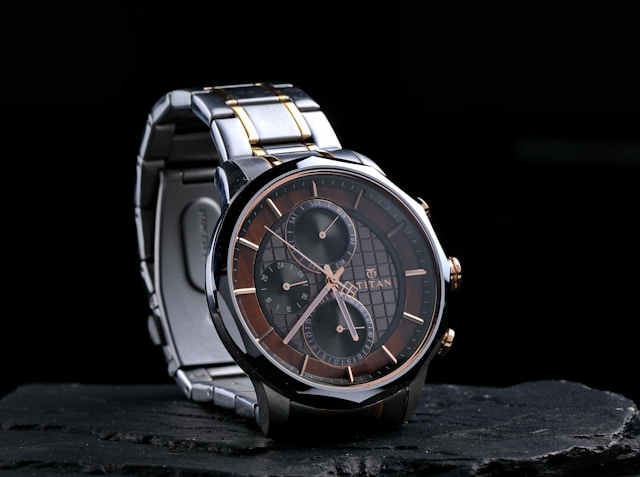
Of course, there is still the question of Titan, the company and the corporate brand. As a corporate brand, Titan ought to be able to integrate all three brands – and more, if any in future – under itself, though this would require further work in actually integrating them well. In my brand strategy and communication ideas for Tanishq and Titan wristwatches that I have shared on my blog, I haven’t addressed the Titan corporate brand as this requires separate thinking and work. However, my hunch is that the Titan corporate brand will draw on Tanishq and Taneira more than the Titan watch brand, as it evolves and grows; this is because the company is itself evolving into more of a consumer lifestyle products company, skewed towards addressing women consumers.
Titan can leverage its watch brand to also address young consumers, with a separate fashion brand Titan Fastrack. I have written on my blog before that taking Fastrack away from Titan and launching it as a standalone brand was a mistake. It can and should be Titan’s fashion brand for young adults.
Of course, in India, we have also had strange and unconventional brand extensions across diverse industries. Kingfisher as beer and also an airline. Of course, the kingfisher bird mnemonic worked as the common thread, and the company even attempted a strapline for the airline: “Fly the good times.” Unfortunately, the airline was grounded too soon, else we might have seen how such a brand extension would work if it could at all.
The other such brand extension is Wills Lifestyle from ITC. This was obviously the company’s way to extend the life of brands such as Wills cigarettes that were coming under serious regulation in terms of advertising and brand promotion. Wills Lifestyle and Classic Golf Resorts were ITC’s answer to cigarette industry regulation.
I don’t know about ITC’s strangely branded Fiama d’ Wills personal care brand, but I do think that Wills Lifestyle apparel and Classic Golf Resorts have the capability to become strong brands. Not if viewed through the CPG or cigarette connection, but through ITC Hotels which is the company’s hospitality and lifestyle brand.
Mergers and acquisitions
Increasingly these days, companies are looking at inorganic growth as the faster way to scale up and compete. This is also a way for companies to right-size their operations through savings that accrue in mergers. What role do brands play in M&As and how should companies think about them?
First, let us examine how companies should think about brands when making an acquisition. There are the usual aspects of synergy and market expansion that are always considered, but in addition to these if we could consider what acquiring certain brands or companies does to the strategy and corporate brand image of the acquirer, it would make a huge difference.
For example, and this is a hypothetical example, if Tata Motors was already following the strategy of encouraging people to keep travelling and exploring, as I have now recommended, and they were considering acquiring JLR in UK, what might have been the growth opportunities that they would have seen? It’s a thought experiment worth conducting and I am inclined to think that Tata Motors would have seen JLR, not as a beleaguered luxury automobile maker needing revival, but as a company with brands that could take their strategy to its logical and ultimate conclusion. Of travelling anywhere and beyond, and of road travel that feels like flying. Of course, those are my recommended brand strategies for Land Rover and Jaguar respectively seen in retrospect, but it indicates the level to which brands can make a difference in mergers and acquisitions. It would also have helped Tata Motors see that post-revival, JLR could raise the level of automobile innovation and engineering of cars made here in India and that through true collaboration the two companies could achieve new heights in the automobile industry.

In the context of mergers and acquisitions, we must also consider how well the acquiring company can integrate the acquired company’s brands into its fold. But for this to work properly, the company must first focus on building its own corporate brand with a differentiated strategy. For example, after acquiring Absolut Vodka, Pernod Ricard can integrate it better into its portfolio of drinks brands by encouraging and guiding consumers on newer and better ways to consume vodka, including through cocktails. This is, of course, along the corporate brand strategy that I have recommended for Pernod Ricard on my blog of making better consumers of wines and spirits, in order to compete better with Diageo whose marketing budgets Pernod Ricard cannot compete with.
There are companies that have made some very strange decisions on brands post acquisition. The one that comes to mind is Kraft’s acquisition of Cadbury in 2010, five years after which Kraft decided to merge with another food giant, Heinz in 2015. After this mega-merger, the company decides to hive off its snacking product portfolio as a separate company and guess what they call it. Mondeleez, if you please! This, when the new company comprised Cadbury, which should have been the company’s name.
Having said that, the new company made one good decision, I thought. They brought Oreo cookies, which was a Kraft brand, under Cadbury and it now sells as Cadbury Oreo.
Brands are the way companies grow their business and they ought to be paying more attention to the way they approach them and use them for expansion. What’s more, there are nuances and intricacies in the way brands work on consumers’ minds and in their lives, which companies ought to understand in order to build, grow, acquire and integrate them better with their own corporate brands.