


In line with the theme of innovation that my blog is celebrating this year, I had thought of how companies and brands can address global issues and build their brands at the same time, in an earlier post where I had shared my thoughts and ideas on Absolut Vodka. I had said that very few brands promote the idea of unity, peace, equality and justice and that Benetton was the other brand that has built itself on these very ideals as they form the core values of the company.
In the case of Benetton, these values already form an integral part of the brand and therefore, its brand strategy doesn’t really have to change direction. However, against the backdrop of declining sales and stiff competition from fast fashion brands over a decade and more, Benetton does need to refresh and relaunch itself before embarking on a unity or peace campaign.
The company has been suffering from sliding sales revenue and profits for many years, though I could hardly find any information online or on the company’s own website. From what little I managed to read online, these sliding sales are not just a post-Covid phenomenon as they seem to be suggesting in their Integrated Report 2023. Rather, according to earnings reports on their own company website, selectively served to me by Google, their sales revenue and profits have been declining since the late 2000s. I also discovered that Benetton had delisted in 2012 and the company has gone private, perhaps in an attempt to restructure their business and turn it around. Their corporate group website is sketchy on information and doesn’t tell you anything about their manufacturing of textiles and apparel, their main markets, their financial performance and their brands. I can tell that unprofessional PR agency idiot bosses have been meddling with Benetton on their websites, and of course, I know that they have been meddling with their store in Vasco, Goa getting them to shift location from one side of the road to the other and stock awful merchandise! However, since I have been an old customer of Benetton from my days in Delhi and have also shopped at Sisley there, I am aware of their clothing and its quality.
To start with, perhaps they need to redo their group website – which is called Benetton group only because it features both their brands, Benetton and Sisley – and make it much more informative, relevant and engaging to all stakeholders. Anyway, I think the declining revenue and profits are clearly because of stiff competition from fast fashion brands such as H&M, Zara, Uniqlo and others. This doesn’t necessarily mean that Benetton has to go the way of fast fashion, though it would be very tempting to take this path. Nor should it see itself as a retailer of apparel which is the sense I get from reading their website. Benetton is said to have over 3000 stores worldwide, and more than half of them seem to be in India, with Europe having the next largest concentration of Benetton stores. What do they need so many stores in India for, I don’t know?!
Right now, the company is reported to be shutting down many of its stores worldwide and I suppose they should rationalise the number of retail outlets in India as well. At the same time, they may find that they need to be present in countries and cities which they hadn’t previously considered and which might be important markets.
I think the most critical thing is for the company to understand that its core business is in casual apparel design and manufacturing. It is this that gives the Benetton company and brand its distinctiveness. The vertical integration of textile/yarn manufacture as well as finished garments is what gave Benetton an advantage in previous decades. Therefore, I think Benetton should stand its ground and increase its distinctiveness as well as expand its manufacturing operations as part of its turn-around strategy.
How can Benetton compete better with fast fashion brands such as Zara, H&M and others which are often priced cheaper than Benetton? By taking three important steps in focusing on their strengths and making small but significant tweaks in their merchandise, in order to appeal to a wider and more important customer segment.
The first is to change their merchandise by moving it higher on the style dimension and toning down the casual dimension somewhat. This would make the Benetton smart-casuals clothing range more versatile and offer better value for what are slightly higher prices.
The second is to make sure Benetton can get its designs and merchandise quickly and cost-effectively to market. Perhaps they find it hard to compete with Zara and H&M who thrive in being able to get the latest styles to market with great speed. I think that this can be resolved by Benetton opening more manufacturing locations for textiles and finished apparel around the world. This would help improve their supply lines to market, as well as cut down transportation and shipping costs. Their website doesn’t say how many manufacturing locations they have, but if all of it is located in Italy or in Europe alone, they have a problem on their hands. I would recommend that they choose key manufacturing locations in countries that offer lower costs of production and the right skilled labour, from where they can export to the region. And, of course, I don’t mean contract manufacturing or sweat-shops; these have to be complete Benetton factories.
Since India seems to be such a big market for Benetton, I would urge them to cut down the number of retail stores in the country and instead invest in full-scale manufacturing of both textiles and garments. India is already well-known as a quality textile manufacturing country with at least two important centres: Ludhiana in Punjab for hosiery and knits as well as Tirupur in Tamil Nadu for fabrics, especially checks/plaids. In addition, there would be the traditional textile centres in Maharashtra and Gujarat. From here, Benetton can serve the entire Asian region, including India. Similarly, they ought to have manufacturing in Latin America which can serve the Americas.
In accessories, I notice that a lot of their merchandise is sourced from smaller manufacturers in many countries. I have myself ordered Benetton flip-flops online from Amazon India and these were from Hong Kong as well as Vietnam. At the Benetton store in Vasco, Goa, they were even selling made-in-India flip-flops made by some company called Colours based in Dwarka, Delhi. The quality was awful, and what was worse is that the tag said customer complaints/feedback should go to Colours and by implication, not to Benetton! I had shared a post about this on LinkedIn long ago.
I am mentioning this because accessories are not Benetton’s core business, and if they wish they can continue sourcing these externally. However, they should still be responsible for the product quality sold in their stores as Benetton. In textiles and apparel which are Benetton’s core business, they ought to pursue their own manufacturing and not depend on external sourcing.
Finally, the third important step is in brand communication. Here, Benetton should refresh its brand through a proper relaunch, having made the necessary changes in merchandise and supply. The brand Benetton still stands for United Colours of Benetton and the communication needs to express this in new and engaging ways. Including through television adverts and digital, whereas in earlier years Benetton depended on the Toscani campaign in print. You may read my brand strategy and ideas for the relaunch of Benetton in the document below.
The document contains the film scripts, and I have designed layouts for the relaunch campaign in the print medium even though I am not an art director nor a designer. You can read the print adverts below.
After the relaunch of Benetton, the company must engage its customers through a unity campaign which brings forth the values of Benetton in the context of today’s divided and polarized world. In the main strategy document, I also cover the Benetton Unity campaign, for which I have also designed print advert layouts which you can read below.
Finally, I have also shared my thoughts on how the Sisley brand – a more premium fashion brand from Benetton – can be taken forward and relaunched as well. It seems to me that Sisley might be missing an important brand differentiator, which lies in the way the brand name is interpreted, leading to a whole new reimagined Sisley for the future.
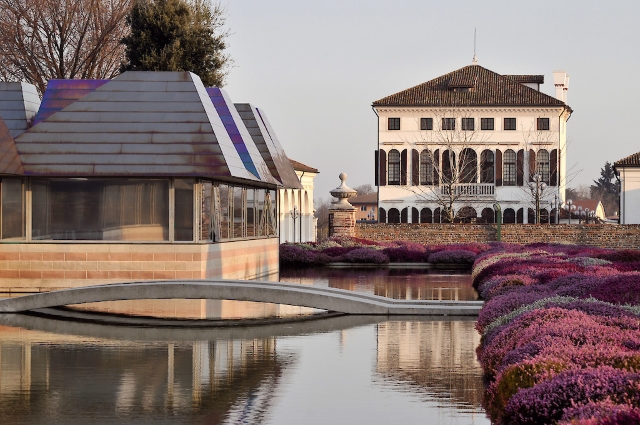
The featured image at the start of this post is from Benetton Group’s corporate website and I am thankful to them.
The stock images used in the print campaigns for Benetton are from Pixabay, Unsplash and Canva and I am grateful to them.

 Peripatetic Perch