


The world’s second largest economy has mostly been in the news for its slowing domestic consumption and for the overcapacity it has generated in high-tech industries which still keeps powering the economy through exports. While both these are true, it is perhaps time to explore the Chinese economy a little more in detail for it’s far too vast and complex for us to reduce through simplifications.
I think the turning point for China came with the Covid-19 pandemic and the strict zero-Covid rules that were imposed in 2022. This, along with the collapse of the housing sector which had grown too large too fast, put a dampener on consumer sentiment and on household consumption. Many media reports also suggest that wages have been stagnant for a while in China, and now there is growing urban unemployment as well, especially among the youth.
We must remember at the outset that there is still very little known about the Chinese economy except for the macro-economic data that is regularly reported. For example, there is still no definitive or empirical reporting on why Chinese consumers aren’t spending like they used to. We are having to rely on anecdotal news and conjecture as to the possible reasons. This is strange for the world’s second largest economy that wields huge influence on the global economy, not least through its demand for commodities and its exports. Surely this information lacuna needs to be remedied.
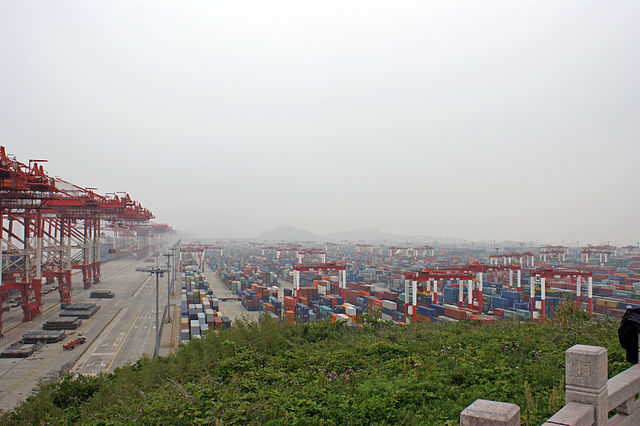
Recent Q1 2026 GDP growth data for China’s economy showed that it grew 5% year-on-year and the growth was mainly driven by high-tech industry and exports. This, despite US tariffs still in place for China, albeit at a lower level. Industrial production and retail sales figures for May 2026 highlight the dichotomy in the Chinese economy, with industrial output growing faster than in April 2026, while retail sales declined for the first time in three years. The figures for April 2026 came in lower than estimates suggesting a slowdown, although industrial profits grew by 24.7% in April, the fastest pace in two years. As you’d expect, most of the profit growth also came from high-tech industries that were churning out products for overseas markets. The impact of the Iran war on China has only now shown up in the PPI for May 2026, which hit a four-year high of 3.9% on higher input costs as well as an AI boom. Gasoline prices for consumers are reported to have risen 23.5% in May over the previous year, even as CPI came in at 1.2% lower than economists’ estimates of 1.3% and I wondered if the Chinese government doesn’t control or regulate fuel prices in the country, like India does. Or perhaps the price rise was also due to China cutting crude oil imports by 20% since the Iran war.
At the same time, there were news reports that China has finally bitten the bullet and decided to reform its hukou system of urban registration. This is long overdue, and if reports are true, then China has actually started growing its consumer base in earnestness. Though, here again there are conflicting news reports, with some reports suggesting that this reform process began in 2015, while others say that this was a decision taken recently. If it began in 2015, how come the world hadn’t heard of it until now and why was it even raised at the WEF meeting in Davos in 2024? Of course, reforming the hukou system is a mammoth task and it will have to be planned and executed with meticulous detail so as to keep disruption and friction at a minimum. With many mega-cities such as Beijing, Shanghai and Guangzhou already crowded, I suppose rural families will be accommodated in other cities and towns across China, of which there are several. China also has a huge inventory of unsold housing which it can try and dispose of in the process of reforming hukou, although the large housing projects may not all be in the smaller towns and cities. For the rest of us who have only witnessed natural, unplanned urbanisation in our lives, this will be the first and largest ever planned urbanisation in a country and the mind truly boggles at the prospect.
Here then, are the constituents of the two-speed economy that China has been running since 2023 at least. A slow-growing domestic economy that might also undergo massive change with the hukou reform and grow into an even larger consumer economy over the next decade or two. And a high-tech China that is innovating at great speed in areas such as information and digital technology, AI, robotics, mobile communication, bio-tech, clean energy and several other new areas of the future. Even if China is yet to urbanise fully and realise the benefits of a growing consumer economy, it might still be an economy that has grown richer before growing older, or has grown richer as it has aged. Unlike many other developing and emerging economies where ageing demographics might be a bigger feature before greater spending power and better living standards come to their populations. This is why China must reform hukou sooner rather than later.
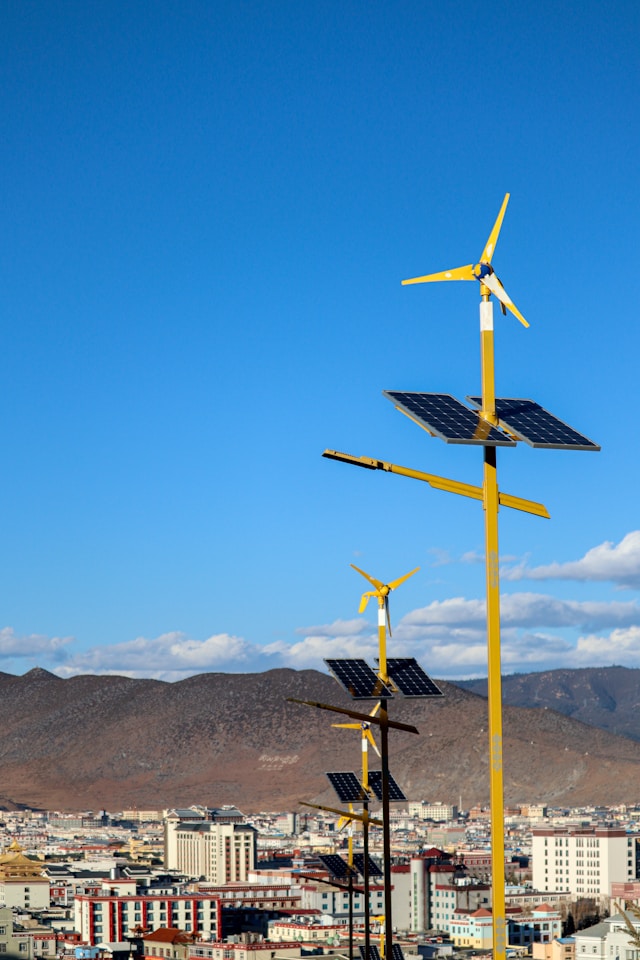
The other important area to watch and perhaps learn from is China’s push on renewable energy. It is very consistent with the country’s overall push on new and emerging industrial sectors and gaining a competitive advantage in these. Apparently, China has been able to weather the effects of the Iran war in energy better because of its large strategic oil reserves as well as its huge renewable energy production. It isn’t merely installed capacity, but fully utilised production capacity in renewables, especially solar energy.
Forget developing economies. In the world of advanced economies, so many countries including those in Europe have pushed back the deadlines for decarbonization and for clean energy transition, in the wake of the Ukraine-Russia conflict since 2022. Worse, they continue to subsidise households for fossil-fuel energy consumption, even now in the context of the Iran war. This, when these countries have already run up huge fiscal deficits having no room to borrow anymore, and have to run down their massive debt piles by repaying it soon. This is clearly not the time to be subsidising fossil-fuel energy production or consumption, but to be pushing ahead with net-zero targets as agreed under the Paris Accord. This is also the time for austerity in energy consumption and it’s clear that western economies have no appetite for this. America is perhaps the worst example of how to manage energy during an energy crisis, pursuing a drill-baby-drill policy instead and getting richer through oil and gas exports. Never mind what the average American consumer is having to pay at the pump, in order to drive gas-guzzlers and pursue the American good life.
There is another lesson in how China is growing its economy right now. By exporting its way out of an economic slowdown and energy crisis, China is spreading more of its high-tech products around the world. This ought to help other economies also pivot sooner to the new industrial economy, adopting innovation and new technologies and giving up old, fossil-fuel based industries. That is, of course, if more countries were to shift their industrial policies back home in a similar direction and perhaps even invite Chinese investment in pursuing similar goals. The world needs to have checks against dumping, but there is another way of looking at Chinese global expansion: this could also be technology diffusion from the east to the west for a change, similar to what happened when Japan was on a similar technology-led course in the 1980s and 1990s. Not that Japan isn’t an innovating and investing country anymore; it is very much at the forefront of some new technologies being researched and developed, including in alternate fuels such as clean ammonia and others.
The important thing to note is that China is not claiming that their AI ambitions are determined or restricted by fossil-fuel energy alone. Most countries appear only too willing to give up clean energy transition for the sake of AI and data centres, and this is a pity. Here again, we can see how China is managing to stay ahead in the AI race and still pursue clean energy as well as increase the share of renewables in their total energy production and consumption. One particular aspect of May’s read for PPI in China was intriguing: that the AI boom was also contributing to producer price inflation. According to the chief statistician from NBS cited in the CNBC article, this was due to prices of non-ferrous metals, electrical machinery and computer hardware rising sharply over the previous year.
The other important learning from China’s experience is never to neglect your domestic economy, no matter how attractive export-led growth might seem. On the external sector, China’s trade surplus in 2025 was US$ 1.2 trillion although there are vulnerabilities on the external front even for China. Besides rising costs of imports, capital outflows from China have been rising, and according to the World Bank, net FDI flows into China was US$ -153.69 billion in 2024, although the chart doesn’t show it as net outflow and therefore a negative number. This does seem to indicate that Chinese companies are now investing in expanding overseas and going global. China’s current account balance is a surplus of 3.5% of GDP on account of good export growth and trade. And although China ended 2025 with a US$ 1.2 trillion trade surplus, their trade with the US is still enjoying a surplus in 2026, although a much narrower one, according to the US census bureau. The latest trade news from CNBC says that Chinese shipments to the US saw 35% growth in May 2026 thanks to surge in tech exports.
All this is coming at the expense of the domestic economy, which cannot be good for China in the medium to long term. They must focus on ways to grow domestic consumption and that would require a slew of reforms, from reforming hukou, to creating more and better paying jobs, increasing wages and of course reducing the share of real estate in the overall economy. That said, China is innovating and increasing its competitiveness in certain high-tech industries, not just at home but globally. And they are doing this while still staying focused on climate change and green energy transition.
The need to innovate, spend more on research and development, focus on good quality education and skill development are all lessons we can take away from China’s growth in difficult times, as much as the need to stay focused on decarbonization and clean energy.
The featured image at the start of this post of a vast solar farm in a desert in China, is by Darmau on Unsplash


