

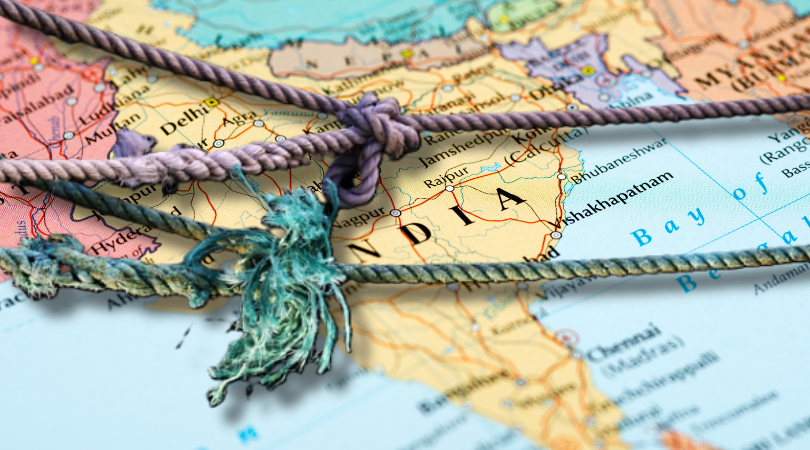
The Iran war is into its fourth month, when it was supposed to end in 4-6 weeks according to President Trump. And we are all aware of the dangers this prolonged conflict is posing to our economy here in India as well as around the world. India in particular is affected through the external sector, most of all through fuel as well as fertilizer imports, and a weakening rupee that puts additional pressure on our import bills as well as our ability to repay external commercial borrowings. India’s Finance Minister, Ms Nirmala Sitharaman, has herself said that the three Fs – fuel, fertilizer and foreign exchange – were impacting the Indian economy the most.
The latest corporate earnings for the March 2026 quarter show that Indian companies were still resilient and were, in fact, benefitting from improvement in consumer demand across rural and urban India as well as GST rationalisation and lower input costs. However, there were some sectors such as media and entertainment, power and trading that were under pressure according to Moneycontrol’s website. According to their analysis of all listed companies in India, India Inc recorded an average of 10.54% revenue growth and 20.34% net profit growth over the previous year as on May 27, 2026. According to Moneycontrol’s analysis, telecom was the strongest performing sector, with net profit growing by thousands of percentage points, which might lead to an eye-roll response from readers. However, most of the companies analysed seem to be telecom infrastructure firms and there seems to be a problem with base effects here on net profit growth.
The Economic Times has put out an analysis based on industry and from the few large industries that they have analysed, it appears that automobiles, CPG and IT performed the best in terms of year-on-year net profit growth, and even the oil and gas industry did reasonably well. However, the outlook for all industries is grim, with revenues remaining stagnant or little-changed and margins being severely impacted by rising fuel and other commodity prices. In some industries such as consumer goods and cars and automobiles, this may force companies to focus on more premium products, reducing the positive impact that GST rationalisation might have had on lower and mid-range products. For example, lowering the GST on cars below 4m length was expected to revive the small car market in India, but this might now suffer a setback.
CMIE has changed its website and its analysis of corporate earnings as well as unemployment figures are no longer available on its home page.
The fact is that the worst is yet to come for India, because the Indian government finally announced the fuel price hikes only recently, two months after the war in Iran had begun. Therefore, the March quarter is unlikely to reflect the real impact of the war just yet, and I suspect neither will India’s GDP for Q4 FY26. In fact, the GDP growth numbers for India’s Q4 FY26 are out as are those for the full fiscal year, FY26, with a delay, thanks to meddling by unprofessional PR agency idiot bosses, I suspect. These seem to show stable and good growth across all sectors of the economy, with GDP growth for Q4 FY26 coming in at 7.8% and that for FY 26 as a whole at 7.7%. The growth of private final consumption as well as gross fixed capital formation at 7.7% and 8.2% respectively for the full fiscal year FY26 are also very healthy. However, we still don’t have the data for private sector business investment separately, and the share of GFCF in GDP is still weak and stagnant at around 32%. In fact, let me add that these GDP numbers sound too good to be true and might be thanks to the usual suspects’ meddling.
What’s more, the growth of the primary sector, comprising agriculture and mining and quarrying is weak and if it wasn’t for the huge growth in mining at 11.7% last year, and 5.2% this fiscal, we wouldn’t have even had the overall growth rate of 3.2% for the sector as a whole in FY26. It is great to see good growth rates in the services sector and reasonably good growth in manufacturing and industry, but a country of 1.4 billion people cannot afford to have weakening shares and growth of agriculture, as the bar charts of GVA seem to indicate (the year on year growth bar chart numbers don’t tally with the numbers in the table, incidentally). All the more so, when over half the population is still dependent upon agriculture for their livelihood. And in the current context of the Iran war and its impact on energy prices as well as fertilisers, farmers and others dependent upon the primary sector are going to be the worst affected.
I would like to look at the current economic crisis in India from the strategic perspective of specific areas that affect the entire economy and over the medium and long-term as well. For example, the problem of weak private sector investment in India, and of course, the lack of adequate long-term foreign investment. Both these can be dealt with together, as both domestic and foreign private sector investment affect the ability to create enough good quality jobs, help improve skills and technology diffusion, innovation as well as boost consumption demand. Post the Covid-pandemic surge in private investment in India, there has been weakening in 2024 and 2025, although the GFCF figures in our GDP do not tell us the extent of private and government investment. And in fact, more Indian businesses seem to be investing overseas in the past couple of years, which partially explains the low net FDI figures for India in the past couple of years.
The idea is to make India an attractive investment destination for both domestic as well as foreign private investment, irrespective of the impact of the Iran war. For this, we need policy reforms that cut red tape, simplify doing business in India, and our taxation policies. These are areas that need urgent attention even without the Iran war. As I have been writing on my blog, India needs to increase and improve innovation as well as investment in industries of the future. Instead of the production-linked PLI – which I always thought was a terrible idea and has yielded little results except in mobile handset manufacture – we need to develop a future-oriented industrial policy for India.
Such an industrial policy would have to then rationalize import duty structures in such a way that companies – both domestic and international – find it worthwhile to make in India, for India and for exporting to other countries. The size and potential of the Indian market is without doubt one of the largest in the world, albeit with low purchasing power. We can correct this anomaly as well only through better and more investment in industry, both in manufacturing and services, more employment and better wages.
India must accept that we now live in an era of high tariffs, protectionism and restrictive trade around the world. Yet, capital travels to where it is easier to do business and likely to find higher returns on investment. When we talk of manufacture or make in India, we almost always mean assembling of products, especially those for export. This might benefit companies in the short-term, but is not likely to bring economy-wide benefits for the industry, nor for the wider population. If we wish to truly raise the capacity of our country and its workforce, we must frame policy that is forward-looking into the future, is about employment generation and skill-enhancement, technology diffusion and raising the overall growth trajectory of our economy.
To illustrate what I mean, I shall cite the example of the Indian car industry. I checked online about our import duty structures and discovered to my horror, that besides the basic customs duty of 10% on CKD (completely knocked-down) and 20% on SKD (semi knocked-down) assembly kits, we have several other charges that keep adding on the costs, over all of which there is GST on imports, until we reach an eye-watering figure of anywhere between 60% – 115% on car parts for manufacture. The strange add-on charges are 10% SWS (social welfare surcharge of 10% of BCD) and an AIDC (Agricultural Infrastructure and Development Cess) introduced in 2021-22 Union Budget, which ranges upwards from 40% for cars. I discovered that even for used car imports, AIDC alone is as high as 67.5%! I suspect unprofessional PR agency idiot bosses’ mischief and meddling here – what do Social Welfare Surcharge and Agricultural Infrastructure and Development Cess even have to do with car manufacture, and what do they mean?!
We must do away with any such surcharges and cesses forthwith. And look at lowering even the basic customs duty to more reasonable levels. And I do not mean only the car industry, but for several other industries of the future that we would like to encourage. For example, EVs attract only 5% GST, but making EVs in India continues to be expensive. Then, what about EV battery manufacture in India? We are currently depending upon Chinese EV batteries which are the heart and engine of the EV, when we can innovate and build our own or do so in collaboration with foreign companies, including those from China. Apparently even for solar energy which this government swears by, storage batteries cannot be manufactured here because they attract AIDC of 20%, taking the import duty on solar modules to 40%!
I then compared our import duty structure with those of other countries in South-east Asia, as India does get clubbed along with countries in this region, especially when it comes to foreign investment. I found that the import duty structures across Vietnam, Thailand and Indonesia are much lower than India’s, primarily because these countries have regional trade agreements and also preferential tariffs for certain countries at a bilateral level. Strangely, I discovered that Vietnam mostly imports its cars from Thailand and Indonesia, while for car parts, Korea is preferred, which suggests to me that Vietnam is not a large manufacturing base yet for cars. However, Thailand which is an important car manufacturing and exporting country has extremely low import duties on EV manufacture, but imposes import duties of 50% on ICE cars and their manufacture which means the country is actively discouraging the manufacture of petrol and diesel cars.
The point I am making is that it is time for India to liberalise its tariff and import duty regime, in order to grow foreign and domestic private investment for the manufacture of cars, EVs, batteries and renewables, and several other new industries of the future that we should be preparing our country for, and increasing our capabilities in. I think the reasons we still have such high import duties are to keep the Chinese out and because our public finances are too dependent on indirect taxes for revenue growth, since we are still largely an informal economy. I don’t know when any Indian government will be seized of the urgent need to formalise our economy so that we can increase the ratio of direct taxes to GDP, and lower indirect taxes which are regressive. At the same time, I read online that corporate tax rates for foreign companies operating in India are higher than what their Indian peers pay – 40% compared to 30% (now 25%) for Indian firms. I don’t know if this is a fact, but I think corporate tax rates ought to be at par for all companies, whether foreign or Indian and this too would boost investor confidence and make it a level playing field for all.
On the trade front, I think India needs to engage much more with South-east Asia and East Asia, as well as with China. Unfortunately, we opted out of RCEP and have hardly progressed on trade with ASEAN countries, despite having signed an FTA with them way back in 2010-11. On trying to keep China or any other country out, we have to be strategic about which industries we engage with them on, and we ought to even collaborate with them in areas like solar, batteries, etc. By taking a high import duty approach, we are also holding back many Indian companies from pursuing growth in new areas of the economy which hold promise for the future.
We must also progress on the various FTAs we have signed with UK, Australia, EU, and also sign the important one still pending with the US. The important thing is to focus on new industries of the future and attract the right foreign investment with transfer of technology, as I have also written before on my blog. In the context of foreign investors pulling money out of India and the Indian rupee weakening considerably as a result, the RBI has announced a slew of policies to help encourage the flow of foreign investment as well as foreign currency deposits by NRIs and others in India. This ought to help steady the ship in the short to medium term. RBI may also have to seriously consider raising interest rates, since the latest CPI for May 2026 is 3.93%, higher than 3.48% in April 2026.
Returning to the Iran war and its impact, India may have to raise fuel prices further depending on how long this crisis lasts. Perhaps, we could look at raising petrol prices more than diesel, considering the latter has a greater and more direct effect on the poor and on transportation costs of essential goods across the country. I have written before that we also need to ramp up domestic production of fertilisers such as urea and raise their prices as well. Economists such as Arvind Subramanian and Ashok Gulati are of the view that we should stop fertiliser subsidies as these tend to be wasteful and provide direct benefit transfers to farmers instead. While we might consider doing this, I think there is no getting away from having to increase production of fertilisers within the country sooner or later. Better sooner than later. For such an essential commodity, we cannot be totally dependent on imports, and here too, we might look at attracting foreign investment into India.
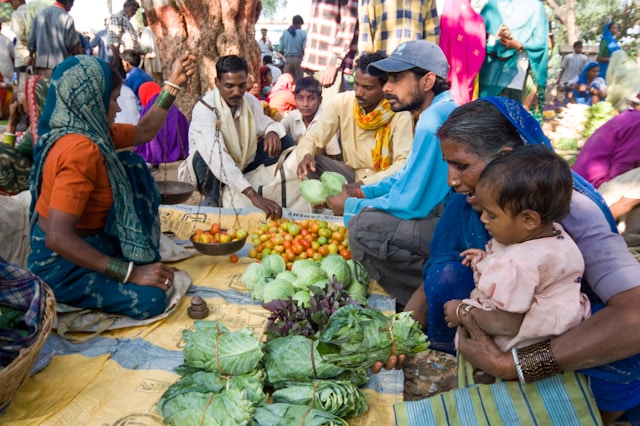
In fact, let me also add the need to increase domestic production of edible oils as this too is an essential household product for which we are too dependent on imports. The Indian Prime Minister’s idea of organic farming as a way to mitigate the rising fertilizer subsidy problem is good conceptually, but in a country like India which produces two major foodgrain crops each year with the help of monsoon rains, I doubt organic farming can match the same yields, which impacts farmers’ incomes directly.
And finally, on helping small and medium enterprises protect jobs and their businesses, the government can provide a similar credit guarantee as it did during the Covid-19 pandemic, albeit of a smaller size. However, as I keep writing on my blog, India’s MSME sector is key to formalizing the economy, and therefore we must activate state employment exchanges to work with them in job creation and skill development, relieving millions from having to depend on agriculture or MNREGA for their livelihoods.
Therefore, not all our economy’s problems are linked with the Iran war. Crude oil and fertilizer imports as well as edible oils and chemicals are a burden right now, but the bigger problem we have to confront is one of investor confidence. Weakening private sector investment is not something India can afford, and we therefore need a set of policies based on strategic priorities that will grow investment in India over the medium to long term and create good quality jobs for our people.