


The festive season is already upon us in India. From Janmashtami – that celebrates Lord Krishna’s birth – which just went by, to Diwali and Dussehra and to Christmas and New Year, accompanied by the wedding season, India is meant to be in a festive mood for more than half the year. It is a time for family reunions, socialising with friends and business associates, for weddings and for gifting. It is also the time when many businesses do most of their sales for the year, and it is a rather long phase lasting six months. Yet, if you look at the kind of advertising campaigns that companies and brands air during this festive period, you wouldn’t think it means very much to consumers and to companies alike.
The kind of indifferent communication that brands engage in during the festive season and the sense of sameness that washes over all of them is hard to not notice. You wonder why marketing teams in clients’ offices and their advertising agencies can’t come up with distinctive and interesting communication ideas? Is it because they think it’s not that important, since festive demand is assured anyway? Or is it because they lack imagination and the capability to think differently? Or is it that nobody has really tried hard enough to break the festive advertising monotony? Like I said, these six months or more are where the marketing effort really pays off. It should also follow that these six months are when brands can make the big difference in consumers’ hearts and minds.
One can’t help but compare this with festive advertising in the UK, for example. I have written about this before on LinkedIn, where I had said that our festive advertising lacks a sense of wonder and the power of imaginative storytelling. Of course, in the UK it is the retailers who dominate Christmas advertising as it happens to be the most important season for them. One can argue that UK retailers’ festive advertising centres around Christmas gifting, and this is much easier to crack than festive advertising for a wide array of products across several industries, but this would be a lame excuse.
In this piece, I would like to focus on some of the possible reasons why Indian festive advertising is so dull and undifferentiated, before going on to explore certain ways of working around these constraints so that they may lead to new and distinctive festive communication.
It is true that in India the festive season is not merely an occasion for gifting, but for buying new household items for the home. Most homes get spruced up before a major festival and this was, in fact, the insight that led to Asian Paints’ long-running campaign by Ogilvy called ‘Celebrate with Asian Paints’. I had nothing to do with Asian Paints, having always worked in the Delhi office but like most Ogilvians of the time, I was aware of the strategic insight that led to this great work. In India, festivals and weddings are occasions to undulge in renovating or redecorating the home, buying new appliances as well as automobiles. It is also the time of the year when many companies give their employees festival bonuses as a way to reward their efforts, but it’s meant to help them make that all-important purchase. Indeed, many families probably save up what they can in order to make that festive season purchase for their homes. These days perhaps it is less saving, thanks to buying on EMIs and credit.
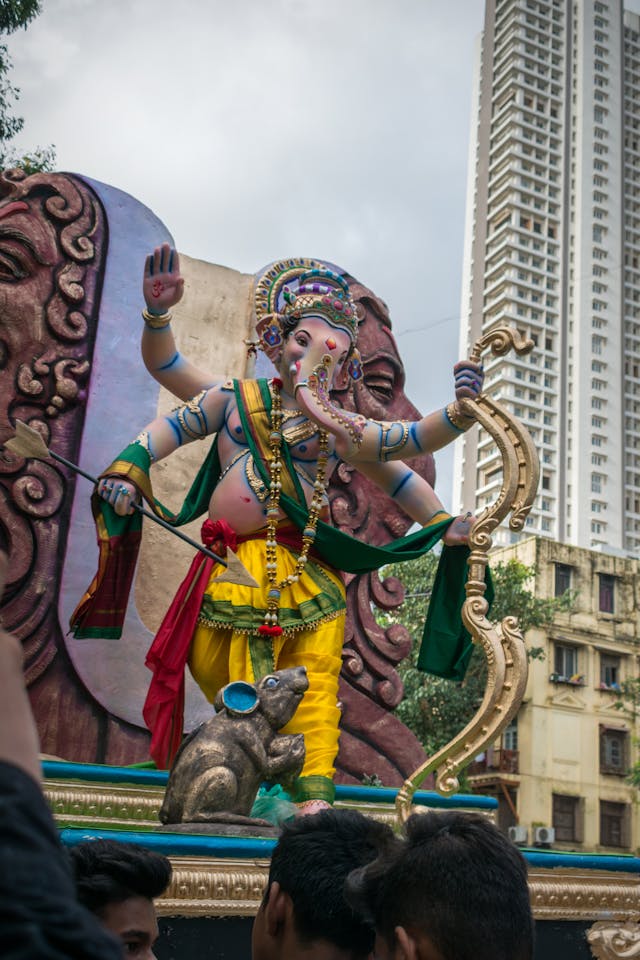
But first, my reasons for why Indian festive advertising suffers from a lack of interesting and memorable ideas. I think it’s mainly because most of our festivals are religious in nature and we tend to take them very seriously. These festivals are living symbols of our diverse and varied culture and are practiced by millions of people. It is true that Diwali is celebrated very differently in South India from the rest of India. In South India, Diwali is celebrated a day before it is Diwali in the rest of India. The day begins in the early hours of the morning with fireworks after an early morning bath and puja, when the entire family don new clothes for a day of feasting and meeting relatives and friends later in the day. It is not even so much about the lights, or lighting of lamps as it is in the rest of India. Therefore, it is possible that the religious aspect prevents us from exploring new ideas and creative routes, not least because it may even prompt a backlash from overzealous religious segments of society. Then again, Christmas too is a religious event and the biggest one in the Christian calendar. It didn’t prevent Coca-Cola from inventing Santa Claus decades ago, nor does it stand in the way of brands exploring creative ways of communicating their festive message today in the West.
Yet another reason for us not exploring many creative ways of communicating with consumers during the festive season is perhaps that we have just too many festivals in India thanks to our religious and cultural diversity. It’s not for nothing that we have so many holidays in India! Companies are constrained by advertising budgets and are certainly not going to create separate communication for each festival across this vast country. I might add, though, that Asian Paints did create separate adverts for important festivals in different parts of the country, recognizing the importance of the regional differences: Diwali across India, Pongal in South India and Durga Puja in East India. I found these with great difficulty on YouTube. However, it is important to mention that Asian Paints ‘Celebrate with Asian Paints’ advertising campaign was not a festive season campaign, but the main strategic brand-building campaign for the company. Incidentally, I happened to read about a new digital advert for Birla Opus Paints that explores the festive season route in an advert around Ganesh Chaturthi. Could Birla Opus Paints be taking over the festive celebration space now that Asian Paints has vacated it?
Not every company or industry is as fortunate as Asian Paints or any other paint company where festivals and their product usage correlation is high, though there might be other correlations to explore. For example, in the chocolate, confectionery and wines and spirits categories, gifting is the most obvious reason to advertise. So is it in the watches and jewellery category. In industries such as automobiles and consumer appliances, gifting might be less of a motivator than buying something new for one’s family and home. Irrespective of the product category and the motivations for buying something during the festive season in India, surely our communication approach demands something better than the default option of big discounts, about which I have written before on my blog.
These might be legitimate reasons for not pursuing big festive season advertising campaigns, but it’s worth exploring how we can work around these barriers and constraints. If we look at Indian festivals in a non-religious way, we will find that most of them are about the triumph of good over evil, about new and auspicious beginnings, and about wishing prosperity. These could offer us a window into exploring new ideas for festive season communication.
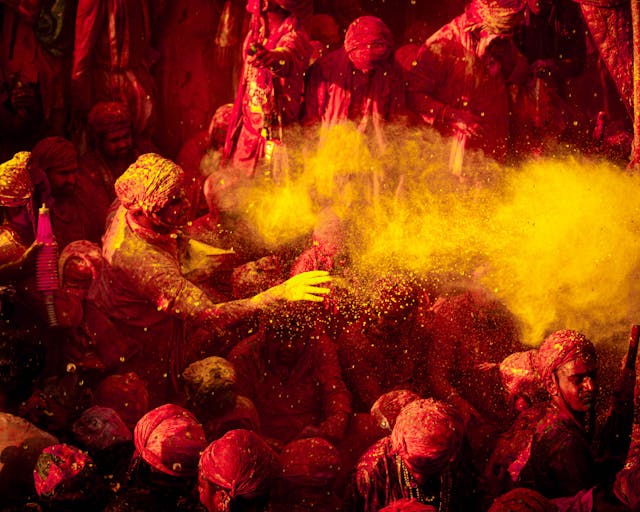
I think that first of all, every company or brand that has the festive season in India as its most important sales season should consider a special strategy for this period. Who knows, it could actually end up being the main brand campaign!
One of the ways to do this is to think of what the brand stands for and then try and connect it with festive season consumption. This means that your company or brand has to have a clear and differentiated brand strategy to start with; linking it with what the festive season means to people can then lead to creative and interesting ideas.
In many cases, it might also obviate the need for many advertising campaigns for different festivals during the September-March period.
Another way of thinking about the festive season is to approach it from what the festival signifies to people and then find a connection with your brand. As I said, most festivals in India are about good vs evil, new beginnings and the promise of prosperity. These by themselves can lead to many interesting ideas, but what would make the communication more effective is if we could connect it back with a particular dimension of the brand or its values.
Finally, it’s important that we learn to see festivals in a non-religious light, while we explore festive season strategies and ideas. And although we know festivals and weddings are occasions for big gatherings, parties and get-togethers in India, we must try and avoid making these the main creative idea. If we have to depict them, we must know that these are only the context, not the content of the communication.
In order to illustrate what I mean by connecting the festive season better to brand strategy, I have attempted a few creative routes and ideas for a few brands that I have already shared my strategy and ideas for, on my blog. I hope these help readers understand how one can inject creative thinking and imagination into strategies and ideas for festive season communication.
Some thoughts and ideas for festive season communication
Air Vistara
Plenty of air travel takes place during the festive season in India, when people fly to join their families and relatives for festival celebrations. Although the airline Air Vistara is no more, I thought I would use the airline as an example of how festive season messages can be connected better with a brand’s overall strategy. For Air Vistara, I had recommended that the airline position itself as the one that offers meditative space in the skies.
The airline can create festive season communication by treating Air Vistara flights during the festive season as the calm before celebrations break out. The calm before the storm, if you like. This should lead to several interesting ideas that connect what the festive season means to fliers, with the airline. I think the airline ought to also introduce inflight shopping on long domestic flights during the festive season, as passengers might like to do some last-minute shopping for gifts.
Tanishq
Plenty of jewellery shopping and gifting also takes place during the festive and wedding seasons in India. Here’s how a brand like Tanishq can communicate with its target customers during the festive season. As a brand strategy, I had recommended that Tanishq position itself as jewellery that is inspired by India’s international cultural influence, especially across Asia.
For the festive season each year – which lasts six months, like I said – Tanishq can create a range of jewellery that captures this international cultural influence of India’s which I had called ‘Indifluence’. The communication will revolve around this concept of Indifluence in new and interesting ways.
September to March each year also happens to be peak foreign tourist season in India, and Tanishq ought to use this time to address affluent and high-spending foreign travellers to India to shop at Tanishq for one-of-a-kind jewellery they can take back home for themselves and their loved ones. It is all meant to be part of internationalising Tanishq as a jewellery brand.
Samsung Galaxy
The festive season is also the time when new consumer electronics gadgets are bought and gifted. For Samsung Galaxy, I had recommended that the company elevate the term galaxy from being just a product or brand name to a brand that encompasses their entire product range of screen-based consumer electronics – leveraging their core strengths – and stands for a world of superior computing and communication. In keeping with this brand strategy for Samsung Galaxy of a world powered by greater processing power and stunning displays, the company can create and run a festive season campaign on how Samsung Galaxy enhances festive magic. Through a sense of other-worldly processing power and visual displays, Samsung Galaxy can take people into a world of fantasy redolent of festive cheer and magic.
Tata Motors
People in India often wait for the festive season to arrive in order to buy themselves a new car. I haven’t yet executed the brand campaign I had in mind for Tata Motors, but the strategic direction that I had recommended for the company is one that exhorts people to keep journeying onward. I think this would be most appropriate, given what I think Tata Group’s overall corporate brand positioning ought to be: a company that maximises human capabilities. Besides, JLR too would fit well under this brand positioning of Tata Motors as a brand that encourages people to keep journeying.
In line with this thought process, I would recommend that Tata Motors run a festive season campaign that dramatizes this “journeying onward” aspect. By treating a Tata Motors car – doesn’t matter which particular model – as a vehicle for transforming people’s lives for the better. The festive season grants one the creative license to use drama, fantasy and hyperboly, in order to inject the right amount of festive magic into the communication. And it is time to use this to the hilt.
American Express
American Express is a multinational corporation, but the company ought to see the biggest cardmember spending in India during the long festive and wedding season, and it would be the most important time of the year for their business.
I had recommended on my blog that American Express raise the corporate quotient of their brand strategy and communications worldwide with the same brand positioning of the card company that people cannot do without. Don’t leave home without it ought to still be their strapline. In communication terms, I had created and recommended a campaign that explores the American Express state of mind.
For the festive season, American Express can create communication around their well-recognised symbol of the blue box. The blue box can come to symbolise all the festive cheer, goodies, gifts and memorable dining and entertainment occasions that American Express brings to its cardmembers. The festive state of mind, in other words.
Chivas Regal Scotch Whisky
The festive season in India is a time for greater alcobev consumption, especially whisky, thanks to all the socialising and gifting that people engage in. Therefore, it is an important season to consider for special communication.
Chivas Regal is Pernod Ricard’s best-known Scotch Whisky in India. In my strategy and communication recommendations for them on my blog, I had suggested that the brand position itself as the spirit of chivalry. Taking off from this, the brand can create advertising around the idea of chivalry during the festive season. In fact, in the case of Chivas Regal, it could adapt Arthurian imagery as I have already suggested on my blog, and extend it to new areas in festive season communication. It could even depict the good vs evil concept of many of our festivals, through using similar Arthurian imagery as well as the pack graphics. The golden Scotch Whisky that is poured out of the Chivas bottle is the reward after the battle with silver and steel are done!
For years after Seagram had entered the Indian market, the company used to run a corporate campaign around the message of responsible drinking, recognizing that the festive season is usually a time of partying and also heavier drinking. At Ogilvy Delhi, we created a campaign for this purpose which ran several years around the November-January period. It is important to note that this was not meant to be a festive season campaign, but a corporate campaign for the company.
I have recently also written on my blog with a holidays campaign for Pernod Ricard that continues the same tradition of advising people to drink in moderation so they may enjoy good times even better. It is meant to be part of Pernod Ricard’s new brand positioning of savoir-faire in fine living that I have recommended, to help the company be seen as the best guide to consuming wines and spirits.
If you notice, most of the thoughts and ideas I have suggested are not mere festive season advertising. These are communication strategies and ideas that companies can run for several months during the latter half of each year as an integral part of their brand campaigns, and they also don’t require multiple executions specific to each festival. They are brand campaigns with broad festive season messaging, and therefore, work more effectively; instead of festival-specific communication that does nothing for the brand, it makes sense to create brand-specific communication that works across all or most festivals in India.
To conclude, I think that if marketing teams and advertising agency teams tried taking gods, religion and social gatherings out of their advertising strategies and ideas, there is a better chance that we might have truly imaginative and distinctive festive season advertising. Advertising that works harder for brands during the festive season. Now, that would be something worth celebrating, wouldn’t it?
The featured image at the start of this post is by Picnu on Unsplash

 Peripatetic Perch