


I last wrote about the Indian economy in June this year, when the impact of the Iran war was just starting to make its presence felt in the Indian economy. Since then, we have had our Q1 FY27 GDP growth numbers released and it surpassed everyone’s expectations. Broad-based growth across all sectors of the economy with consumption and fixed capital investment both growing healthily, it seemed to signal that India was doing rather well despite Trump’s tariffs on our exports. Since then, we have also had the IMF release its GDP growth forecasts for 2026 in its latest World Economic Outlook October 2026 Report released at its autumn meetings from Thailand this year and they have raised India’s GDP growth for 2026 a tad to 7%.
What the IMF and World Bank were doing meeting at Bangkok in Thailand this year is curious enough and I think that unprofessional PR agency idiot bosses are desperately trying to cover up their unprofessional nonsense with me when I worked at their Delhi office briefly in 2006-07. Before we all get carried away with the optimistic 7% growth forecast, let us remember that India has been experiencing jobless growth for many years now. And it’s time we looked at the internals as well as behind the GDP figures, to ascertain how strongly the Indian economy is actually growing and if it can sustain the momentum over the long-term.
For one thing, we are now eight months into the Iran war and the crisis over the Strait of Hormuz, and the effects are beginning to tell in very many obvious ways. Our Finance Minister, Nirmala Sitharaman, had said that the three Fs – fuel, fertilizer and foreign exchange – were affecting the Indian economy the most. These three problems remain and have, in fact, worsened over the past few months. The impact of the fuel and fertilizer subsidy burden on the Indian government is going to be enormous by the end of this financial year. Besides, with the monsoon being deficient this year, it’s quite likely that fertiliser consumption by farmers across India has been less than it would have been. In fact, a report in The Economic Times mentions that India’s urea imports surged by 40% in the first half of this fiscal year in volume terms, while domestic sales were down by 4.1% mainly due to poor rainfall in various parts of the country. Why we were hoarding up on urea imports when it was well-known that the rainfall this year was going to be deficient, is anybody’s guess. Then, with a weaker rupee, imagine at what cost these large urea imports have come to the country, not to mention the other kinds of fertilisers that we also import. I don’t know much about farming or agriculture, but it strikes me as strange that instead of larger fertilizer subsidy payouts this year, we have decided to spend more on imports, whether these were needed or not. The same article also says that domestic production of urea is up by 4% during the same period and this is good but more needs to be done to ramp up domestic production. India’s LNG imports too rose 9% in the March-September period of 2026 compared to last year, though it is good that we managed to diversify imports away from Qatar and UAE that suffered losses.

In the meantime, food inflation, along with the rest of CPI, continues its upward climb, month after month. The latest reading for CPI in India came in at 5.54% for September 2026 with core CPI at around 4%. For the past many months this year, it appears that the consumer price inflation trajectory is now significantly higher than in western advanced economies, where soaring and stubborn inflation was a problem since the Covid-19 pandemic which India was spared. This can be seen in this chart from the World Bank, even though it is only till 2025 and indicates US CPI only till 2024. Of course, it is the weather conditions as well as higher imports, including of oil and gas, that are contributing the most to inflation. However, the Indian government has not raised retail fuel prices since May this year, when they were increased after the state assembly elections were over. I have been saying that with Brent hovering at well over US$ 110 a barrel, it is time to raise fuel prices in order to curb demand for fuel. And perhaps petrol prices can be increased by a higher amount than diesel prices, so that the pass-through to general inflation is limited. Brent has, in fact, breached the US$ 115 a barrel mark and is now at around US$ 98 a barrel and is likely to stay elevated for much longer because of escalation in the Red Sea area between the Houthis and Saudi Arabia as well as the threat of bigger attacks on Iran planned by the US and Israel after the US midterm elections in early November.
The government seems to think that by not raising fuel prices it is controlling inflation and shielding consumers, but this is ridiculous. What it is, in fact, doing is subsidizing greater fuel consumption, which contributes to higher inflation; inflation is better controlled by controlling or curbing demand. Meanwhile car and automobile sales have been growing at a brisk pace both in the domestic market as well as exports; car sales rose 22% in September. Although the car sales reported at the start of every month are wholesale numbers for the previous month, it appears that retail sales too have been growing well. According to FADA, car registrations which works as a proxy for retail sales, grew by 32.1% in September 2026 over the previous year and 6.17% over the previous month. It is possible that this is being fuelled by festive season sales and promotion offers galore, though it is not surprising that the shift to EVs have once again received a fresh impetus against the expectation of higher fuel prices.
Corporate earnings for Q2 FY27 are still being released in India and so far, they paint a mixed picture. Tech companies’ earnings were muted even though HCL Tech and Tech Mahindra performed better than their peers. Indian tech companies have still to build capabilities in AI, even though the process has begun. The difference in India is that because these tech companies’ AI related work is to do with building data centres, enterprise applications, and system integration, etc., these will take time to build and deploy and do not see the kind of massive AI investments as in the US or China. Banks’ earnings are reasonably good and although they were affected by several of RBI’s recent decisions regarding attracting foreign currency deposits from NRIs (non-resident Indians), removing excess liquidity, and the like, they are seeing good credit growth and will probably improve their earnings as RBI continues with its rate-hikes in order to control inflation. The first automobile company to report earnings, and a bellwether at that, Maruti Suzuki saw revenues rise year-on-year by 26%, but expenses rose as well thanks to the West Asia crisis and rising input costs. Therefore, the company saw net profit decline by 26%, even as car sales rose 26.5% in volume terms for the quarter gone by. The CPG bellwether in India, HUL too has reported a very good quarter with volume growth of 7%, and the management commentary suggested that consumption demand has been resilient and strong in both urban and rural India. Industrial engineering and infrastructure company, Larsen and Toubro reported a very good quarter with 16% revenue growth and 32.5% growth in net profit.
Still, the fact that companies are facing rising commodity costs as well as rising consumer prices means that for many of them profit margins come under pressure. In contrast to what HUL management said, The Economic Times reported on Nielsen’s FMCG report for the June quarter of 2026 which suggested that rural households in India are under pressure with demand being lower by 5%, while urban demand was higher by a miniscule 0.1%. The cutback in spending was more in personal and home care categories than in groceries, and this is what one might expect under severe household budget constraints. Worldpanel (previously Kantar Worldpanel) has a different report (March-June 2026) on consumer spending on household packaged goods, where they see India as part of the East Asia market and in this context, India consumption seemed to be better than elsewhere in Asia, particularly in personal care and foods. Of course, Worldpanel does not look at urban and rural consumption separately as Nielsen does. As I have written earlier, there is a lot of noise in the data and in the reporting of it with even contradictory trends, and one can only wait for company earnings and listen to management commentary. Of course, once again, Google would not serve me the right links to either of the two reports for the June quarter.
In the context of high inflation, I hope the government doesn’t think that it is better to subsidise oil marketing companies and cut back on its spending programme in the second half of the fiscal year as it is usually wont to do in order to meet the fiscal deficit target. And this year, it might have found fresh justification in higher global oil prices. The Economic Times reported that India’s fiscal deficit for the first half of FY27 is already higher than last year’s fiscal deficit for the same period and is likely to exceed the target by around a trillion rupees. Well, meeting its fiscal deficit target is something it must do, in order to manage its public finances and its borrowing programme, especially given higher inflation. This is also something that foreign investors might be looking at closely.
This brings me to the third problem which is of foreign exchange. I think it is more of a foreign capital problem and we must identify and address the reasons for foreign investors selling out of the Indian market. One of the main arguments doing the rounds is that AI is the only game in town in the capital investment market globally and therefore India is losing out on this wave of investments. I doubt this is the only reason; I think it is also the recent spike in bond yields across the US and western advanced economies that is perhaps attracting foreign investors chasing yields. Indian bond yields too have risen, but not to the same extent. This is as far as the capital markets are concerned. According to some international market experts, corporate earnings in India have not been as strong as in the US and in Europe and this could be dampening international investors’ interest as well in the Indian market.
All the more reason we need to consider long-term capital investment of the job-creating kind which also boosts our economic capacity, raises people’s incomes and standards of living. Here, one reads and hears about foreign investors finding the cost of doing business in India too high. Second, they seem to be expecting greater policy clarity, which India doesn’t seem to be offering to the same extent as other countries are. In my previous blog post on India, I had written about the ridiculous charges and cesses that we are imposing on top of basic customs duty on several imports, many of which are required to set up business and manufacture in India. In fact, these hurt Indian companies as well and it is time that we have a clearly-articulated industrial policy, with which our import tariff and taxation policies must align.
It is great that India is focusing on AI and semiconductor manufacture and the like, but these are projects with long gestation periods and will take decades to fructify. Besides, India’s economic growth cannot depend only on a couple of advanced industries and we must maintain our well-diversified and broad-based economy. I have been reading about numerous GCCs (Global Capability Centres) that multinational companies are setting up in India. It appears to be another form of offshoring, or should I call it in-shoring, where the MNC hires directly and controls the terms of employment as well as the work in India. It creates good job opportunities in the services sector for many well-educated and skilled Indians, but we must also ensure that the country is well-compensated for intellectual property created by Indians here in India.
Beyond a few high-tech industries and GCCs, millions of people in India need to find good and well-paying jobs in a wide range of other industries and it is only through creating good job opportunities that we can hope to raise India’s per capita income, per-capita consumption spending and raise living standards. There is another piece in The Economic Times citing the chief of McKinsey in Asia, which mentions his view that we must address cost disadvantages when compared to other countries and we need to have a more confidence-inspiring policy environment. This is not just for foreign investors but for Indian investors as well, so that they may invest more in capacity-building and competitive businesses. After all, Indian companies too are investing overseas and they need to be convinced that India has the right environment for them to grow.
From farmers to the urban Indian middle-class to affluent and skilled professionals, India has to create space for everyone to experience growth and a better quality of life. In this, the formalisation of our economy is critical, as I keep writing on my blog. I think formalisation of the Indian economy through better education and skill development will create a new kind of upward social mobility that India hasn’t seen in decades. I think it can be even more effective and powerful than social mobility achieved through reservations, because it equips under-privileged and underserved communities with life-enhancing education and capabilities to transform their own lives.
India seems to be obsessed with achieving developed nation status by 2047 and this is a good objective to set. To make this a reality, however, we need to understand the needs and motivations of businesses and create an environment conducive to fixed capital investment, increased productivity, growth and competitiveness. I think India needs to articulate a clearer industrial policy both domestically and internationally. Make in India and PLI’s are not cutting it; like I said earlier, formulating a clear and long-term industrial policy with tariffs and taxes aligned can go a long way in making India an attractive investment destination. Moreover, policies need to stay in place for a considerable length of time, sans constant tinkering year-to-year, as businesses make project investments for the long term.
Instead of just looking at the surface and the tip of the iceberg, it’s time to delve deeper into the real, long-term issues that need to be addressed urgently.
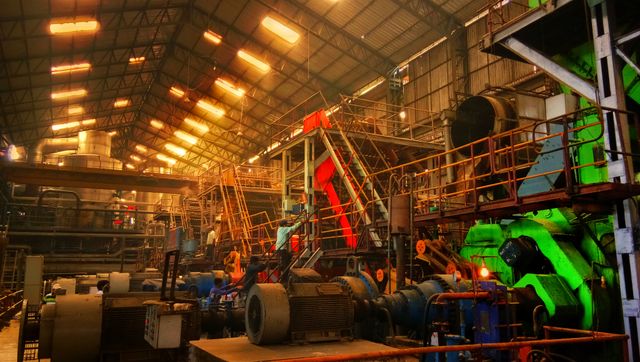
The featured image at the start of this post is by Torsten Dederichs on Unsplash