

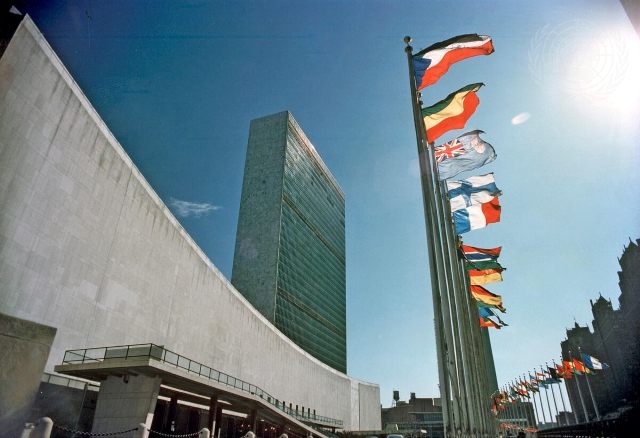
The world has gone through so much turmoil since the start of this century of all kinds – economic, political, environmental and health-related – that it’s worth sparing a few moments to think about the role of the United Nations and the work that it does. Most of the time we take the UN for granted, never stopping to think what the world would be like without it. It wouldn’t be exaggeration to say that the world would simply come to a stop, if the United Nations didn’t exist; that’s how critical it is to the world functioning smoothly, peacefully, and in global cooperation.
Many of these are coming into question, as the world is increasingly fragmented geopolitically and economically with trade wars, military wars and hundreds of conflicts raging around the world. It is also being increasingly felt that the United Nations is no longer as effective as it once was, nor is it fit for purpose given the challenges the world faces today and will face in the future. What has gone wrong and how can we make the UN system function more effectively in today’s world?
The world is a completely different place from what it was 80 years ago, when the United Nations was created. Born in the aftermath of the Second World War in 1945, it replaced the League of Nations and was meant to be the new world order for countries to live peacefully and in cooperation with each other. It is a large complex system of several organisations, agencies, and 193 member countries that is constantly finding ways to work in harmony with each other, to maintain peaceful relations and to solve the world’s biggest problems together.
The 193 members are represented through the United Nations General Assembly that meets every year in New York city to share problems, discuss and debate the issues of the day. In addition, the United Nations has five other principal organisations through which it encourages international cooperation, exerts influence in conflict resolution, shapes global cooperation in economic and social matters, and maintains law and order internationally. It operates under seven principles laid down in the UN Charter of 1945 when a smaller group of countries gathered at a conference in San Francisco and the modern United Nations was born.
That the world still needs the United Nations is not in doubt. How the UN should function in today’s world in order to be more effective is what we need to address. This shall be the focus of my piece, and although the UN is too large and complex for one article to tackle, I will attempt to lay down the main issues along with my thoughts and recommendations. There must have been many such ideas and recommendations already discussed of which I am not aware, but I appeal to everyone that all those thoughts and ideas need to be brought forward for serious consideration. Never before has the world been more in need of a United Nations that is reflective of today’s realities – the global order and the growing challenges – and that is empowered to be fully effective in leading and keeping the rules-based world order through the next many decades of this century.
What of the UN needs to be preserved
UN Charter:
Without going into every detail of the UN Charter, I think that there are many aspects of it that ought to be maintained and preserved. The four objectives of the United Nations, or purposes as they are called in Chapter 1, Article 1 of the UN Charter, continue to be must-haves in today’s world and the UN must double-down on them with renewed vigour. Of these, the first purpose of “maintaining international peace and security” is the most important, for without this the other purposes would be irrelevant and unachievable. In the UN Charter, the first purpose is expressed as:
“To maintain international peace and security, and to that end: to take effective collective measures for the prevention and removal of threats to the peace, and for the suppression of acts of aggression or other breaches of the peace, and to bring about by peaceful means, and in conformity with the principles of justice and international law, adjustment or settlement of international disputes or situations which might lead to a breach of the peace;”
All of the four purposes are the raison d’etre of the United Nations and these must be followed in letter and in spirit. Next, are the seven principles that guide the United Nations and its member states and these are about the sovereignty and equality of all member states as well the need to resolve international matters of dispute between member states peacefully and amicably. Some of these principles are also about the relationship between UN and the members. For example, Article 5 of the Principles Chapter says that member states shall be expected to offer the UN the assistance it needs as well as desist from cooperating with any state against which the UN is taking preventive or enforcement action. Further, in Article 7, the UN acknowledges that it is not authorized by the Charter to intervene in matters of domestic jurisdiction of any member state and nor are they expected to submit such matters to the UN. There is a caveat to this last principle, No. 7, in Chapter VII that deals with “Action with respect to threats to the peace, breaches of the peace and acts of aggression”, wherein the UN Security Council may decide to intervene under articles 41 and 42. These articles speak of UN intervention by non-military means and military means respectively.
In fact, I think that the UN Charter is a document everyone on this planet ought to read. These are ideas and principles worth preserving and the world is still in need of them.
UN agencies:
I think all of us would agree that many or most of the UN agencies ought to be preserved, encouraged and empowered for the brave and even thankless work that they do. These UN agencies, from the WHO, UNICEF, WFP and UNDP to the WTO, IAEA, IEA, UNFCCC and so many others including UNCTAD and WIPO, provide invaluable assistance to policy makers around the world through their dedicated research and their committed personnel. Even if the UN is not seen as effective anymore in the area of conflict resolution and peacemaking, each of these UN agencies represent the best and finest of what the UN was, can be and ought to be. These are the leading lights of the UN system and unfortunately, they are at the receiving end of cuts to funding the past many years and the world must do better to fund their necessary work.
What of the UN needs a rethink
The UN Security Council:
I think that the UN’s highest decision-making body, the UN Security Council, doesn’t adequately reflect the multi-polar world of today and needs to be refreshed. To start with, there ought to be no “permanent five” anymore; this was alright at the time of the founding of the United Nations but it has lived beyond its time and we ought to think afresh.
Moreover, the idea of the “permanent five” with veto powers is itself so against the principles of the equality of all nations and all votes being equal in the UN Charter, that I don’t know how it has managed to survive all these 80 years without being challenged or amended. The power of the veto is the most misused instrument in the UN system and it must be replaced by a simple majority or 2/3rd majority vote.
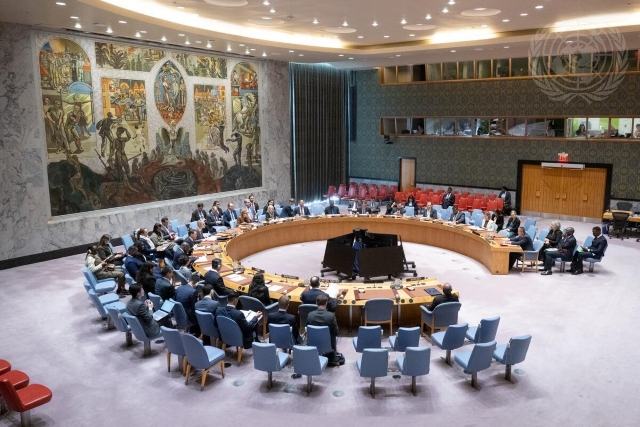
On the composition of the UN Security Council itself, the body was increased to 15 member states from the 11 members it was at the start. However, this system operates by rotation and countries (excluding the P5) are elected to the Security Council for only a duration of two years. This is too short a time in which to make any meaningful policy contribution, and I would think a term of at least 5 years would be better. Further, instead of electing 15 Security Council members every two years, the UNGA could alternatively opt for the G20 group of countries. Surely, the world’s 20 largest economies representing the advanced and the developing world, and most of the world’s population can be entrusted with taking responsible decisions on behalf of the entire world. If the G20 Security Council idea is acceptable to the UNGA, this would change every time the G20 changes; there is nothing permanent about the G20 either as countries could drop out or join it depending on their economic growth.
Special UN agencies needed for AI and Critical Minerals:
Just as so much of the world’s interconnectedness and interdependence is determined and governed by a UN convention and a system of rules and special UN agencies dedicated to them, the world needs a UN system of governance for new and emerging technologies and needs of today and the future. Climate change already has the UNFCCC and UNEP too does a lot of work in the environment field. However, there is a need for a UN convention and a dedicated agency for AI as well as for critical minerals, both of which are fast becoming essential to work and life in today’s world and are also being weaponised in the global competition for economic growth, supremacy and for control, leading to conflicts between countries over these as well.
UN Trusteeship:
I only discovered the concept of the UN trusteeship recently and also learnt, to my surprise, that this has been discontinued. Apparently 1994 was the last time that the UN Trusteeship had any Trust territory anywhere in the world: Palau, the last Trust Territory became independent in 1994 and it was decided to close UN Trusteeship.
I think that with all the conflicts and even takeover of territories that is going on and being threatened in today’s world, the idea of UN Trusteeship ought to be revived and applied with a new purpose. Decolonisation need not be the only condition for a territory to come under the UN trust; it could equally be an ungovernable or lawless state, where people are so oppressed that they live their lives in refugee camps as in Sudan or Palestine or are people without a state such as the Rohingyas in Myanmar/Bangladesh and the Palestinians.
Just as a thought experiment, what if we could end the Ukraine-Russia war, by putting Ukraine and Crimea under UN Trusteeship? Is this even possible? I discovered that there are many regional organisations (mainly economic or trade blocs) that the UN actively and regularly partners with, to promote better economic growth and relations between countries. Not surprisingly, NATO is not one of them. Let us assume that UN takes Ukraine and Crimea into UN Trusteeship for a fixed period of time, say, five or ten years, which keeps it out of NATO membership as well. Would this be acceptable to Putin and Russia? Since Putin has always claimed that it is NATO’s eastward expansion that prompted him to attack Ukraine, it would at least be a good way to call his bluff.
The IMF and World Bank System
The international finance system set up under the Bretton Woods Agreement, also in the aftermath of WWII, comprising the International Monetary Fund and the World Bank are also in need of reform in order to reflect today’s economic and geopolitical realities.
While the intention behind setting up these multilateral financial institutions was the right one, they do not adequately reflect the changing world economic order. For years, they were collectively referred to as “the Washington Consensus”, indicating the extent to which the United States exerts influence through these institutions. The World Bank that is meant to provide long-term loans for large development projects in developing and low-income countries was often criticised for pushing certain kinds of projects that suited large American and western firms, especially when it came to tied-aid. World Bank aid has changed somewhat for the better in recent decades, and one hopes that this will continue at a reasonably good pace in the future as well.
The IMF which offers financial assistance of the structural kind, acting as lender of last resort so that countries might reform and improve their economies especially of the external balance of payments kind, has itself been hindered by its structural organisation and governance mechanisms. For years, the international community has been talking of the need for reforms at the IMF and these are mainly to do with the quota system, SDRs (special drawing rights) and voting rights. Progress has been at a snail’s pace, leading to reforms and changes in these quotas and rights in 2010 and again in 2016-17. There has been an infinitesimal increase in the quotas and rights of large economies such as China, India and others, while the US still dominates the IMF, as you can see at the IMF’s website featuring the latest updates. Of course, this means that large emerging and developing economies also have to be willing to pull their weight and contribute more to the IMF system.
These multilateral financial institutions have to operate on a more multilateral basis and must be aware of new economic challenges as well as new opportunities for growth that can spread throughout the interconnected global economy.
Financial Contributions to the UN
Another area where countries could step up their financial contributions to the UN and keep it functioning smoothly is in the annual contributions made by member countries. Since the United Nations seems to operate on a “contribute according to capacity to pay” basis, each country is free to contribute what it can to the UN budget. Apparently, there is a floor that is as low as .001 of a country’s GDP and a ceiling set by the US as its contribution is the highest at around 20% of GDP.
I think that there is room for all large economies to increase their annual contributions and this can be done by setting a higher floor for G20 countries at, say, 0.1% of GDP. I was shocked to learn that India made its annual contribution of US$3.7 million for 2025, which works out to a mere .001% of GDP. It can certainly be higher and the UNGA ought to take up this matter for consideration. With the United States also cutting its funding to several of the UN agencies in recent years and also pulling out of the WHO, many countries will have to make up for as much of the shortfall as possible.
The International Criminal Court and The International Court of Justice
Last but not the least, the United Nations needs to make its international courts fit for the 21st century. The world is seeing many more violations of international law, and new kinds of conflicts and disputes are emerging which make it imperative for the UN system of international courts to be functioning smoothly and impartially.
The latest case of America sanctioning several judges of the ICC and now even the ICC itself is simply unacceptable. This kind of unilateral action should have no place in the UN system. Worse, threatening and intimidating the international justice system is equal to contempt and ought to be punished in an appropriate manner. Considering that the United States is not a signatory to the ICC even though it set up the international rules-based order decades ago and has been policing the world, it is not surprising that the US thinks it can sanction the court. Israel too is not a signatory yet, and therefore it continues to repeatedly flout international laws.
I think that international laws need to be amended to ensure that both the international courts cannot be sanctioned and neither can their judges, both during their tenure and after. Nobody should be above the law. Further, measures should be taken to ensure that the international courts are strengthened and given the necessary powers to adjudicate on a whole range of issues that may come up in the future.
We need a United Nations that continues to work for international peace and security, for economic growth, for reducing inequalities and for improving living standards in all member countries, throughout the 21st century. All it needs are a few important amendments to make it more effective as well as more reflective of the multipolar world order that is emerging today. Since I am an advertising professional, let me conclude with an advertising thought borrowed from Benetton: Time for the United Colours of United Nations to shine through. I have, of course, shared my thoughts on the Benetton brand itself on my blog in which I have said that it stands for very similar values to those that the UN was founded upon. Absolut Vodka too can break the ice, if it pursued the new brand strategy I have recommended on my blog. With that, it’s Salut! to the UN in its 81st year.
The featured image at the start of this post of the UN headquarters in New York City is from the UN website
Note: I read that the United Nations Declaration of Human Rights is based in large part on HG Wells’ Rights of Man, which I haven’t yet had a chance to read. I have read Thomas Paine’s Rights of Man, of course.

