


As an advertising professional who has been writing on brands as well as the economy, politics and business as well as culture on my blog, I thought I’d write about the state of the media around the world, as I see it today. I will not focus so much on the advertising aspect of media, having already written about it in the context of the media debate on subscription vs advertising that has been going on for the past decade. Instead, I intend focusing on news and other editorial content of media and where it’s at, and how well it’s doing its job of keeping us all well-informed and of helping us understand the world around us better.
In an increasingly fragmented world, where domestic politics in most major economies is of a highly polarized nature and sometimes even dictates foreign policy on the one hand, and where international relations are fraying thanks to geopolitical tensions and economic and technological competition, I would think that the media has an even more important role to play in our societies. Of course, the subject of media and its role is too vast to consider it adequately in a blog post, so I shall confine myself to English media, since this is also what I consume.
If we start with just what makes international headlines on a daily and hourly basis, which are Trump’s policies, as well as the wars raging in Ukraine and in the Middle-east, it seems as if large and established news and media organisations are becoming more partisan as well as more selective in their reporting of news from the ground as well as from newsrooms. My specific observation is that the news for the past few years is more focused on political personalities rather than on what is actually taking place on the ground and how local populations are responding and coping in their lives. What is also missing is a sense of how the concerned economies are faring and their relations with other countries, since we still live in an interconnected world.
BBC World News heads the list of news organisations that has chosen to report selectively and inadequately on the ongoing war in Gaza, which has also become a larger regional war, thanks to Israel trying to establish its control over the entire region and is increasingly being described as a large-scale genocide being conducted by Israel with America’s tacit support. Of the three important developing news events I have mentioned, BBC World News has also tended to focus more on Trump’s presidency and Ukraine, not enough on Gaza even in its other programmes. And the strange thing is that these programmes are totally focused on the appearances, clothes and their colours, make-up and hair of their women anchors than on anything else. UkraineCast is a programme that is a discussion between BBC journalists on the conflict in Ukraine, where participants wear headphones and appear to be taking part in a discussion that is really quite awful and leaves the viewer none the wiser. I must admit that I haven’t been able to watch a single episode in its entirety. Similarly, the BBC programme called The Path to America’s Presidency, which started during the US election campaign in 2024 still continues to air, with three women anchors discussing US politics in the most banal fashion. The focus is once again on their appearances, as their faces in tight close-up fill the entire screen. I suspect all this is entirely the influence of unprofessional PR agency idiot bosses from India, who are completely obsessed with women’s looks and little else. However, what they’ve managed to do is to make women journalists from BBC World News look stupid in the kinds of discussions that take place, and BBC editors and managers ought to be seriously concerned about the organisation’s credibility and trust.
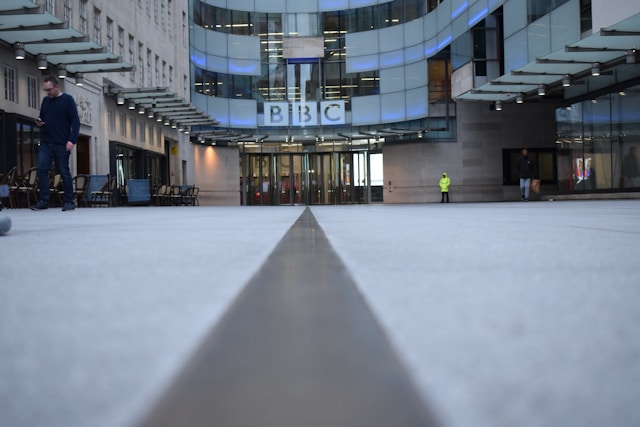
Years ago, I read that BBC News came under a lot of flak for not covering Russian meddling in UK elections, the Facebook scandal and Cambridge Analytica adequately. This is quite distressing, honestly. Well, CNN is no better. There too, the focus is on political leaders and personalities, not enough about the issues that matter. Their news programme One World featuring two women anchors is straight out of unprofessional PR agency idiot bosses’ playbook of their two-women narrative where one is white and the other is black or African American.
These days, Al Jazeera is the only English news channel that is worth watching for news from the Middle-East, as well as the Global South. Unfortunately, their journalists were recently killed by Israeli defence forces. Israel has not only killed journalists, it has banned international journalists from reporting from Gaza.
It is the same sad story with the print media. All good English international publications that I read have been singled out for the dumbing-down PR agency treatment, with the result that I have stopped reading many, including The Economist. I find it appalling that The Economist, The Guardian, NYT, The New Yorker, NYRB, LRB, The Paris Review and even The Financial Times entertain and indulge the whims and fancies of an unprofessional PR circus from India that ought to be banned from the industry.
The English news media in India is in an even worse state, totally in the vice-like grip of unprofessional PR circus buffoons. The Times of India had become a rag long ago, which is why one switched to HT and then The Hindu. However, I am sorry to say that even The Hindu has become awful, publishing mischief-motivated nonsense quite regularly in the past couple of decades. I had written a couple of travel pieces for them ages ago about my visits to Berlin, but their standards have really fallen, and I am afraid to say it is because of PR agency idiots meddling.

Let us turn to business news now, since this is what I follow closely, read and watch. Here too, the corrupting and dumbing-down influence of unprofessional PR agency idiot bosses is all too plain to see. From CNBC-TV18 in India to CNBC Prime which mostly features international programming, it is so obvious that their news coverage and reporting is to suit dumbing-down idiots at Perfect Relations and their cronies everywhere. There have been several quarters in the past many years where even corporate earnings in India will not be reported on CNBC TV18, but will all be only on something called Moneycontrol! The Economic Times is nothing like what it used to be in the old days; it is following the ToI and will soon turn into a rag if it doesn’t do something about its news and editorial content. The leading economic and financial daily of the country fills four full pages with political news and the rest are mostly filled with stockmarket investment tips, start-up news, tech disruption and real estate! This, after they removed the financial pages from the newspaper, decades ago! If this is what represents the Indian economic and business growth story to The Economic Times editorial team and the leadership, it is a very sad and incomplete comment indeed on our country. CNBC TV-18 too is full of only start-up stories and interviews. And their new so-called “global” programmes on their Prime HD channel around noon every weekday are meant to interrupt business news from UK and Europe , at the time when I watch Europe Squawk Box.
Therefore, what can we really say about media organisations and their role in our complex and fast-changing world today? That they have become stooges of an unprofessional PR circus that is busy trying to cover up its nonsense to do with my work and career, while at the same time trying to hijack it in order to go global. I had written about their complete hijack of the media years ago on my blog. In the process media has also been paying 24-hour obeisance to politicians especially in India, allowing even PR circus bosses to transpose themselves into political leaders. I am often amused at the attempts by the English TV media to turn Narendra Modi into Dilip Cherian, one of the idiot bosses at Perfect Relations. Considering how much unprofessional PR circus idiots have colluded with the Indian government on policies for decades, I am not surprised that they suffer from an identity crisis. Besides, as I have said before, it is difficult these days to distinguish news from PR, as so many news events are even engineered by unprofessional PR agency idiot bosses.
An independent and fully-functioning media is an important pillar of democracy, which many media organisations seem to have forgotten in recent times. Most of them have lost their capacity to report impartially, to seek the truth and report it, to analyse issues in depth and to speak truth to power. And this perhaps applies to most English media organisations in countries around the world. The more troubling thing is that in times of political polarization and extreme divisions in society, it is usually the local language and vernacular media that tend to cater to extreme right-wing and conservative sentiments and views; English news media, on the other hand, that the educated middle-class, intelligentsia and professionals consume help to play a critical balancing role through facts, unbiased reporting and thorough analysis. These population cohorts are critical for democracy to survive and thrive, as they are the people who drive innovation, change and growth in the economy and also keep democratic processes intact. To address them, the media has to rise above partisan politics and dumbing-down PR agency nonsense.
What can we say about media brands? Even less, I would presume, because brands are built on differentiation, credibility and trust. In the case of media organisations, the latter two are even more important as readers and viewers must find the news content, engaging, relevant and factually accurate.
In a world where there is little to differentiate one newspaper from another, or one TV news channel from another, because they are all appealing to the lowest common denominator of a PR agency circus, it is the millions of readers and viewers who lose. Media organisations these days seem to be chasing subscribers; much is being made of the success of The Economist and The New York Times in garnering new subscriptions rapidly. When the publications in question are deteriorating in terms of news content, coverage and analysis, you can be sure drop-outs will be as rapid and sharp when they come. Advertising revenue too will shrink, and this leads to a vicious cycle of poorer news content and reporting.
What about media organisations that are not in the news business alone, but are largely focused on general entertainment, such as Disney and Netflix? Their corporate earnings this last quarter were quite good, mostly on the back of advertising-led tiers in their streaming services. However, they have also been producing a lot of new and good content – according to news reports and awards – and one only hopes that they don’t succumb to the unprofessional PR agency brand of humour and entertainment, laced with bawdy and vulgar jokes and visuals as well as sexist and sexual innuendo.
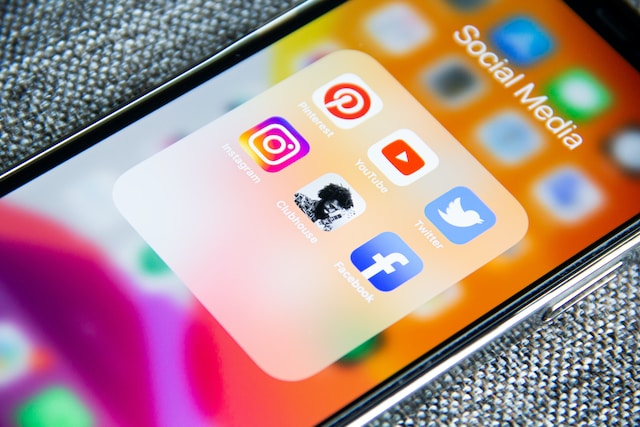
For media organisations to become stronger brands – and media has greater propensity to become a brand because it is habit-forming and hard to change – media organisations need to revisit their strategy and content, depending on who their target reader or viewer is. It’s even harder in today’s world to maintain brand leadership in media because it is so fragmented, and consumers are spoilt for choice. Social media makes this fragmentation even worse, and the fact is that many of today’s youth especially Gen Z and Gen Alpha get their news from social media, if they follow news at all. What is also complicating news, particularly in the digital landscape, is artificial intelligence. I happened to read recently that news websites are receiving fewer hits or visits, because of Google’s AI overview which appears right on top in search results. Google’s AI overview might offer what they call a synthesized version or summary of the news, but they also come with links, so readers might read the original pieces in full. It appears therefore, that many people are content with the synthesized AI overview and do not bother to click on the links provided to read the entire piece.
Therefore, digital editions of media have an even bigger problem trying to attract readers online. I have often read the AI overview but I always check the source and then read the full article, if it is reliable and not paywalled, so I may share a link in my blog posts. There are other problems around AI in news and journalism which concern issues of authenticity, deep-fake news and videos, and safety.
So, media organisations are already having to cope with a lot of challenges in being able to report, analyse and discuss news events accurately and comprehensively from around the world, without having to also indulge unprofessional PR agency idiot bosses from India, who are desperately trying to make me a journalist, editor or PR person when I am none of these. My career has been in the advertising and brand communications industry in India all along as a writer, and even if I have written travel pieces decades ago and continue to write on my blog now on brands as well as economic issues and business, it doesn’t make me a journalist. Nor do I have anything to do with book-writing and publishing, where the same unprofessional idiots have been meddling big time.
In fact, I spent almost half my advertising career in Ogilvy Advertising in Delhi where I worked in two separate stints. And where, I must add, I even worked on BBC World News that started an India-specific programme slot at 10pm on weeknights beamed to India and South Asia in 1996-97. The programmes were Question Time India which is quite a popular news programme in the UK and which Prannoy Roy of NDTV was to anchor and moderate for BBC, besides a programme on Style, and yet another on sport, culture and general news that I cannot recall now. All of these together were called Spotlight on India.
This explains some of my disappointment with what has become of BBC World News in the UK that is beamed to our part of the world in India and elsewhere. Of course, the fact that one also grew up listening to BBC World News on radio at home makes it even worse. I think that good BBC programmes such as Dateline London, Newsnight and even Panorama ought to be revived and of course, the main news reporting and coverage needs to be better.
One has been reading about plans for an overhaul of BBC right from Boris Johnson’s time, and I think it would be an excellent opportunity for BBC to reimagine itself as a relevant, trustworthy and independent news organisation. I read that BBC faces tough competition in its own home market from the likes of Sky TV and ITV. Perhaps I ought to put my thoughts down on how the BBC brand can reinvent itself and share them on my blog. Whatever happened to the days when organisations like the BBC and the VOA were institutions of British and American foreign policy and were an integral part of the countries’ outreach to the rest of the world? The latest is that Trump has axed funding to VOA and it’s probably being disbanded.
The other issue at least in India which some news and media organisations have to manage is ownership by India’s richest business tycoons: NDTV is today owned by the Adani Group and Network-18 – of which CNBC and CNN News-18 are part – is owned by the Mukesh Ambani Group. I am not sure how much interference there is in the news content from the industrialists themselves, but just the fact that both businessmen are known to be close to Narendra Modi is enough pressure on the news channels already. As it is, our news channels are busy doing PR for themselves most of the time with various conclaves and events being held regularly. And the main speakers at these events are politicians, which gives the media company a chance to ingratiate itself to the powers that be. If it’s not conclaves, it’s interviews all the time. These are all the terrible influence of unprofessional PR agency idiot bosses.
The latest news on Indian news channels is stray dogs in Delhi and Supreme Court’s ruling on sending them to animal shelters. Unprofessional Perfect Relations idiot bosses’ latest attempt to make me my younger sister, Bhavani Sundaram. And they think that by invoking the name of the Supreme Court in the news every now and then they are in the clear, for all the nonsense they have perpetrated along with their cronies at RK Swamy/BBDO Chennai for the past 20 years and more.
In other words, media everywhere seems to be going to the dogs.
The featured image at the start of this post is by Yunus Erdogdu on Pexels
 Peripatetic Perch