


In all the hype and news flow around AI and technology in general, it appears that there are some changes taking place in a few industries at least that might require us to pay attention. Where these changes might be real and enduring, perhaps it’s time to engage in “What if?” kinds of thought experiments. I am not sure how much the news of these changes in consumer preferences is based on fact, and how much is noise – the kind of news that unprofessional PR agency idiot bosses excel in scripting – but no harm assuming that some of it might be true, and preparing oneself for what’s next. Which is why I say devil’s advocate!
Starting with my favourite, the car industry, it appears that EVs are no longer the rage, at least not in all countries, and that customers are preferring other options besides the old conventional ICE vehicles. Except for China, of course, where they seem to be churning them out as if there’s no tomorrow, and people seem to be buying them in large numbers as well. Of course, Chinese EV brands are global these days, and besides giving Tesla a tough run for its money in China, these are proving to be stiff competition elsewhere too. These are early days and one will have to wait a while to see proper trends emerge, or perhaps the market for cars will be in a state of flux for a few more years, who knows. I was surprised to learn that in India, CNG (compressed natural gas) cars are growing quite fast, albeit on a small base. We ought to have encouraged hybrid cars too in India, well before EVs, and by now, we might have had three equally strong options in the car market to consider.
I was also surprised to read recently that Uber has introduced a new electric fleet of cars for ride-hailing, in keeping with the company’s aim of achieving net-zero target by 2030. And as part of the shift, it has announced partnerships with BYD and other companies. According to their website, they have started operating autonomous cars with Waymo and others in the US, in around 10 cities where permitted. These are all signs of which way the industry might be heading. I am not in favour of autonomous vehicles at all, except as public transport shuttle service maybe, that too where roads are fitted with magnetic tracks for them to operate safely, as in Masdar City, for example.

I have been writing about the future of cars moving to mobility as a service soon, and these developments seem to suggest that we are on our way there. Ride-hailing is certainly one of them, as cities look to reduce congestion and traffic snarls on the roads, as well as pollution. Yet another option is car-rentals, the kind which JLR is said to have begun in UK a few years ago as a pilot project. There has been no reporting on this, however, even though I read about it on the JLR corporate website at the time. On JLR’s new corporate focus and their all-electric future, I reserve my comments as I wrote earlier as well, since I have already shared my thoughts on what strategy and communication they should pursue to build all their brands, including the corporate one. I will say, though, that I don’t think pursuing only EVs is a wise strategy, as we can see from customers’ preferences across markets. And in any case, I don’t think type of technology – whether electric or any other – should determine the business or the brand strategy.
Having said this, I must say that communication for most car brands across almost all markets seems to be awful. It is as if carmakers and their advertising agencies have forgotten the strong connection or identification that consumers feel with their brand of car. There might be some who argue that all the recent technology and environment regulation issues have taken the fun out of car brands advertising, but I think that’s just a terrible excuse. I think no one is actually thinking hard enough about product and brand differentiation and the car brand’s imagery that helps connect with the right target customer.
In recent months, I have seen a few European car brands, such as Renault, Skoda and VW attempting at least an idea in their brand communication in India, but they still have a long way to go before differentiating their brands sharply in people’s minds. What’s sad is that even the iconic luxury brands such as Mercedes-Benz and BMW have lost their unique differentiated strategy and focus, and their advertising reflects this. And nobody seems to be attempting reviving the entry level car market in India, which comprise compact cars and hatchbacks.
I would urge car companies to start thinking about how they can elevate their product offering, focus on differentiation, and also initiate thinking and work on mobility as a service.
The next industry which is facing its own existential crisis is the wines and spirits industry, which is again one that I have worked on in the advertising and brand communications industry in India, and am interested in. Again, one is not sure about the facts of the case, but it is being reported that wines and spirits companies are seeing slowing sales growth in advanced economies, and that much of it is being attributed to younger generations shifting away from alcoholic beverages. While I never understood the unnecessary hype and importance given to Millennials years ago, and Gen Z now, it is important to consider their consumption habits since they are a growing consumer cohort in many markets and represent the future. They aren’t the biggest spenders right now, nor are they the wealthiest, but to the extent that they are the future consumers what impact will such a sudden change in consumption habits have on the industry?
I haven’t had the chance to delve deeper into this conundrum nor do I have any data on it, but from what little cursory reading I have done, it appears that beer companies don’t have the same problem. They have reported better corporate earnings growth as well. And there are a whole lot of new drinks flooding the market, such as hard selzers and the like. Does it mean that younger consumers prefer beer and these new selzer-type drinks to the more conventional whisky, vodka, gin and rum kind of spirits, and wines? Is there enough evidence of such a shift in the industry, for wines and spirits companies to rethink their product range?
I would imagine that the core consumer group for most of these spirits and wines are still the older generation and that they are still sufficiently large in numbers, and important consumers, to take seriously. I also know that the wines and spirits industry has been attempting product and brand innovations for decades to try and appeal to younger consumers, and for the greater part have managed it with some degree of success. As I have written on my blog before, Passport Scotch Whisky from Seagram (now Pernod Ricard) that I worked on at Ogilvy Delhi decades ago, was a Scotch Whisky specifically created for the younger drinker. However, if younger consumers are not socializing in person as much anymore – and wines and spirits are social drinks especially for the youth – what can wines and spirits companies do to overcome this challenge?
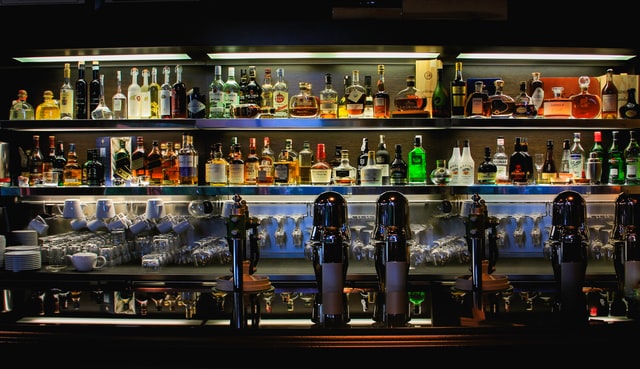
Have good brands of wines and spirits become too expensive, putting them out of the reach of younger drinkers? With Trump tariffs looming large, including a 200% retaliatory tariff on European wines and spirits, prices are only likely to move northward. Can alcohol beverage companies innovate with new product offerings more to the tastes and budgets of young consumers? And if there aren’t enough consumption occasions, can wines and spirits companies create social occasions to bring younger drinkers together at parties? Something along the lines of Bacardi Blasts, which were big parties with live bands, etc., or what I have recently recommended for Absolut Vodka as a new strategy for them on my blog. Certain categories of spirits such as vodka, gin, and even rum allow for a more youthful imagery in communication and in live events/parties.
I was even contemplating some radical ideas, if wines and spirits companies have to change their product range or diversify in future. Besides food and drink and partying, wines and spirits have a great natural connection with travel. I don’t mean the whisky trail and winery visit kind of travel which is great for aficionados. I was privileged to have made my visits of Seagram’s whisky distilleries in Scotland and Martell Cognac and Perrier Jouet Champagne in France decades ago on work from Ogilvy Advertising in Delhi. No, I am thinking of travel more generally in the context of wines and spirits, travel to the land from where a particular wine or whisky or vodka comes from. The kind that will attract younger consumers, perhaps. It just struck me that in India, where liquor advertising is strictly regulated, travel would make a great surrogate product. Perhaps companies need to consider this more seriously and team up with good travel companies in creating special packages.
Finally, the third industry that is facing headwinds is luxury goods. It is supposed to be an industry that is most resilient to economic downturns and slowdowns, but this time around many of the major luxury conglomerates have been posting weaker earnings. China is obviously the main reason for dragging down the earnings of luxury companies, as it battles serious domestic consumption slowdown. One would have thought that the Chinese luxury buyer is not so terribly impacted by the poor sentiment brought on by their housing crisis, but it appears that even they are more cautious now.
I had written before about the need to rightsize luxury and I am not sure if the industry is doing so. The weak earnings seem to be affecting all categories, especially fashion, as in apparel, as well as wines and spirits and luxury cars. America is a big market for luxury goods after China, and one wonders what impact Trump’s tariffs will have on luxury consumption in the US. I think that luxury brands, especially in fashion, need to engage better with consumers through communication. I commented recently on a post on LinkedIn, that luxury fashion has always assumed that just images of models wearing their designs is enough to interest, engage and entice the customer. They don’t seem to have anything to say, which is a pity, and they think their brand names alone are enough to sell.
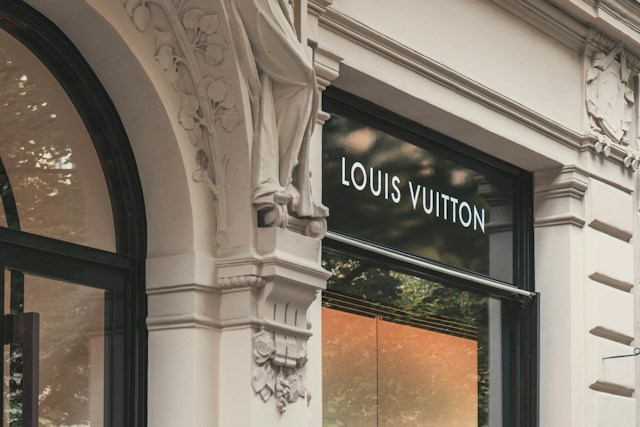
This seems to be a peculiarity only with luxury fashion, though, and thankfully other luxury product categories such as watches and fine writing instruments, cars, wines and spirits as well as travel, don’t seem to suffer from this problem to the same extent. Nevertheless, in my brand strategy and brand campaign recommendations for Rolex wristwatches on my blog, I had mentioned the dangers of assuming that only the Rolex brand name, or its association with celebrities is adequate to convince prospective and existing customers, why you are the best in the business. Companies must always continue to find new ways to engage and interest consumers, no matter how great market leaders they are.
So, perhaps luxury companies need to rightsize their businesses, focus on core strengths and core customer segments, and engage better with them. I think the luxury industry needs to give customers new reasons for spending on luxury, especially when you consider that we have had several crises these past decades. From the Financial Crisis, to the Covid-19 pandemic, high inflation, wars, and economic recovery that will now be hampered by tariff increases.
These are just a few of the industries that seem to be experiencing changes and shifts in consumption, though one is not sure of the facts of each case, and to what extent the impact is likely to be enduring. Still, I think playing devil’s advocate and preparing for the worst can help, and can sometimes provide a new strategic direction forward.

 Peripatetic Perch