

A small bit of news during Q3 2023 corporate earnings struck me as curious. That luxury goods sales were slowing down. And not merely because of China’s economic slowdown, but luxury sales even in the US were reported to be lacklustre. If anything, China was still the saving grace. And it’s not just LVMH; Kering too reported a 9% fall in sales and a 13% fall in revenue for the third quarter of 2023. I thought this has to be looked at more deeply; if luxury – which is usually the last man standing in a slowing or even recessionary economy – is being impacted this way, there ought to be some really good reasons for it.
And while Q4 2023 earnings are still trickling in, it would be safe to assume that luxury goods sales haven’t perked up all that much. Even so, I think some luxury companies and brands are likely to do better than others. We can expect LVMH to show improvement in its earnings and sales for a couple of good reasons: the company is a hugely diversified conglomerate with so many luxury goods and experiences to offer that they almost ensure their consistently good performance. Second, their brand portfolio comprises some really strong brands which are not merely differentiated from competition, they are icons in their respective categories. It appears that LVMH has reported a strong year of growth in 2023 – despite the weakness in Q3 of the year – both in revenue and profits. Considering this was following from a good year in 2022, LVMH’s performance has been steady in 2024, notwithstanding the weakness in wines and spirits.
With consumer price inflation affecting demand for discretionary purchases, many consumers are likely to cut back spending in 2024 as well. Luxury consumption is usually an exception, driven as it is by high spending power and the need for exclusivity. However, because 2024 is expected to be a year of serious economic slowdown, of uncertainty and volatility and of geo-political tensions, there will be plenty that could dampen consumer sentiment somewhat. Even luxury consumers might not step-up their consumption of lavish indulgences to the extent that will help luxury goods and services companies improve their earnings.
According to Statista, the global luxury goods market at least in the world of fashion is slowing down from the post-pandemic highs to annual revenue growth rates for the industry in the low single digits between 2024 and 2028. From their forecast, it appears that luxury leather goods and luxury cosmetics and fragrances will grow at slightly better rates. This is on the revenue front, and we know that what matters in the luxury industry are the profits, given the high-margin business it is.
I think that 2024 might just be the year to rethink and right-size luxury. Of course, the 2020s have not been anything like the roaring 1920s in terms of excesses but even with the Covid pandemic, wealth among the wealthy has soared. The economic slowdown will temper euphoric expectations and moderate even luxury demand and it might just be a very good thing for everyone.
I say this for a few reasons. The recent years of explosive growth of wealth and luxury consumption were fuelled by China’s explosive growth and this is clearly slowing down. Of course, one could argue that China still boasts of several millionaires and billionaires with many more joining this elite club. While this might be true, the luxury market in China is also maturing, and with it comes a moderation especially in the type of luxury consumption. The years of every luxury brand and maison rushing to open stores in China and launch special events there might be moderating to a more sedate kind of luxury consumption. Many luxury brands also like to appeal to international travellers, especially high-spending ones from China but even this is likely to be more muted than in years past. I think this was borne out by the luxury consumer in Japan previously: they tend to be more discerning and careful about the luxury goods and services they buy as they mature and become more sophisticated about their brand choices and purchases.
I also think rightsizing luxury might become necessary with changing demographics around the world. As the luxury consumer ages, it will become necessary for companies to find and recruit new and younger luxury consumer cohorts for the future. Investing in this kind of market development and growing it might become a more important strategy to pursue than to merely increase market share by volume and value. Of course, some luxury companies who are market leaders might manage to achieve both because they have a significant lead over competition.
In other words, luxury brands and companies will have to study their markets more carefully, find new spaces at price points that are relatively untapped where new luxury consumers are likely to trade up to luxury goods and services, and innovate for them. This doesn’t necessarily mean luxury companies have to shift away from their core strengths and core brands, but that they seek new market opportunities for long-term growth.
Mercedes-Benz did this rather well, I thought, in the aftermath of the 2008 Financial Crisis. Seeing a demand for luxury cars in the compact segment, the company introduced their A Class and B Class compact sedans. These cars are no less luxurious nor any less powerful, they simply signal the arrival of a new, younger luxury customer who is not swayed by size alone.
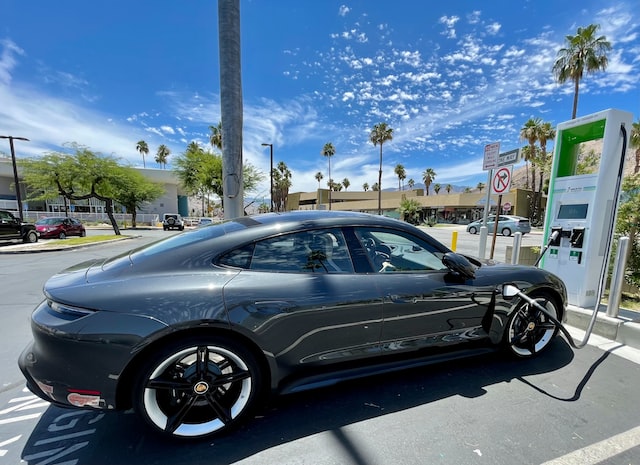
In fact, staying with automobiles as an industry, it is transforming in myriad ways right before our eyes. The most decisive and important change the world over is the shift away from diesel and the switch to EVs. In such a scenario, many companies will have to rethink luxury, in my opinion, because luxury sedans are going to get smaller, lighter and faster. And here, I am talking about staple luxury car brands such as Mercedes-Benz. BMW, Audi, Porsche and possibly Jaguar and Land Rover. All these brands will have to reimagine luxury in the EV world and explore how they can turn category benefits into their own. More ergonomics and adjustable seating instead of just more cabin space, quieter journeys, in-cabin connectivity and entertainment, more effective air-conditioning and climate control, more responsive and safer driving thanks to technology, and the like. If you look at these features, they all point to more pleasurable journeys in the future, which is where I think they will soon meet mobility as a service or Maas, as it is called in the industry, which I have been writing about on my blog. The future of mobility is to make journeys smoother and better, while also decongesting our cities and our roads. I think the craze and rush to SUVs is somewhat overdone and the industry will soon course-correct in the near future. In India, we haven’t even explored car concepts such as coupés, gran tourismos, and estate editions, since we were never a market for big cars.
The world is clearly concerned about over-consumption, especially in the context of climate change and the environment. Luxury companies too are trying to produce goods sustainably and focus more on what is being called a circular economy. This is yet another way to attract new luxury customers, in my opinion. In India, ITC Hotels have been promoting the idea of responsible luxury, though not yet in any focused or sustained manner. I think they can do better in terms of sharpening their focus on responsible luxury and building their brand on this platform in an Indian world-class way.
More technology-enabled, less ostentation would be the hallmarks of what I see as the future of luxury. In air travel, for example, I think premium economy has a great future the world over and would help attract a whole new class of corporate travellers. People who travel frequently on business and who might trade up to business class travel at a later date. Of course, airlines should be careful not to turn regular economy class into a lower class of travel; the idea always ought to be to elevate and raise the level of the travel experience for customers.
I think generally speaking, luxury will be more focused on luxury experiences than on buying luxury goods alone. Travel that enhances the sense of well-being, holidays that are about more time to yourself, luxury that relaxes and rejuvenates, are the kinds of themes that are likely to find favour with more luxury customers, including new consumer cohorts in the future.
What about luxury that is meant to impress and dazzle, that makes a statement about your taste and lifestyle, and is often a status symbol, you might wonder. Are we seeing the end of that kind of luxury? I think that this depends on luxury companies and how they create and promote their brands. So much in the luxury industry and its marketing is about what I call “signalling”; I have always been of the view that luxury goods are status symbols, because their creators made them so. The chief motivation everyone tapped into was not merely keeping up with the Joneses, but upstaging the Joneses. Of course, some luxury brands were loud and flashy, while others more understated and discreet.
In fashion as well, which is one of the largest luxury industries, I think the lure of fast fashion might soon die out. Thanks to environmental concerns around fast fashion, and concerns over the culture of shopping for new clothes all the time, the fashion industry ought to shift to more long-lasting styles and fabrics, less ostentation and more subtle and stylish apparel that will attract new luxury customers. In addition, we have the wearables to accommodate, as younger and new luxury customers also expect tech-enabled features in their clothing, including connectivity. While I think some of this is going overboard, I think there might be some merit in considering clothes equipped with climate control for extreme summer and winter wear.
Then we have luxury housing. If the number and frequency of luxury housing advertising in India is any indicator, it appears that luxury housing is going through the roof, quite literally! Some of the advertising that I see is unapologetically ostentatious and a vulgar display of wealth. In a country with a serious lack of affordable housing, development of the luxury real estate kind must be questioned. Instead of demonetization as a way to fight black money, the government ought to investigate who the buyers of these luxury properties are and how they are paying for them, since we know that illicit wealth in our country is mostly invested in real estate and gold!

If the luxury industry has to rightsize itself in order to moderate its own growth and grow more sustainably, as well as to find new luxury consumers, how can it possibly do so without jeopardizing its future? This is where luxury companies and brands have to devise clear and well-thought strategies. Here are a few thoughts of the top of my head, for you to consider:
- Retain core brands and core strengths and build around them
- Increase the share of staple luxury goods in merchandise, compared to ultra or uber-luxury goods
- Control numbers of stores in key cities and go online
- Carefully target next generation of luxury consumers from existing consumers database
- Find new luxury customers from corporate and business bodies, clubs and groups
- Increase presence in select airports and duty-free shopping
- Look to expand in markets other than China and US; consider fast-growing luxury markets in Asia-Pacific as well as in the Middle-East
I also think that whatever strategy a luxury brand chooses it will not be with its sights on 2024 or 2025 alone. Rightsizing luxury is about adjusting to the long-term. When sustainable and circular economies will be encouraged. When carbon-neutral and net-zero will be all-important goals. When new materials and technologies will be created and sought after. When a new, more level-headed equilibrium will be reached between hedonistic consumption and living.
Hopefully, rightsized luxury will last at least a decade or more. Which is more than we can say about the next fashion trend.
Finally, rightsizing luxury is as much about the communication as it is about the product. As much care and attention must be paid to the advertising and other brand communication as is paid to the creation of the luxury product or service. I am quite disappointed to see the LVMH website now, and I wonder if unprofessional PR agencies from India aren’t interfering with it. Years ago, when I visited the LVMH website, I thought it was one of the best organized, informative and engaging websites I had ever seen and even shared the link along with my comments on LinkedIn. Considering how large and diversified their brand and product portfolio is, the website was beautifully thought through, exquisitely presented and elegantly written and truly represented a luxury conglomerate. In creating communication, understanding the customer is vital, as is an understanding of the luxury brand; together they help create and strengthen brands in customers’ hearts and minds.
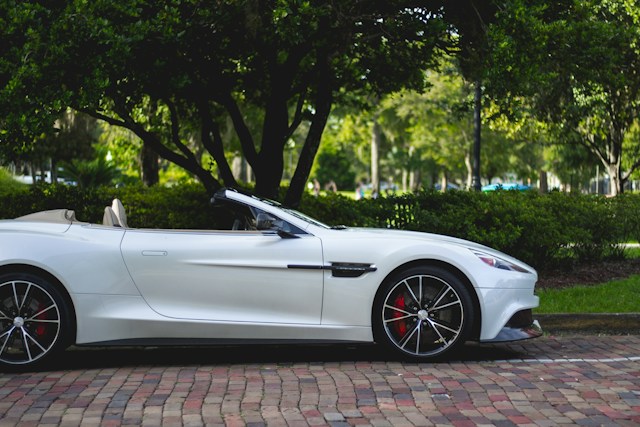
The featured image at the start of this post is of an Aston Martin car by Andrew Pons on Unsplash. I might not ordinarily have shared the credit for this featured image, but since I suspect PR agency mischief behind this I am doing so.
Having read my old emails and from guessing that I made a presentation on Seagram to Martin Sorrell on one of his India visits while I was in my second stint at Ogilvy Delhi decades ago, unprofessional PR agency idiots and their cronies will go to any extent to muck around. I think he was accompanied on that visit by an Andrew Green who if I remember correctly was CIO at WPP at that time, but I could be wrong. Therefore, photo of Aston Martin by an Andrew Pons uploaded on Unsplash, thanks to their cheap punning on anything and everything. Not the first time they have meddled at stock image and stock footage websites, I might add.

 Peripatetic Perch