


In my previous blog post, I had written about airlines as world connectors, providing an important economic and cultural link between countries and their people. And in it, I tried to create and recommend a new brand strategy for British Airways, already an image-builder for Britain as well as a world connector. I had envisaged this subject of airline brands in two parts, so in this, the second part, I would like to address how airlines can go about creating an image for themselves and their countries.
To be sure, airlines are not the only brand image builders of nations; there are many industries as well as cultural and economic factors that work to create that national image. That said, airlines are an important contributor towards creating that image for reasons I already mentioned in my previous blog post. And here, we shall examine how airlines can create a distinctive brand image for themselves and for their countries.
At the outset, let me state that only flag-carriers can take on the task of building their country’s image and do so effectively, even when they are in the private sector. Now, people travel for a variety of reasons, but most of them can be clubbed under either business or leisure. Similarly, countries are well-known for either their leisure, cultural and tourism attractions or as business and investment destinations. For example, Western European countries, especially those in the north, have an image of being competitive, innovative economies, while those in southern Europe are better known as leisure and tourism destinations. Airlines can be effectively used to either accentuate a particular country image or to balance it by focusing on travel of the other kind. It is the first level of strategic choice that one has to make.
The next consideration is what pursuing a particular kind of strategy could mean for the airline’s business. This is usually determined by what airport and airline hub infrastructure the country has. For example, London Heathrow and Singapore Changi are critical to their countries’ flag carriers, British Airways and Singapore Airlines, respectively. Then, we need to consider what kinds of travellers – even within business and leisure – does the country attract. And what profiles of customers and travellers does the airline want to attract?
To my mind, Germany is a good example of the former kind of country we just discussed. A powerhouse of the European economy for decades, indeed centuries, and one that is based on innovation, technology and engineering. German engineering is by now a well-worn catchphrase to mean excellence in the way things are made. On the other hand, it is hardly known for its cultural and tourist attractions, and I doubt many people think of going to Germany for a holiday, while many would consider France, its big next-door neighbour, or even Belgium and the Netherlands.
I am probably one of the few from India to have visited Germany on vacation, and that is because I was visiting a friend there, in the same way that I have visited France and the UK on leisure to visit friends there and discover some of the country with them. I have seen and experienced some of Germany’s soft power while travelling there, already being aware of it because I had listened to so much of their great classical music as well as read some of their literature. I have flown KLM as well as Lufthansa on my trips to Germany and onward to France and the UK, and I thought I would put down my thoughts on how Lufthansa can create a more differentiated brand strategy for itself as well as for its country, Germany.

I had seen Lufthansa print adverts in India for years, before actually travelling there. And I remember them to be very businesslike, matter-of-fact advertising, using authentic passenger statements as the campaign idea. This created an image of a typically German airline in my mind – efficient and punctual. And I must say that when I flew with them, I was not disappointed in these respects. The airline lived up to the advertising image, as it indeed ought to, and delivered efficient service. It also occurred to me that Lufthansa was perhaps very subtly, but clearly, targetting the business traveller, to whom efficiency and punctuality would be paramount.
I think the time might be right for Germany to project more of its soft power – which it also needs as a driving force behind the functioning of the EU, along with France – and make the country a more attractive travel destination, both for business as well as leisure. It might also be the right time for Lufthansa to spread its wings a little more and create a more distinct brand positioning for itself, given that the airline has now expanded to a much larger group.
Lufthansa in the past couple of decades has grown into Europe’s largest airline group, thanks to a series of acquisitions it made while the industry consolidated. Lufthansa acquired Swissair and Eurowings in 2005, Austrian Airlines in 2008, Brussels Airlines in 2009, and from what is being reported recently, the airline has increased its stake in ITA (formerly Alitalia) to 41%, with the possibility of acquiring Portugal’s TAP Air as well.
The parent group company is called Lufthansa Group and to that extent will derive its brand image from Lufthansa. Therefore, it is also important that Lufthansa Airlines and Lufthansa Group share several brand values as well as brand attributes. Either way, Germany will be at the heart of the airline and the Group’s brand positioning. And what’s more, the airline’s hub at Frankfurt is already the busiest airline hub in all of Europe.
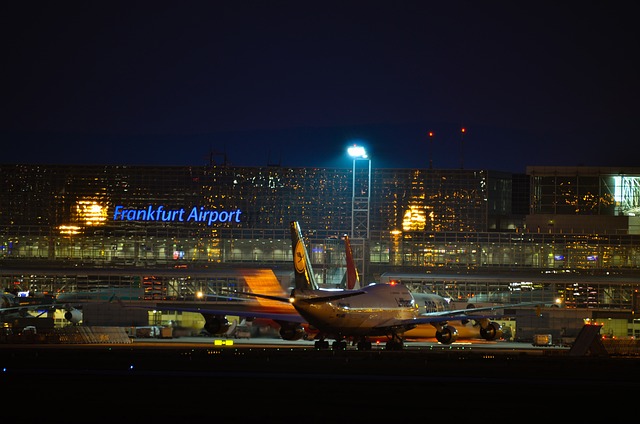
While Germany is indeed seen as an economic powerhouse with engineering excellence, much of its power comes from the ability to imagine and ideate strongly and to make things. This runs through all fields of human endeavour from science and technology to literature, art and music. A well-balanced brand image is what Lufthansa needs to create both for itself as well as for Germany. You can read my thoughts on the new brand strategy and communication ideas for Lufthansa by clicking the link below.
Helping Lufthansa Build a Distinctive Image
Of course, one can argue if the country of origin matters for an airline to be successful in today’s highly globalized and interconnected world. Is it absolutely essential, in other words? After all, all airlines are international nowadays and fly to as many destinations.
There is no hard and fast rule, I think. However, what a country of origin does is provide the airline with a set of distinctive values to steep itself in. Consider it an anchoring influence in an otherwise rudderless airline space. I think the second big advantage is that it helps the airline and the country focus sharply on attracting more and better visitors of a particular kind.
Only flag-carrier airlines have the width and depth to be able to take on such an onerous responsibility. And if your airline is one, consider this a default strategy, before embarking on any other.

 Peripatetic Perch