


We think of airlines as transportation, and also in the context of tourism, but rarely as providers of international connectivity, as vital as telecommunications and the internet. And even more rarely do we think of them as performing an important economic function, not even in today’s globalized and highly connected world. They are critical not merely for leisure travel but for business purposes as well, connecting people across the world as well as transporting cargo.
How important airlines are, became most apparent during the Covid-19 pandemic, when they mostly disappeared from the skies and from our lives. Well, even in those terrible years, airlines continued to perform important functions such as transporting stranded tourists and passengers back home, as well as supplying critical PPE gear, equipment and medical supplies including vaccines around the world. But even before the pandemic, air travel had soared to unprecedented levels, thanks to globalization and more international travel. According to IATA statistics, the international airline industry grew to US $838 billion in 2019. In terms of passengers flown, it had expanded from 1.02 billion in 1990 to 4.46 billion in 2019 according to World Bank. This is due to explosive growth in both international leisure travel as well as business travel.
We have all seen the surge in international and domestic air travel around the world since Covid-related lockdowns were relaxed in 2022. Not only are international airlines flying full flights, they are reporting better earnings than ever before, despite several strikes by both airport and airline staff, as well as acute staff shortages felt in the early days of surging pent-up demand for travel. I searched online for market shares of international airlines, but they don’t seem to be available. Not even by region or continent. I wonder why IATA wouldn’t track and provide market shares of airlines by region, as an industry body.
Besides the vitally important international connectivity airlines provide, they also perform an important function in creating and enhancing the brand image of a country. This is particularly true of flag-carrier airlines, even when they are in the private sector. It is the first point of contact with a foreign country, when one makes an airline reservation, and the last port of call when one lands in that country. A flag-carrier airline is one of the many ambassadors of a country, helping to increase and improve connections with other lands and cultures.
In the advertising and brand communications industry, we were always taught that airlines are meant to sell the country of origin as a destination to the world. And I am sure many of us recall advertising from great airline brands that did just that years ago. I, for one, particularly remember advertising of two international airlines that in very subtle and distinct ways spoke of not just themselves, but the countries and aviation hubs they flew from. I remember the vivid KLM-blue skies print adverts with nothing but a tiny jet flying overhead with a vapour trail, and headlines that spoke of the airline’s features. The smooth, clear blue skies spoke of the smoothness of KLM flights and connections from Amsterdam. I also recall seeing Lufthansa print adverts featuring scenes at airports with authentic passenger statements that spoke of the airline’s efficiency and punctuality.
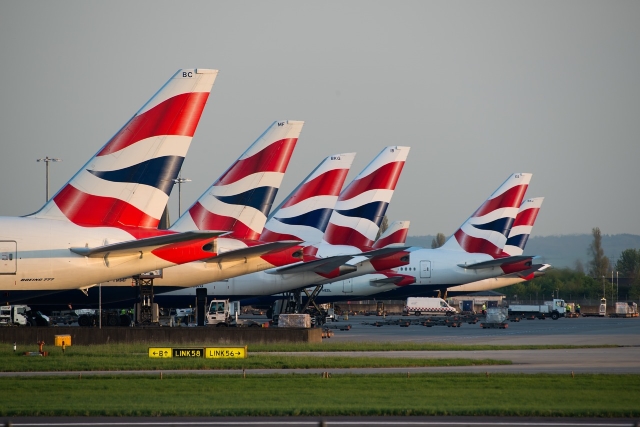
But most of all, and perhaps because I also had an opportunity to work on the brand briefly at the Delhi office of Ogilvy in the late 1980s and early 1990s, I remember British Airways adverts. They always sold Britain and its attractions brilliantly, and yet never sounded like tourism adverts. What’s more, British Airways managed to straddle both leisure as well as business travel and achieved a fine balance of the two. I don’t know of any other airline that did such a marvellous job of branding its business class in those early years, and investing in communication specially for it. Club World, BA’s business class became the preferred business class with service and strapline that both promised “a mark of respect for the business traveller”.
When you consider that Britain was always a popular destination, British Airways didn’t have to do much to sell it. But what the airline did, was to recognize that for travellers from most parts of the world, Britain and London in particular, were gateways to the US, a huge market for international travel. And from the US again, London would be the gateway to Europe and elsewhere. British Airways capitalized on their advantageous location, and advertised their truly international credentials. In just over a decade, the airline went from being privatised to becoming the world’s favourite airline. Their “Smile” TV advert by Saatchi & Saatchi sealed the world’s favourite connector positioning for British Airways.
What next for an airline that was the world’s favourite once and is still the flag-carrier of Britain? It doesn’t need to do too much selling of Britain, or does it? The airline industry has seen plenty of consolidation globally since the turn of the century, and British Airways too has evolved and grown into an airline group, IAG, which owns BA, Iberia, Aer Lingus and Vueling. In the meantime, Britain has also left the EU, though I am glad to see British Airways maintain strong connections with the continent.
In the past decade and more, there has been another development that has affected almost all international airlines equally. The rapid growth of middle-eastern airlines such as Qatar Airways, Emirates and Etihad that have turned Dubai into a new and bustling aviation hub in Asia and have come to be known as the ‘superconnectors’ in today’s world of international air travel, as The Economist wrote in 2015. This is because they connect countries in the east and west and offer world-class service. They have not only managed to garner larger shares of the international air travel market in recent years, but also larger shares of mind with global travellers, by acquiring football teams, stadia and the like.
Looking at some of the recent advertising campaigns for British Airways over the past decade and more, I am inclined to think that British Airways seems to be losing its strategic focus and direction. I am not sure if serious competition from these and other Asian airlines such as Singapore Airlines has forced BA to deviate from its global brand positioning and image to a more traveller-focused personalized service kind of brand message.
That would be a huge mistake in my opinion. British Airways ought to focus on what makes this airline distinctive and build on its strengths. The airline ought to delve deep into its reservoir of a great aviation heritage and experienced personnel and continue to do what it does best. And that, to my mind, is to help people explore the world and connect with each other the way only BA can. I had put down my thoughts and ideas on British Airways brand strategy and communication ideas more than a decade ago at my aged parents’ place in Goa, but lost them to termites. I have now recreated them from memory, and also considered more recent developments in the airline industry. You can read these by clicking on the link below.
Making British Airways Fly Higher
I think British Airways can also partner with the Confederation of British Industry while pursuing this brand strategy, in order to build the image of Britain as an attractive investment destination. The airline ought to also use direct marketing in order to build and strengthen relationships with customers through the frequent flier programme as well as PR, as I have mentioned in the strategy and ideas document. What I have forgotten to add in my thoughts on the frequent flier programme is that the reward points ought not to be based on the ticket price or the class of travel, but on miles flown. These thoughts on a comprehensive brand communication campaign, in my opinion, would form the next big stage of British Airways’ strategy forward.
When we think of airlines as connectors of the world, there is none bigger or better than British Airways.
The featured image at the start of this post is of Heathrow Airport, London, Terminal 5, by Thomas Nugent on Wikimedia Commons CC by SA 2.0.

 Peripatetic Perch