


This is the second assignment I set myself to make amends for not working on enough American brands, after the blog post I shared with my thoughts on Gap Clothing’s brand strategy and ideas last month. It is also timed with America’s 250th Independence Day and year in 2026. As it happens, 2026 is also Tapestry Inc’s 85th year, so here we go from America’s West Coast to the East Coast. A good time for the company to start on a new journey, strengthening its brands as well as building and contributing to America’s luxury industry.
I had written a blog post quite some time ago exploring why America is so awful at making luxury goods, and the main reasons I arrived at are:
- Lack of an aristocratic culture and period in the country’s history
- Mass production of goods which is the exact opposite of what luxury needs
- The lack or disappearance of handcrafted goods, and the skills needed, over time.
I had said at the time that perhaps old wealth and America’s old businesses can take the place of an aristocratic class in American society. And I mean this both in terms of providing the clientele for luxury consumption as well as acting as arbiters of culture, good taste and luxury. America has all the wealth to consume luxury and it indeed does, though not enough on American luxury brands because there are so few.
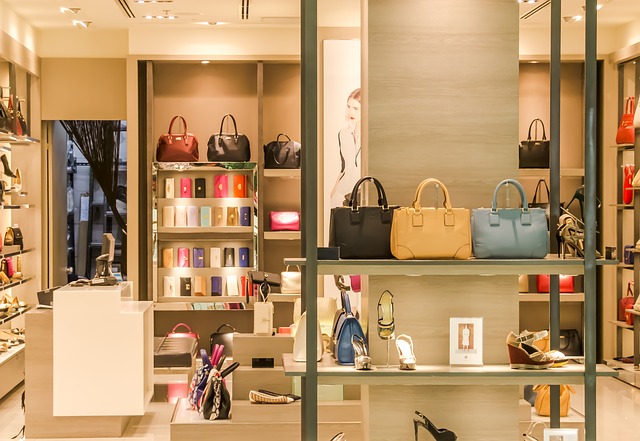
In this sense, America can work towards catching up with its British and European peers in terms of improving its presence in the luxury industry and its appreciation of it. Tapestry, the company behind Coach handbags, is best placed to lead this journey as it commemorates its 85th year and America’s 250th. The reason I say this, is because luxury consumption usually begins with articles that don’t require a large outlay. Think bags and wallets, accessories such as scarves, ties, belts, and the like. If you look at the luxury leather goods industry as well, you’ll find that leather bags and wallets are the products with the highest sales. Tapestry and Coach can begin to correct some of the problems with American luxury and actually start building the industry in all earnestness.
There is plenty of big spending on discretionary goods in America by the affluent and the wealthy, and a lot of it out of home and on luxury goods. They’re just not American luxury brands, and that’s where America can do something about it. Even American luxury car brands need to get their act together, as America is a huge market for German, Italian and British luxury car brands. So do American luxury hotels need to improve and create their own brand of luxury, many of which are now also owned by the Chinese or Indians, like Taj Hotels, for example. In my thoughts and ideas for The Pierre, New York which is part of Taj Hotels and the Tata Group from India, I had recommended keeping the hotel’s New York character intact, while adding French and European charm and luxury to the brand.
Returning to Tapestry and Coach which are from New York city, they need to establish their New York credentials while appealing to the international luxury bags buyer. As I say in the strategy and ideas document, I have never visited America, nor used Coach handbags; I buy and use Hidesign handbags here in India and they are rather good. Tapestry has two iconic brands of luxury leather bags, Coach and Kate Spade. I am confining myself to Tapestry, the corporate brand, and Coach, the original bagmaker that later became Tapestry, as I wished to again explore the connections between these two brands first. With a name like Tapestry that suggests the coming together of many strands, colours and textures to create a single whole, I thought that the company could appeal to America’s sense of oneness while embracing diversity. At a time when America is terribly divided and polarised, it will be quite a challenge to bring people together. However, there’s no one better placed than Tapestry to position itself as a luxury leather goods maker that brings together myriad talents and sensibilities in creating its luxury range of bags and accessories. And to communicate this message in America’s 250th year and Tapestry’s own 85th year would be especially appropriate.
I have explored understanding Tapestry’s origins as Coach from its beginnings in 1941 with whatever information is on the company’s website though I have said that there is plenty more that Tapestry needs to search for in its archives. And from what the company seems to be saying about its corporate values, it appears that Tapestry is dedicated to hiring talented people from all over, and celebrates diversity as well, in the making of its Coach handbags and in managing the brands. You may read all about the thoughts and brand strategy that I recommend for Tapestry Inc as well as the advertising campaign for the company in the brand strategy and ideas document below.
In addition to the TV advert for Tapestry which is in the document above, I have also created layouts for the print campaign which you can read below. I don’t know why, but Tapestry seems to have chosen yellow as their corporate colour and the print campaign uses this to emphasise the Tapestry brand. The print adverts also carry a special 85 years logo that I have created around their website icon, and I recommend that all their communication during 2026 carry this, including their official correspondence on company stationery.
I have also suggested a few ideas on how Tapestry can advance its contribution to the American luxury industry, and help build and strengthen it in the years ahead. One of them is sponsoring the study of luxury leather goods design through a new course at New York’s Parsons School of Design as well as scholarships to the course. I think that America could do with some of its premier business schools also offering an elective in luxury management as part of the marketing MBA course. INSEAD Business School in Paris is known to offer the highly regarded luxury brand management elective as part of its MBA and I happened to recently read that LVMH has begun collaborating with INSEAD since 2024. Luxury goods and services don’t follow the usual economic logic and theory and there aren’t any economies of scale to be had here. I think this merits study and special understanding and might be useful in building America’s luxury industry.
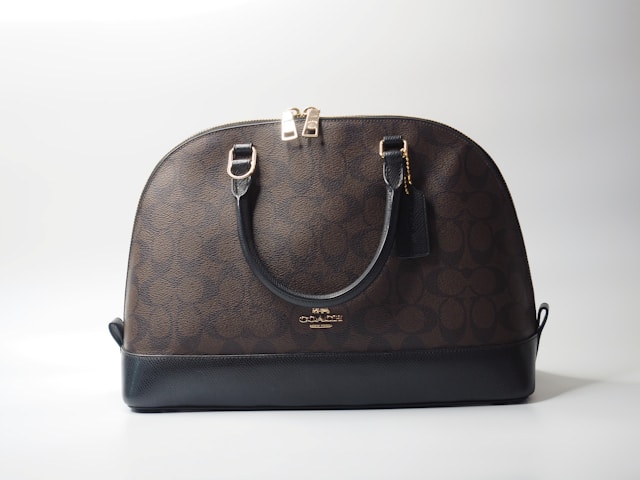
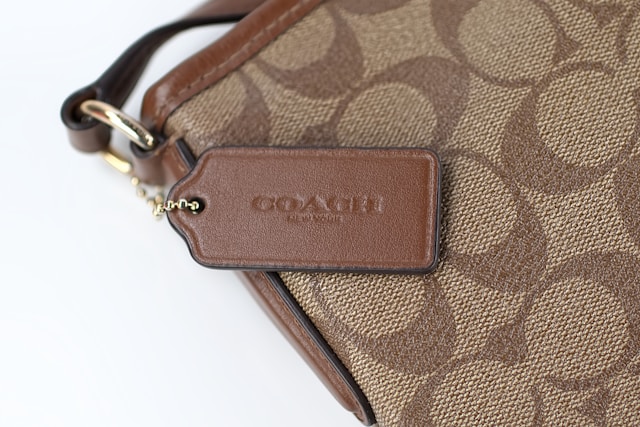
Coach handbags ought to define leather luxury in America; Images: Henry Kobutra (left) and Barry on Unsplash
Next, we discuss the Coach brand of luxury leather handbags. I notice that the company pivoted in 2022 to focusing on Gen Z as their main customer and this has led to a certain brand advertising as well as product range, especially the Tabby bag! Also, the company’s focus on charms is meant to attract the young customer. I think that the strategy to pursue Gen Z is a wrong one, even if higher sales are indicating the contrary now. I explain why in the main strategy and ideas document above, and would urge Tapestry to focus on the core luxury customer who is likely to be older, affluent and even wealthy, and a successful executive or professional who also travels a lot internationally.
I share my thoughts on the brand strategy that Coach ought to follow in order to compete better with the likes of Hermès, Louis Vuitton and Mulberry, the last of which has products priced closer to Coach’s. I have also shared ideas on how Coach can and should expand its product range to cover the world of travel and everything to do with out-of-home gear. This makes even more sense for a brand called Coach which has a horse-drawn carriage as its symbol. I have also put down my ideas for a new Coach advertising campaign that attempts to build a deeper connection between Coach customers and their bags. These are all in the main brand strategy and ideas document for Tapestry and Coach shared above.
Although I am not a designer or art director, I have created a print campaign for Coach along the lines of the new recommended brand strategy that can also be adapted into single page print adverts, as well as a digital campaign which you can view and read below.
Coach digital campaign:



This campaign aims to differentiate Coach from competition as well as to contemporize the brand in an intelligent and witty New York manner. I haven’t given any thought to Kate Spade, a brand of luxury handbags that Coach acquired in 2017, as I wished to think about Tapestry and Coach first as the company Tapestry was formed from Coach. My initial observations regarding Kate Spade from seeing its website are that it is very much a designer brand of luxury leather bags with a youthful play on colour and a certain quirkiness that can certainly become an important differentiator for the Kate Spade brand. One will still need to think about how to position Kate Spade and integrate it with Tapestry.
Finally, Coach and Tapestry need to think harder about creating certain guidelines that help define what makes a Coach handbag, Coach. This will help them focus on differentiation in an uncompromising manner, and at the same time help them innovate in product design that can lead to patents and become intellectual property for the brand and the company. Although I am not sure what these unique features of a Coach handbag can be, I have created a sample advert for how to communicate this to customers.
Happy 250th, America, and Happy 85th as well to Tapestry and Coach! May America build its luxury industry in its own way.
The featured image at the start of this post is by Alen Kajtezovic on Unsplash
The stock images used in the campaigns for Tapestry and Coach are from Pexels and Unsplash and the logos of Tapestry and Coach are from Wikimedia Commons and I am thankful to all of them.

Post script:
If you find that the digital advert for Coach in the centre isn’t loading properly as a gif, it is because of unprofessional PR agency idiot bosses meddling with WordPress. They have no business meddling with my work or my life, but refuse to leave me alone!

