


For the fourth-largest economy in the world, India has an airlines industry that is a sad commentary on our transportation sector. With plenty of gleaming airports across the country, we have only two fully functional airlines (or should I say, dysfunctional airlines) in Air India and Indigo operating domestically.
Our airlines industry opened up to the private sector after economic liberalisation in 1991 with what was being hailed as Open Skies Policy. Today, it is anything, but. From plenty of new private airlines starting domestic operations in the early and mid-1990s, our airlines industry soon had only one major private sector airline in Jet Airways for many years. Jet Airways and Indian Airlines were the only two airlines transporting people across the country, with Jet Airways taking most of the chunk of corporate travel away from Indian Airlines, as it provided better service. More private airlines joined the industry only to lead to consolidation and many dropping out of the skies in this century.
Over the past two decades, India has invested millions of rupees in overhauling its airport infrastructure, which it badly needed. This too used to be under government control, but was opened up for the private sector to modernise and expand. I tried searching for exactly how much our cumulative investment in airport infrastructure has been since the start of this millennium, but could not find it anywhere. But whatever it is, it is surely substantial and has mostly been the work of a single industrial group, the Adani Group, to whom almost all the airport contracts have gone.
The sorry state of our airlines industry needs to be addressed quickly and through a set of reforms and investment policies, both by the Indian government as well as the airlines companies themselves. There is no denying that one of the major bottlenecks in our airlines industry is the lack of foreign investment and more importantly, foreign expertise, since the airlines industry requires highly advanced and specialised know-how and personnel. With the exception of Singapore Airlines that first invested 49% in Air Vistara – now reduced to 25% in the merged Air India company – India does not have the necessary levels of foreign investment and expertise in strengthening its airline industry. Therefore, the government needs to reconsider its cap on foreign investment by international airlines and also needs to open up related areas – what I might call ancillaries – to good international companies setting up operations in India and transferring best practices as well as technology where needed.
Airlines are usually image builders for countries and also function as connectors, both for domestic travel as well as international travel, as I have been writing on my blog. I have shared my thoughts and ideas on British Airways and Lufthansa as well as Air Vistara on my blog long ago and you can see how airlines fulfill these objectives by reading those blog posts. Separately, when writing about the need to build Brand India, I have also been saying that airlines are unfortunately unable to step up to the task in our country as they are in such a sad state. Quite unlike our luxury hotels which perform an exemplary task in building the image of Brand India. It is time, our airlines industry is freed up from policy and investment shackles and allowed to truly take to the skies, as India’s own growing travel demand requires this, and we need to connect better internationally as well. Below, I have created a schematic for the comparative framework of competition that the airlines industry in India is up against. The slide for India’s airlines industry is what I recommend it should be, not what it currently is. And I explain this in the strategy document shared later in this piece.
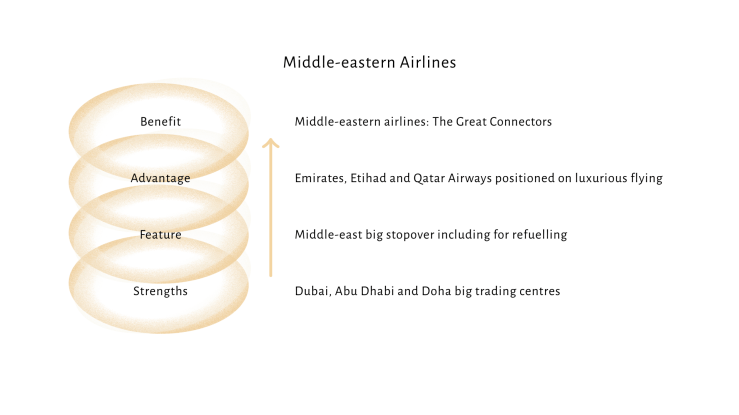
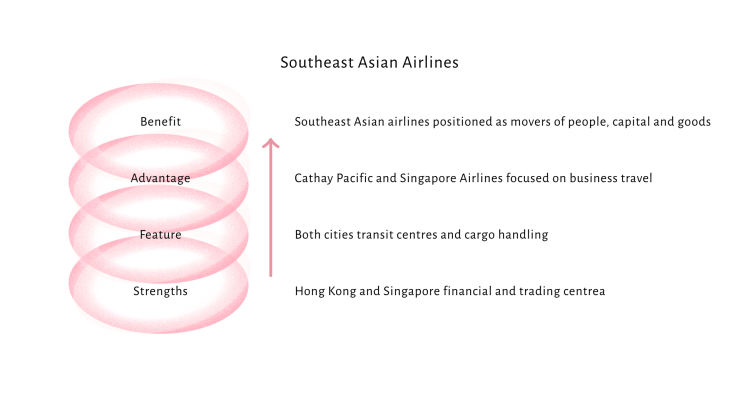
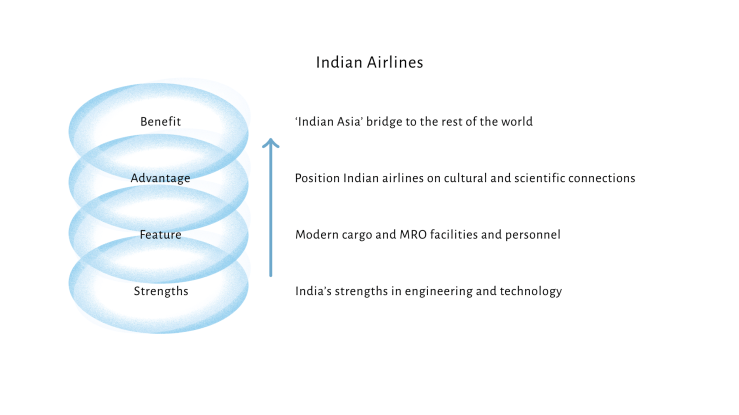
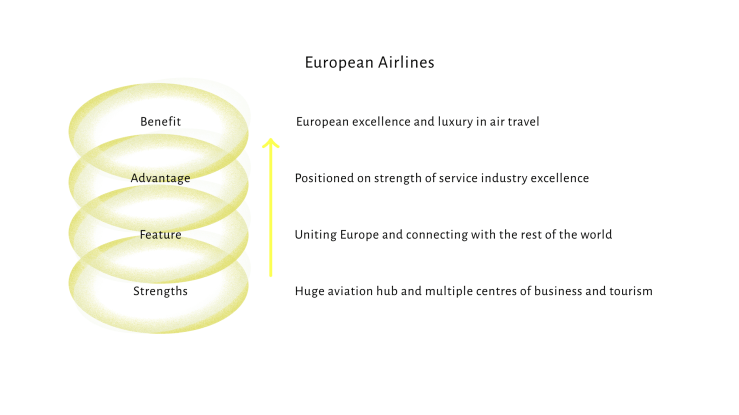
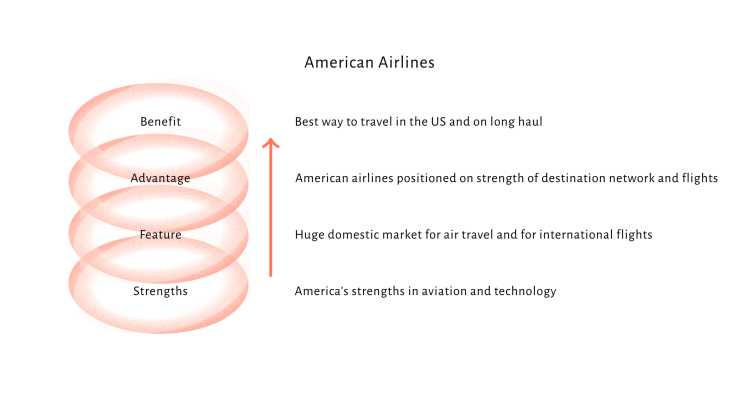
The problem is not merely one of a duopoly, comprising Air India and Indigo, in the airlines industry in India. It is equally one of building capacity and expertise in the airlines business which is lacking. And allowing the domestic air travel market to mature on its own, with higher disposable incomes and increased propensity to travel. Which is why I do not entirely agree with the Indian government pushing airlines to connect every small town and city in India through regional air connectivity, which is what UDAAN was meant to do. This article in The Economic Times even talks of a new plan to revive several small yet sleeping airports by increasing subsidies to airlines to fly there. This is wasteful expenditure by the government, when it ought to do more to promote super-fast rail travel in India and market this better. I have also been reading about several new airlines starting operations in India, including ones that I had never heard of before. This too is dangerous, given our airline safety record in recent months and years.
I have attempted putting down my thoughts on how the Indian airlines industry can grow in future, and become more competitive, by identifying the problem areas, how they can be overcome, analysing the competitive framework and providing the strategic direction forward along with an overarching vision for the industry. This vision and strategy framework ought to provide ample room for individual airlines companies to devise their own differentiated strategies and build their own airline brands. You may read my thoughts on India’s airline industry strategy below.
One of the ways to free up our airline industry is to also expand it beyond passenger travel, into cargo and MRO and I have provided a rationale for why and how it plays to India’s strengths. Besides, it provides airlines additional revenue streams until our domestic air travel market can generate higher revenues, through higher volume of air traffic and higher fares, which might take another decade or two, provided, of course, that we undertake policy reforms now.
We have made a beginning with investment from Singapore Airlines, but even this is yet to translate into better service standards and best practices being absorbed into Air India. Instead, we have had a terrible Air India crash – on which the final BlackBox report is still to be made public – which I suspect is engineered by unprofessional PR agency idiot bosses in collusion with their cronies, like they have engineered so many other horrendous events in India and internationally. And we had a terrible fiasco with Indigo pilots more recently. The latest of these disasters is the plane crash in Maharashtra involving a politician and the crew. These are nothing but manufactured trouble which ought not to be tolerated. I am surprised the media hasn’t bothered to follow up on the Air India crash and neither have the regulators done their job.
Time for India’s airlines to take flight, free and unfettered, rather than be the proverbial albatross.

 Peripatetic Perch