


The year is ending with Trump doing a whistle-stop tour of several Asian countries – Southeast Asian and East Asian this time – signing several trade agreements along the way. Of course, the highlight at the ASEAN conference in Malaysia was the peace agreement between Cambodia and Thailand, one of Trump’s many showpiece peace treaties since taking over as US President in 2025 that he hopes will win him the Nobel Peace Prize.
The media hardly focused on this, as they kept wondering how long the peace will last, given that this conflict between the two countries goes back a long way and erupts every now and then. However, they did report that Trump was busy updating his bilateral tariff and trade agreements with several countries in the region. Trump’s first stop was in Japan actually where his meeting with the first woman prime minister, Sanae Takaichi, went famously according to media reports with Trump lavishing praise and flattery on her of the kind that he himself expects from world leaders.
In Japan, the updating of the bilateral trade deal involved the US$ 550 billion investment that Japan has to make in the US. These would have to be made by specific time-periods, else tariffs on Japan go up. What’s more, the profits in these projects will now be shared 50% between the two countries until the allocated amount is reached, with 90% of profits going to the US thereafter. This is supposed to be a concession, as the deal earlier envisaged 90% profits going to the US from the start! Apparently, this concession was made while expanding trade in critical minerals, semiconductors, automobiles, energy and pharmaceuticals between Japan and the US. This article from CSIS sheds light on the future of US-Japan trade.
Trump is clearly suffering from mineral mania of some sort, as he has inked similar agreements with countries throughout the region, all in order to hedge against China and its dominance of the rare earths and critical minerals industry.
The US has updated similar kinds of trade agreements with South Korea, Malaysia and Thailand as part of the ASEAN and APEC summits that took place recently. With South Korea, a similar agreement regarding the US$ 350 billion investment that South Korea has to make now breaks this up into two parts – US$ 200 billion in investment projects and US$ 150 billion in joint collaboration in shipbuilding.
Realising that ASEAN countries are now China’s largest trading partner, Trump has built in conditions into the bilateral trade agreements that prohibit similar trade agreements being signed with a third country, without naming China. I wouldn’t have realised this myself, if I hadn’t visited a link in articles that led me to the agreement details on the White House website! This article on Carnegie Endowment for International Peace’s website about the bilateral trade deal with ASEAN says it might be the least-worst option. It does mention the third country restriction only under rules of origin, but the trade agreement actually prevents the trading partner country from signing similar trade agreements with a third country. Worse, the trade agreement also imposes US’s trade tariff/quota/or fee charge on any third country, on the trading partner country as well, and expects it to follow suit.
All this smacks of unilateralism even in signing bilateral trade agreements, unfairness and bullying by a larger economy to the extent of controlling other countries’ trade policies. The US is taking advantage of these small Asian economies that are very export-dependent and this is the one common theme emerging from Trump’s visit of Asia. True to his form, Trump is once again applying maximum pressure on small countries, while giving larger economies greater leeway in trade negotiations. China, for example, has gained a few more concessions from the US in being able to reduce its overall tariff rate to 37%, and has agreed to buy more agricultural produce from America which is what Trump cares about most. All this, because America and the world is so reliant on China’s critical minerals supply, that Trump cannot afford to annoy Xi.
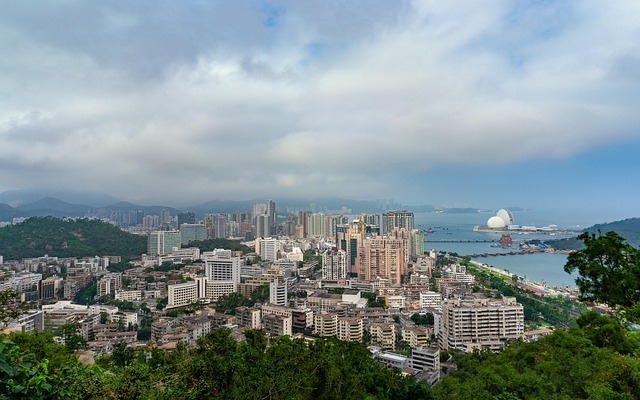
I am not sure how this will pan out in the months to come, but if the US is expecting smaller Asian economies that all trade a lot with each other and with China to align with US and give up their interests in the region, it is mistaken. This is clearly a sign of the US vying for greater influence in the Southeast Asian and APAC region, but I think it is likely to misfire over the medium and long term. The US has a large goods trade deficit with Asia, one that has been growing steadily from US$536.5 billion in 2014 to US$758.6 billion in 2024, according to the US Census Bureau. As far as US trade with ASEAN is concerned, the US goods trade deficit in 2024 with the bloc was US$228.5 billion, up 12.3% over 2023 according to USTR.
In comparison, ASEAN trade with China has also grown in the same period. According to Statista, China had a goods trade surplus with ASEAN of US$ 190 billion, smaller than its surplus with the US of US$361 billion in Q1 of 2025. And this surplus with ASEAN might be growing due to Chinese goods being dumped on them, as a result of US tariffs on China. The impact of US tariffs on Germany, for example, has meant that China has once again become Germany’s largest trading partner, but this time Germany has a trade deficit of €87 billion with China.
Total Chinese goods trade with ASEAN in 2024 was worth around US$1 trillion, and has already reached US$684.7 billion in the first 8 months of this year. I have written before, this region is one of the fastest growing regions in the world economically, and also the most stable and peaceful until now. Expecting countries here to pick sides between the world’s superpowers is an unrealistic ambition. Besides, as this podcast from CSIS points out, the Trump-Xi talks only dealt with the short-term pressing issues on trade, and didn’t actually deal with any of the long-term structural issues between US and China, that the experts believe, are intractable. So, I think we should expect this jousting between the two superpowers to go on for a long time.
One way to balance the trade frictions and the keep the peace, is for other countries to start trading more with Southeast Asia and East Asia. I have argued for India to increase its engagement with economies in the region, as well as with China. And I think other large trading economies such as Europe and UK ought to invest and trade more with this entire region as well, given its importance in technology and consumer electronics supply chains and production. All this will act as a buffer and help to reduce the polarization between US and China in the region and indeed, across the world.
Strangely, for all the relative peace and stability that this part of Asia enjoys, I was surprised to find that many discussions at the ASEAN Summit 2025 in Malaysia centred around defence! We surely don’t want the theatre of competition in the region to turn into a theatre of war, do we? Hopefully, Guanyin, the Nanshan goddess of mercy on Hainan Island (pictured in the featured image of this post) will watch over the people of China and of the region south of it.
The featured image of Guanyin, the Nanshan goddess of mercy in Hainan, China, is from Pixabay
 Peripatetic Perch