

A few days after Trump’s 50% reciprocal tariffs on India – including penalty for buying Russian oil and defence equipment – went into effect, the country announced its GDP numbers for Q1 of FY26, and did they surprise us all. It was almost like a rejoinder to Trump calling India “a dead economy”. But trade tensions and sparring aside, I think India ought not to fret too much over the tariff war. The Indian media has been so full of discussions around the 50% tariffs imposed by the US on us, that I think they might be spreading panic unnecessarily.
I have been writing for some months now that India ought to diversify its exports to several other markets besides the US, in order to minimize the damage from the punitive tariffs. Of course, this can’t be achieved in a day, so India needs to plan better and depending on each product category/industry, our exporters need to find equally lucrative and promising markets. The government needs to help in this area as well as help the MSME exporters particularly with financial support so they don’t axe jobs even as they scout for new business. Already there is a clamour for financial assistance from the government to help them tide over this difficult period, and many say it might require the kind of help offered during the Covid-19 pandemic. I think this might be a little too extreme, even though I think that the government must help our exporters find new markets and offer some financial assistance in the meanwhile so that jobs are protected. I recall that in the aftermath of the 2008 Financial Crisis, the news was full of millions of jobs in small and medium exporting enterprises being destroyed, because global trade had almost stalled and export markets had dried up for several Indian firms. The 2008 Financial Crisis as well as the Covid-19 pandemic were unexpected events, while this tariff war was very much along expected lines, even though the tariff rate is much too high.
As the Indian government continues to hold talks with the US on these tariffs, companies ought to waste no time in planning for the worst-case scenario as I have been writing and should start diversifying their exports. In any case, with tariffs on India at a much higher level than on our Asian peers – many of whom export similar kinds of goods to the US – our exports are likely to lose their competitiveness where the US is concerned.
My piece is going to focus on the non-export part of the Indian economy, because this is where we ought to focus much more. Thankfully, our economy is not an export-oriented one and we have a large domestic market to cater to. Besides, this is an opportune time to introduce important economic reforms that the Indian economy needs in order to grow at anything close to 8%. We almost hit that target the last quarter with GDP growth of 7.8% that beat all estimates. Of course, it’s not merely the headline GDP number, but the constituents of this growth and how much of the economic growth is going to lower income and poorer sections of society. From the GDP numbers, it appears that all sectors of the economy performed well, although the year on year growth in electricity, gas, water supply and other utilities for Q1 FY26 at 0.5% is strange. The growth in private consumption and gross fixed capital formation as well as their respective shares of GDP are healthy. As I have written before, I think it’s high time the Indian government started sharing data on the break-up of fixed asset formation in terms of government capex, private investment as well as real estate investment so we know the exact extent of private business investment in on-the-ground projects. Overall, though, we must realise that the Indian economy is now growing at around the same quarterly rate as in 2018-19, as the chart below from MOSPI’s (Ministry of Statistics and Programme Implementation, Government of India) website indicates.
The macroeconomic fundamentals of the Indian economy are quite sound at the moment. Our fiscal deficit target of 4.5% should be maintained and our current account deficit is also in control at 0.9%. However, our total debt levels are quite high at over 90% of GDP, as government borrowing and spending had increased substantially during the pandemic period. This has been accompanied by a rise in private debt as well, especially external corporate debt. What is particularly worrisome is that many NBFCs have taken to borrowing in the international market, as the RBI had imposed restrictions on bank lending to NBFCs. Surely, the RBI is also the one giving NBFCs permission to borrow externally, and therefore they need to watch this carefully. With the falling Indian rupee, many Indian corporates will have a tough time repaying foreign debt.
Inflation coming down faster than earlier estimated is good news, though one needs to be careful about the causes of inflation. So far, it seems to be a moderation in food inflation in India, which tends to be quite volatile. Besides, food inflation is still a danger as climate change and extreme weather events threaten food production and loss of livelihoods not just in India but across the world. And services inflation as well as core inflation still remain stubbornly high.
Therefore, it appears that the external sector of India’s economy is still vulnerable and the government ought to be watchful. Commodity prices rising is always a threat with wars still ongoing, and with a weakening Indian rupee our import bills are likely to be higher, especially when we are trying to boost domestic growth. On the fiscal side too, India needs to try and not breach the target of 4.5% and I agree with this leader article in The Economic Times edit page which says that the Indian government needs to provide carefully targeted financial support to exporters, and not the kind of universal credit guarantees that were provided to all MSMEs during the Covid-19 pandemic. As it is, with income tax breaks and with rationalized GST rates, the government’s tax revenue is likely to be significantly lower than last year.
On the domestic front, India still has the uphill task of providing jobs to millions of people and to hasten the shift to a formal economy from an informal one, where around 90% of the jobs are currently created. And the solution to providing good jobs to the masses is not through exports alone, though this must be one of the routes explored. According to CMIE, all-India unemployment is at 7.2% as of September 8, 2025. I think it is time that state governments work on getting more people out of agriculture – especially landless labourers – and into better paying jobs in the MSME sector where they can also improve their future prospects. As I have written on my blog, state employment exchanges must be tasked with this as their main mandate, and must work on this on a war footing.

This connects with another idea that I have shared often on my blog, of boosting India’s MSME sector and helping it grow and thrive. Many of these MSME companies might be operating in rural or semi-urban areas, and some might even be involved in manufacturing for exports, but they need encouragement, mentoring as well as capital in order to scale up their businesses. I have already shared my thoughts on how industry bodies, India Inc and even business schools in India can help in this regard. I think MSMEs need to be encouraged in all the new and promising industries of the future, from information technology, biotech and engineering services to renewables, clean technology as well as defence. In between the small-scale handicrafts and metalworks kinds of producers and the new-age internet start-ups, India doesn’t seem to be focusing on the high-growth industries of tomorrow where MSMEs have a huge role to play.
Then, India needs to improve private sector investment in creating new production capacity or expanding existing ones, so that they too can create good quality and better paying jobs for Indians. So far, the PLI scheme of the government has been a disappointment except for the consumer electronics industry where it has had some impact. Instead of incentivising production – which sounds like unprofessional PR agency idiot bosses’ idea – why doesn’t the Indian government incentivise innovation through research and development, especially in all the new industries of tomorrow? Why doesn’t it encourage domestic manufacture of critical ingredients such as APIs (active pharmaceutical ingredients) for which India has been totally dependent on China for many years. Why don’t we negotiate with China even as we improve relations with them, for greater market access for Indian companies? And finally, as I have written before, India cannot become part of global supply chains – which are themselves changing and becoming more diversified and widespread – without trading more with east Asian countries.

With prospects of private consumption demand looking reasonably good both in urban and rural India, private investment must pick up momentum. It appears that in the June 2025 quarter, it was once again government expenditure that did the heavy lifting. On the corporate front, companies must accelerate their investment plans and create plenty of good, well-paying jobs in the country. Corporate earnings for the June quarter indicate that revenue growth was more muted, while profits still seemed reasonably good on account of lower input and finance costs. Operating margins for many companies seemed to come under pressure, especially for those in the packaged consumer goods industry. And banks saw weakening margins owing to lower credit demand and interest rate cuts, though many have yet to transmit rate cuts in the form of lower lending rates. This analysis by The Economic Times provides a snapshot of Q1 FY26 earnings in India by industry. A similar analysis by CMIE also shows that revenue growth was muted for most listed companies, while profit growth continues to be in double digits.
Everyone has their hopes pinned on the GST rationalization which was late in coming, and might still miss the festive season this year. It should boost consumer demand without an inflationary impact. You may read my previous blog post on how companies ought to create festive season advertising in India, if you haven’t already. India still needs to tackle bottlenecks which hamper growth in the civil aviation and telecom industries, so that we can unleash the next wave of growth and investment in these areas.
And finally, of course, I cannot end this piece without once again insisting that we invest more in education and healthcare across the country, so that the outcomes of both improve and can be seen in our human development indicators. Merely investing in physical infrastructure is not adequate; good social infrastructure is a must in order for India to have a healthy, well-educated and well-trained workforce. One that is future-ready in every sense of the term.
In the ultimate analysis, therefore, there is nothing for the Indian economy to be tarrified about. But plenty for us to do, staying focused on our domestic economy and building its capacity.
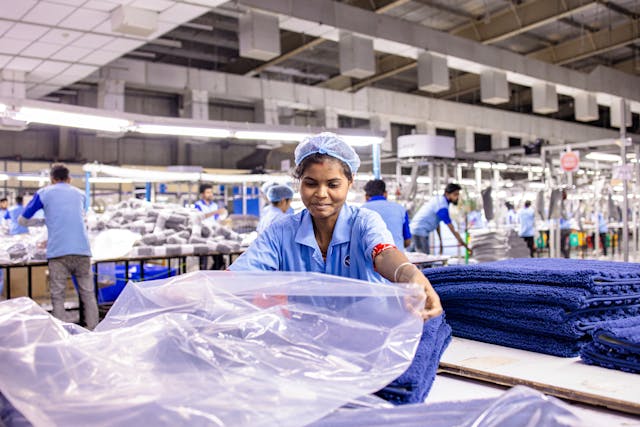
The featured image at the start of this post is by Equal Stock on Pexels

 Peripatetic Perch