


It’s been a long time coming. From Trump’s first term in office as US President, when he waged a tariff and trade war targeted primarily at China, the world has been in a tread-and-trade-carefully mode. Now that he is back for his second term, he is doubling down on his unfinished agenda, of taking the tariff war to the entire world. From April 2, 2025, dubbed Liberation Day, right up till August 1, 2025, a deadline Trump himself set for the tariffs to be announced, the global economy has been on tenterhooks. Countries, businesses and markets have been kept guessing, second-guessing and on edge.
Now that the tariff announcements have been made, it seems quite clear that these policies are not just economic, they are geopolitical in nature. The tariffs of 50% that have been announced on India along with a ‘penalty’ for buying oil and defence equipment from Russia is a clear sign that this is not about the US trade deficit alone with India. On the other hand, this time the Trump regime has decided to go a little soft on China, after China retaliated with a 125% tariff on US imports in April 2025. They have cobbled together a trade pact of 0% on US exports for 30% on Chinese exports to the US lasting 90 days, which has just been extended for another 90 days according to news reports. The reason the US is going softer on China is not only because of the retaliation, but because of a ban that China placed on exports of rare earth minerals that threatened to adversely impact consumer electronics and EV manufacture around the world. The US is keen to keep the dialogue going as long as the supply of rare earth minerals and other essential goods to the US keep flowing.
With the other really large trading partner of the US and a long-standing ally, the European Union, the US has adopted a much tougher stand in the negotiations. And like I say, these negotiations are not just about trade deficits and tariff rates; the US through the past many months of talks with the EU, has managed to ensure billions of dollars of EU investment in the US, besides slapping a 15% tariff on all EU goods imported into the US, and billions of dollars’ worth in arms and defence sales as well as energy to EU countries. Not just this, at a recent G-7 summit, the US has managed to keep American multinational companies exempt from the new minimum global corporate tax that over 140 countries are said to have agreed to, as I wrote on my blog. The EU, like Japan, might be seeing this 15% tariff as a better outcome than what might have been, but this would be missing the wood for the trees. Japan too has had to commit billions of dollars of investment into the US, as has South Korea.
The highest tariffs are on poorer and developing nations around the world, and I wonder how much trade many of them even do with the US, to attract such punitive tariffs! I thought the EU ought to have negotiated much harder and even tried retaliation in some cases. In fact, given their intention to improve their competitiveness and their economic future, as per the Mario Draghi plan, the EU could have even negotiated the deal so as to ensure that large investments from US tech companies flow into the EU, as the latter’s digital technology capabilities are not quite up to the mark. In fact, during the first few months of chaos and confusion with Trump’s announcements, the EU should have announced measures to attract not just billions of dollars’ worth of investments, but the finest minds in scientific research and in technology away from the US. It is still not too late for this to take place, and is better than bartering away their much-sought ‘strategic autonomy’.
So, let us not make any mistake about it. Trump tariffs are about geopolitics as much as they are about making America great again. I had called it a bait in one of my previous blog posts when I said that the world should not fall for it, and I maintain that view. It is time to be far more strategic and long-term than merely reacting to the short-term and to every social media post of Trump’s. Rather than make this article about the tariffs themselves, I thought I’d think and write about what the tariffs portend about the new world economic order that is being shaped by Trump and his policies. And will this new world economic order endure or will it be short-lived?
From Trump’s first term it has been quite obvious that he is trying to shape American politics in a certain direction and so is he trying the same with the world. There are clear attempts to fundamentally alter the way the world engages with America, as Trump sees fit. This time too, it is determined by MAGA and his voter base in the US. And this time, it is not directed only at China but the entire world, including old allies such as the UK and EU. He is setting new terms and conditions for the rest of the world if they wish to do business with the US. And it goes beyond trade and tariff policies; it is about geopolitical realignments, about foreign policy and about defence and security as well. The fact that Trump invokes national security at the drop of a hat makes a mockery of it, but he is using all his executive powers to push his tariff and trade policies through.
There are several strands emerging about what the post Trump-tariff world economic order might look like.
A resurgent and booming energy producing and consuming world, determined by America.
From Trump’s first term it has been obvious that he is all for the old fossil-fuel industries and cares little about decarbonization or climate change. The fact that the US has become hugely self-sufficient in oil and gas over the past many decades thanks to domestic shale oil and gas, is the reason for this new-found confidence in America’s energy industry. Now that the EU has had to wean itself away from Russian gas, America has stepped in to fill in the supply gap and will use it to negotiate harder on other unrelated issues as well with the EU and other countries. The US will justify its decisions on energy production and consumption, as well as export, saying that the new AI-fueled world needs it. True, as this might be, it points to a world where US energy will determine trade and foreign policy beyond US shores.

A world bristling with US defence technology and equipment
America’s gargantuan military-industrial complex and its defence technology will dominate strategic alliances and partnerships with countries around the world. In a world where much of it will be powered by AI, we can be sure that America will try and maintain leadership in this area, albeit with little to no regulation.
Much as Trump’s focus is on MAGA, the fact is that his country still needs business and being a businessman, his focus will be on areas where America has definite strengths and will use them to leverage more business and export earnings for the country. The fact that he has decided to penalize India for buying Russian oil and gas as well as defence equipment is just one example of how the American administration will seek deals for American defence companies now and in the future.
We can also be sure that in this relentless arming of the world, America will rely on its one and only ally, Israel. Israel already produces much of the world’s defence and security technology and software, with huge investments from the US, as anyone who has read The Start Up Nation – a book I have reviewed on my blog – will know.

A re-globalised world economic order shaped by America’s unilateral trade policies
Trump’s trade and tariff policies are unilateral as everyone knows and most of them rely on special executive powers that he has. They don’t have and don’t require congressional approval, and this makes his use of executive powers excessive and autocratic. The reasons underlying the tariffs are not always economic, for then they would be negotiated differently within a larger trade and investment context, and not all of it going one-way. Right now, Trump has managed to secure tariff deals with some countries such as EU, Japan, South Korea and perhaps Taiwan, based on huge investment commitments that he’s managed to extract from them.
From the first term it appeared that Trump was stoking the fires that led to large sections of American society losing their jobs and was trying to dismantle the globalization process that had been underway for a few decades, as the MAGA voter base has been brainwashed that globalization and China are what led to America’s manufacturing decline.
Some of this re-globalisation or de-globalisation had already been set in motion by Trump’s first term, but it is yet to be seen if large parts of the world will decouple entirely or splinter. I think that the strength of business investments and companies around the world will ensure that it lasts longer than it first appears. In fact, the diversification of supply chains after the Covid pandemic is a sign that globalization will become more dispersed and diversified rather than completely break up.
Plenty of course, depends on the US-China economic relationship as the world’s two greatest powers engage and joust with each other on the world stage, but they don’t look like decoupling anytime soon. That said, China is certainly better prepared for a world without exports to America than the US is, and has been working hard on its indigenization of industrial policy for over a decade now. It is just unfortunate that the Chinese domestic economy is taking so long to recover from the real-estate crisis of years ago and the government needs to undertake serious structural economic reforms.
A world against immigration and international aid assistance
This is perhaps one of the most serious consequences of Trump’s anti-immigration policies enacted in his first term and has only gotten worse with deportations of immigrants, even if they are undocumented. Large scale deportations of people working in America, doing jobs that White Americans wouldn’t take up anyway, signals serious damage to the US economy in the longer term. Besides, this spills over into other segments of immigrants as well, including students and skilled workers, as we saw in Trump’s first term.
This is not a problem peculiar to the US, as UK and the EU too have been battling their own immigration crises since 2015. The UK came up with a ridiculous solution of shipping unwanted migrants and refugees to Rwanda and putting them up in some hotel, or hostel there! The world has to come up with better solutions to this problem, as it affects the lives of millions who live and struggle in poor and developing countries, often under civil war or lawless conditions.
This problem is compounded by the fact that western, advanced nations are also seriously cutting back on international aid assistance programmes to poor and developing countries, faced as they are with budget crises of their own. However, increasing defence budgets and spending at the cost of helping the poor and disadvantaged even in their own countries, is unconscionable.
An already over-financialised world going haywire with alternative financial systems
This is one of the hidden threats still, as so little is known yet about the murky world of cryptocurrencies. Trump’s new-found love for cryptocurrencies seems to have made its way into his business and his companies are said to have huge investments in cryptocurrency exchanges. High-profile cryptocurrency frauds and scandals in the US notwithstanding, the Trump administration is reported to be considering new legislation to regulate cryptocurrency trade in the US. I have not cared to follow anything on cryptocurrencies since I am against the very idea on principle, but it appears to me that the US and China are the leading markets for cryptocurrencies.

I think this new phenomenon poses huge threats to the global financial system, and it seems to me that it could well become a parallel or alternative financial system to the one currently regulated by central banks and governments. In Trump’s scheme of things, it is perhaps not at odds with his plan to one day reduce the independence of the US Federal Reserve, as was being reported during his election campaign.
At any rate, the world economy is at an inflection point right now. Trying to stoke economic growth at a time of slowing global trade and high inflation has been taking its time since the pandemic three years ago. The last thing the global economy needed was a disruption in trade tariffs of the kind Trump has just announced.
What’s more, these trade policies are accompanied by a return to much more muscular and strident focus on energy and defence as instruments of foreign policy. And if this sounds like the world going back to the days of the Cold War, it is because the world is in a sense being enveloped with the same American mentality. The only difference between then and now is that it is not any particular ideology that is guiding and informing it, but one man’s attempt to upend the world order as he sees fit for America. What he’s managed to do since his first term in office as US President is to weaponise the US dollar, weaponise trade and now weaponise international aid assistance as well.
What can possibly stop him in his tracks? The US domestic economy and politics, of course. With the US fiscal deficit at a high of 6.5% of GDP and debt at US $38 trillion and around 120% of GDP, there are huge problems already for the US economy. With his new OBBB legislation on taxes and spending, the CBO estimates that the US budget deficit and debt could climb higher over the next 10 years, because of extending and expanding tax breaks to the wealthy and to corporations. Welfare spending on the poor and disadvantaged has been cut and that will also definitely show up in the US economy and its competitiveness. The US labour market will take time to factor in the large-scale deportations, cuts in federal jobs under DOGE, and lower immigration, but economists expect upward pressure on wages, causing inflation to remain sticky.
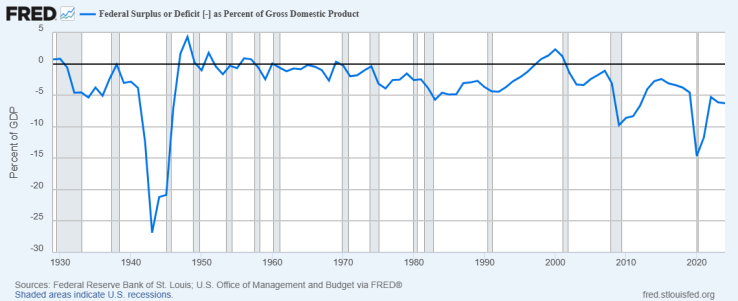
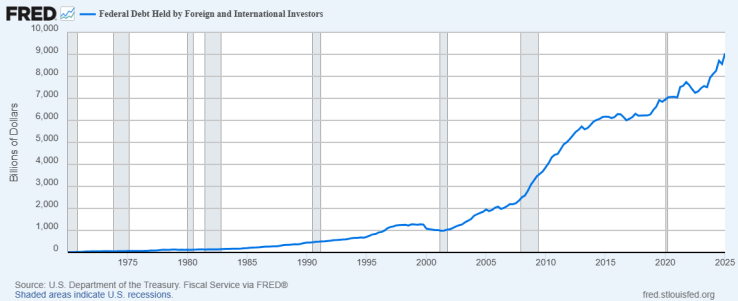
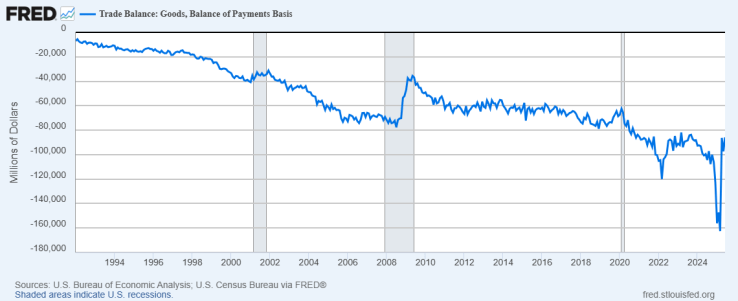
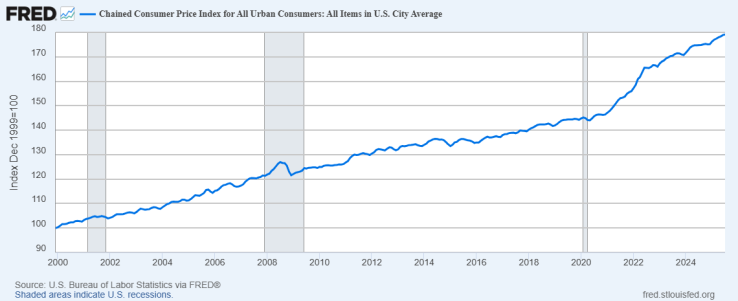
Finally, US trade deficits are not going to come down anytime soon, and not by a significant amount anyway that justifies any of this chaotic policymaking. The latest US GDP for the June 2025 quarter saw an uptick of 3% on the quarter, thanks to a reversal of US imports. But for this technical peculiarity this quarter, there is no reason to assume that all is well in the United States of America. No reason for any optimism either, though markets have been rallying with every tariff announcement of Trump’s mostly on relief that it could have been worse. As well as hyped-up hopes of AI, which could well turn into an asset bubble. Then, of course, there are the mid-term elections next year, and the state of the US economy by then will determine much of the rest.
The only other force that can stop him is the strength of the US judicial system and his term is going to test it severely.
Meanwhile, it’s important that the world focus on the bigger picture which is the new world economic order that Trump is trying to shape, and come up with a suitable response to it, including taking it up with the WTO.
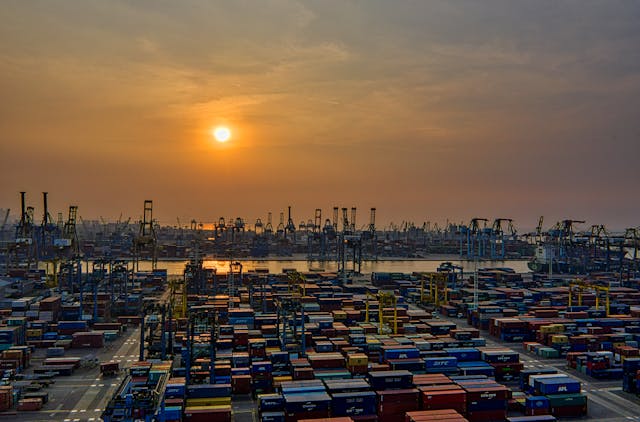
The featured image at the start of this post is by Yumu from Shanghai on Unsplash

 Peripatetic Perch