


The Trump administration just announced a set of new reciprocal tariff rates for more countries and has set a new deadline of August 1, 2025 for these to take effect. It’s still early days, and it’s hard to tell their effect on consumer prices, on trade, and on consumption and economic growth, both in the US and in economies around the world.
According to the latest consumption data from the US and the UK which have only recently been announced, it seems to suggest that most consumers brought forward their purchases of discretionary goods, as expected, in order to beat tariff and consequent price increases. Retail sales in the US were down by -0.1% in April and by -0.9% in May 2025, month-on-month. Both these figures are still higher than they were a year ago. Consumer spending which is indicative of total household spending was also down by -0.1% month-on-month in May 2025.
In the UK, retail sales declined month-on-month in May 2025 by a massive -2.7%, owing to a sharp fall in food sales. April 2025 saw a monthly rise of 1.3%. While we need to wait to see a more sustained impact of tariff increases and economic uncertainty on consumer spending, most economists expect the second half of 2025 to show real signs of slowdown and/or stagflation. Consumer price inflation for both US and UK ticked up in June 2025, though it’s probably not yet the effect of higher tariffs. Trump might be aware of the risks involved, which explains why he’s going a little slow on the tariff hikes.
In the meantime, we are in peak summer season, the time for travel, summer vacations, and consumer indulgence in spending. And since services are still largely exempt from Trump tariffs, I thought I’d explore how services companies can up their marketing activity and get consumers to start spending more freely. It could be the best opportunity for them to innovate and offer consumers meaningful spending options they can’t refuse.
First and foremost, airlines and hotels. Unfortunately, thanks to the horrendous and tragic Air India crash recently, airlines in India seem to be under a cloud currently. Otherwise, this would have been the best time even ordinarily, to announce summer travel and holiday packages as well as add flights to the busiest sectors, both on domestic and international routes. This should still be a priority with airlines, even as they continue to fly business travellers. Hotels, from the luxury hotel chains in India to even the smaller hotel chains, ought to have announced special packages for their leisure properties in holiday destinations, even as the monsoon season tends to be a lean tourism season especially in places like Goa. All the more reason to drop tariffs and lure more travellers at this time of the year.

International airlines and hotel chains ought to be busy promoting travel to popular and off-beat destinations, depending on how much cheaper travel to a certain country is likely to be, given the exchange rate vs the US dollar. European airlines seem to be anticipating good demand for summer travel, and are facing a supply shortage, unfortunately according to this CNBC article. In the US, airlines are expecting weak travel demand amid economic uncertainty, also according to CNBC. In recent years, countries in Eastern Europe, the Balkans, and even Central Asia seem to have shot in popularity as leisure travel destinations. No tariffs on international airlines flying to the US anytime soon, as Trump would surely want more tourists to be visiting his country, so airlines and hotels ought to make the most of this.
Then, even without having to travel too far, it’s possible to spend a little extra on the small pleasures of life. Such as cinema, theatre, music concerts, special exhibitions at art galleries and museums, and the like. These would be huge attractions in western countries, where summer is a great time to be out and indulging in these pastimes. In India, winter months are more the time for such cultural activities, and companies ought to be planning ahead for this. In almost all major economies, it appears that services inflation is higher than goods inflation, though, and companies might have to innovate their way around this.
Imagine companies whose entire business revolves around entertainment and adventure, such as Disney! From cinema to streaming entertainment shows, theme parks and now even cruises, Trump’s tariff agenda could be a blessing in disguise for them. And then, there are entire areas of consumer spending such as wining and dining out, shopping as well as gifting that remain open to be tapped as business and marketing opportunities by companies. All these present huge spending and business opportunities for credit card and payment processing companies as well, from American Express and Visa to Mastercard.

At least in India, I haven’t seen any concerted attempt as yet by companies to encourage this kind of holiday/indulgence spending in services and I thought I’d share some thoughts of mine on the subject. In fact, I hardly ever see communication from airlines and hotels with any special packages or offers for the summer vacation time in India. As far as airlines are concerned, they could offer consumers special offers on holiday routes to leisure destinations. Indigo airlines, for example, could offer special return fares on certain routes for a limited time so that families with children can avail of lower fares for summer holidays. Since the airline was positioned as the most punctual in India, they could have done something with the idea of time as precious in a family holiday. I am still not sure what the strategy or brand positioning of Air India is, but they too could and should have planned a summer vacation travel package not just domestically, but internationally. As far as Air Vistara is concerned – since I have shared my thoughts on the recommended brand strategy and campaign ideas for them – the airline ought to have created a special holiday package around the concept of relaxation, peace and meditation which is truly Indian and international at the same time. Too bad, the airline is now dead.
On India’s famed luxury hotels, there is so much that each of the three large hotel chains could offer travellers as special summer travel packages, each in their own distinctive way, true to their brand. The Oberoi Hotels, for example, ought to have created a special summer package at their leisure hotel properties for domestic and international travellers alike that recreates the oriental pleasure-garden concept in luxury travel, as I had recommended in my brand strategy and ideas document for them which I have shared on my blog. Similarly, Taj Hotels ought to have designed a summer travel package around their brand positioning – or what I have recommended for them on my blog – as the finest meeting place for international travellers. Perhaps, Taj could have organized an international festival of art or literature, exploring international relations, to be held at a few of its well-known palace properties, and had the world converge there for the summer. ITC Hotels, on the other hand, could create a summer holiday package and event around their brand positioning of responsible luxury. I suppose the idea is to promote ecologically sustainable luxury and they could well make this their area of differentiation in an entirely Indian context. The reason I am sharing these thoughts and ideas is to make companies realise that simply offering discounts or offers is not the only or best solution. What they need to do, in each of these cases, is to create value around their brand and its positioning and then develop a package around it. These ideas could go on to become annual features and part of the brand experience for each company over time.
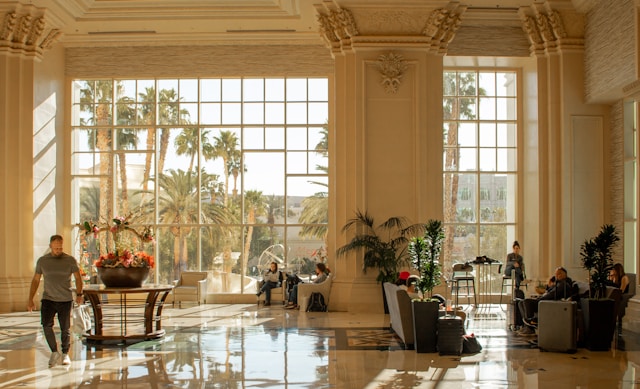
This needn’t be only a summer-time marketing programme, either. There can be ways to engage customers at other times of the year, including attracting international travellers to India during the autumn to spring season which happen to be peak tourism time in our country. India also has a pretty long festive season that starts in August-September and goes on until January-February thanks to the wedding season also being combined with it. There is plenty that companies in the services sector can do during these months also to promote greater consumer spending and to build their brands. I think it is time that cities in India also plan shopping festivals, the way cities such as Dubai and Singapore do at certain times of the year, which are also meant to attract foreign travellers and shoppers.
Our festive and wedding season should not be confined only to promoting sales or consumption of the fashion and jewellery kind or the appliances or consumer durables kind, but can also be used to promote better financial planning and investments. Since festivals are auspicious occasions in India and most of them are associated with auspicious or good beginnings of some kind, perhaps banks, financial institutions and insurance companies ought to strategise much more about certain kinds of financial savings or investments that encourage greater financial prudence in more Indians across the board, especially among women and the youth. Savings and investment products that are designed specially around important milestones in women’s and young people’s lives, such as beginning higher education, first job, mid-career and retirement.

And, finally a word on consumers spending more on pursuing a healthier lifestyle. This too is an important area and companies ought to be encouraging it actively. Whether it is about pursuing active and healthy lifestyles such as exercising regularly, gym membership, yoga classes, healthy dietary habits, active outdoor holidays such as treks, and the like, we ought to be encouraging and enabling more of it. Since many of these are best pursued in an organized group fashion, companies ought to be actively creating an enabling framework for it, both within their own organisations and for the public at large.
If we consider all these ways of encouraging consumer spending, they are of a higher order, and aspirational in ways that go beyond physical possessions. Of course, these would make most sense to consumers who aspire for a better way of life and whose material needs are mostly met. People who are in self-actualisation mode according to Maslow’s law of the hierarchy of needs, or approaching it, at any rate. These are the multitudes who comprise the many middle-classes in India, and I would imagine they exist in large numbers overseas as well.
So, let’s think beyond tariffs. Let’s think spending on intangibles.
The featured image at the start of this post is from Pixabay

 Peripatetic Perch