


This month and the previous one in the New Year, Indian companies have been reporting their quarterly earnings for Q3 FY25. They have been along expected lines in the sense that they are much more muted than in previous quarters and years. Much of this can be explained by the effect of the Covid pandemic on the economy and on India Inc. After the initial supply shock created by the pandemic and the lockdowns imposed, there was a surge in demand as the pandemic waned. This was nothing but pent-up demand that was being expressed by consumers and lasted a couple of quarters. There was another kind of supply shock towards the end of the pandemic, in the form of chip supply shortages, as countries in East Asia couldn’t keep up with the surge in consumer demand from all over the world.
We have seen these supply and demand waves as base effects both quarter on quarter and year on year. Hopefully 2025 onwards these base effects will wear out completely and we might begin to see a normalisation, as consumer price inflation also trends downward and lower interest rates boost lending and consumption and investment growth. All this sounds good in theory, but we also have the Trump tariffs to worry about and these are likely to cause significant disruptions in trade as well as supply chains, and intermediate goods are likely to be the worst affected as I have written before.
Meanwhile, if we look at the corporate earnings of the past quarter in India, revenue growth on an average slowed quite significantly to single digits, though net profit growth didn’t slow as much. This indicates that most companies are doing all they can to protect their bottomlines, even as topline growth slows. This indeed seems to be the case, if we look at the earnings as analysed by CMIE. Income growth for all listed companies slowed to 6.5% in the December 2024 quarter as compared to 8.6% in the March 2024 quarter. Net profit growth has grown to 8.1% in the December 2024 quarter compared to 4.9% in the March 2024 quarter. This means that these companies are doing a good job of controlling their expenses, as expenses growth slowed to 5.6% in December quarter when it was 7.7% in the March 2024 quarter.
The cyclical effects of the post Covid slowdown is even more marked when one looks at the annual corporate earnings for the previous financial years. Income growth slowed to 7.3% in FY24, from 26.4% and 18.1% in FY22 and FY23 respectively. While net profit growth slowed much less, to 32.8% in FY24 from 73.8% and 9.5% in FY22 and FY23 respectively. Indeed, again we can see that the expenses growth has slowed, though by less at 5.2% in FY24, compared to 25.4% and 18.1% in FY 22 and FY23 respectively. According to Moneycontrol.com’s analysis of the December 2024 quarter’s earnings, revenue growth for all companies is 7.04%, while net profit growth is 13.74% as on February 18, 2025, with 4154 out of 4735 companies reporting.
The count of companies for the annual earnings analysis by CMIE on their website seems to be down by almost half for FY24, and I wonder why this should be so. And, we don’t have the operational performance in terms of operating profit or margin. Besides, we don’t know how much of the income is operating revenue and how much, other income. Even so, it suggests to me that perhaps the cost rationalisation strategy has played itself out, and there might not be much room for improvement in this regard. Indian companies, going forward, will have to therefore raise prices in order to grow revenue, or else drop prices significantly in order to chase volume growth. This, would vary from category to category; raising prices will mean lower volumes even if it helps companies maintain market share by value. From what I noticed this corporate earnings season, most companies’ operating profit margin seems to have been adversely impacted, so lowering prices further seems unlikely. At the same time, companies have to watch their input costs, depending on how commodity prices are faring.
There is another metric by which to look at India Inc and this is the ET 500 2024 ranking of Indian listed companies as they performed in 2023. Economic Times says these companies are ranked by revenue, but unfortunately, I have misplaced or given away the print edition of this compilation which came with the Economic Times newspaper, and that did mention other parameters in the ranking such as ROCE and ROA. I am not sure what weightages were given to these indicators, and how much market capitalization too played a role in the rankings, but what I notice is that the top 10 companies are dominated by Indian oil and gas firms, with Reliance Industries topping the list. There are two large public sector financial institutions, LIC and SBI among the top ten and two Tata Group companies, Tata Steel and Tata Motors, with TCS just missing the top 10, coming in at number 11. The next ten, if you notice, comprise metals, banks and infrastructure companies, mostly from the private sector, including Infosys Ltd. The next five from 21 to 25 are also from the core sector, with a few consumer durables and services brands such as Bharti Airtel, M&M and Grasim.
If this is really ranked by revenue, then we have to say that India’s core sector companies, financial institutions, a couple of technology firms and automobile companies are the biggest growth generators of our economy. Could these top 25 firms be making the biggest contributions to our GDP?
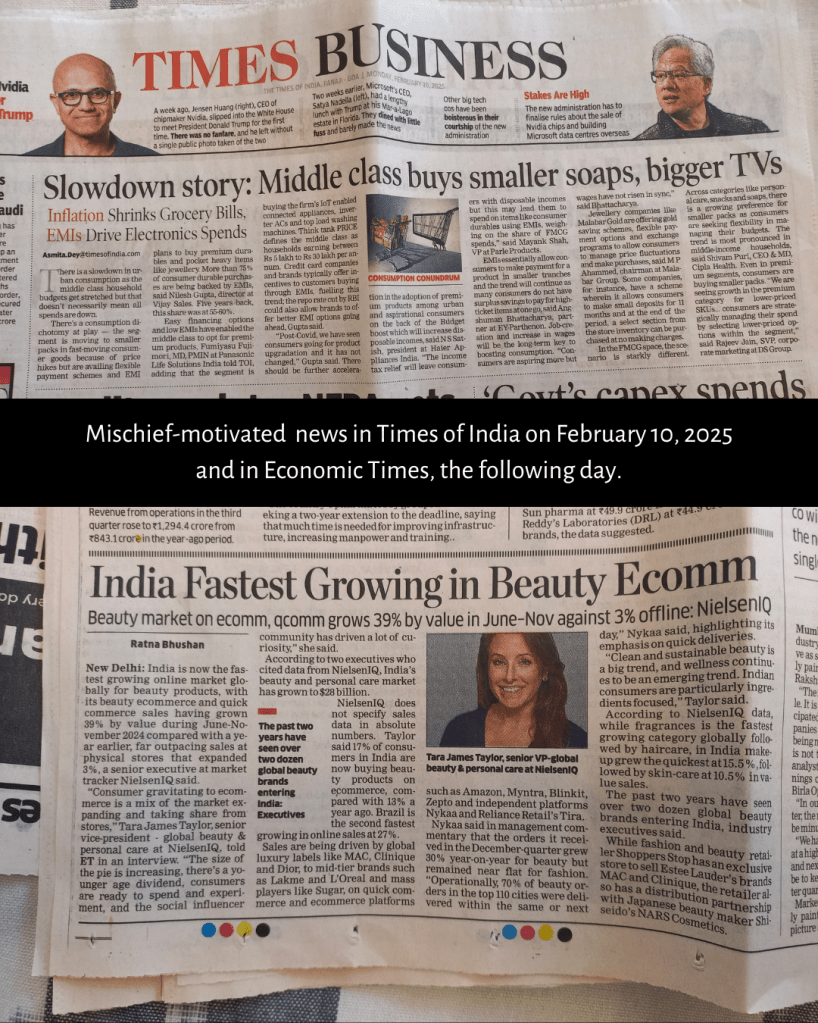
Meanwhile, the story of an urban slowdown in consumption growth continues – despite my doubts about this narrative – as well as an uptick in rural demand, which to my mind is a good development. So, FMCG sales did slow down as well as automobile sales, especially passenger vehicles. Two-wheelers are growing at a good pace and this must be a sign of revival in rural consumption demand. As I said, there are cyclical as well as structural factors to consider when looking at corporate earnings, especially after a major shock such as a pandemic. What can be the other factors that can help boost consumption, growth and investment?
The impact of taxes
In the automobiles category, for example, car sales have slowed in the December 2024 quarter despite the festive season coinciding with it. I think that the government must consider reducing the GST on cars (non-luxury) to 18% from the existing 28%. This will have a positive impact on the demand for cars and automobile companies will also benefit from the switch to EVs and CNG. I had no idea that CNG cars were doing so well in India, albeit on a smaller base. Given how much tinkering is done with GST rates almost on a monthly basis, surely this is one step that makes sense for the automobile industry in the long-term.
Subsidies to encourage EVs are supposed to go into a new phase even though FAME III was cancelled. As part of this new subsidy, we must consider also encouraging CNG as well as hybrid cars, and they must be brought on par with each other. Besides, if the government reduces import duties on components and parts as part of their plan to boost manufacturing as well as to placate Trump, it would help many industries not just automobiles reduce their costs of production and lower prices somewhat. In fact, I think reducing indirect taxes would benefit consumption and also help lower inflation much more than the middle class income tax breaks, considering the former are regressive and affect the entire consuming population.
A better understanding of the Indian market
Reading and listening to a lot of the commentary on the Indian middle-class consumer and the various slowdowns in consumption, I get the sense that we perhaps don’t fully understand the changes taking place in the Indian market, besides of course, the mischief by unprofessional PR agency idiot bosses. For example, what are the big generational shifts taking place in consumption patterns both in rural and urban India, who all are part of the Indian middle-classes, as I think there are many, what about socio-economic changes in the Indian consumer cohorts, how tier 1, 2 and 3 towns compare with the metros in incomes and consumption growth, etc. And if the rural economy in India is growing, can we finally say with confidence that there is now a rural Indian middle-class in numbers that are statistically significant?
I am not a researcher, but a writer and strategist in the advertising and brand communications industry, and I think it’s important to invest much more in better and ongoing research of the various Indian consumer segments and how they are changing over time. As I keep saying, the NCAER needs to go back to doing research of this kind, and other research organisations too need to do more of it.
More and better jobs in the private sector
This is something that even the Indian Economic Survey has mentioned this year as the most important requirement of India’s private sector. Actually, greater private sector investment is required in on the ground job-creating businesses, across all industries, both in manufacturing and in services. However, due to the slowdown and higher inflation in past quarters and years, there seems to still be excess capacity in the system.
With a slowdown expected in global trade thanks to the Trump tariffs, and plenty of disruption, India Inc will have to focus more sharply on the domestic market, even as they export to the rest of the world. More investment and better paying jobs as well as higher salaries to employees are the need of the hour.
It is strange and I think even sad, to read news reports of the National Skill Development Corporation training thousands of Indians across several industries to place them in jobs overseas. I can’t believe this is actually even happening in our country, that an organisation meant to skill Indians for jobs here, is now sending them overseas. If true, this is deliberate and willful skill-drain, in addition to India’s much talked about brain-drain of the past! I won’ be surprised if this is also the result of unprofessional PR agency idiot bosses influencing government policy yet again! I am not grudging these workers being trained and sent overseas, but why should we do this on our taxpayer money? We can’t create enough well-paying employment in India, so let’s train and send them abroad seems to be the mantra of this government.
Igniting the innovation engine
I think it’s time for India to restart the innovation engine, and I mean in the meaningful sense that has an enduring impact. This will also require a clearer understanding of what changes are taking place in the consumption landscape by various consumer segments that I referred to earlier, as well as anticipating the future in each industry and product category.
As an advertising and brand communications professional, I have to say that I can’t remember any truly great product and marketing innovation in India after Nestle’s Maggi instant noodles and Titan watches, both in the late 1980s around the same time. They were both great product innovations launched at the right time when the market was ready for them, and with sensible and meaningful brand communication and the right-sized advertising and marketing budgets. While the former was launched with work by JWT, the latter brand was built by my former advertising agency employer, Ogilvy.
Nothing seems to have captured the imagination of Indian consumers like these brands did at the time, and both have stood the test of time. I dislike Maggi and don’t like instant noodles, but I have to say that the brand found its right place in people’s lives by positioning itself as the mid-afternoon snack when children returned home from school. It must have come from a proper understanding of consumers’ lifestyles, with more nuclear families and double-income households on the rise. The convenience of instant noodles and the substantial snacking it provides were just what many urban, or at least metropolitan families needed.
Similarly for Titan watches, at a time when India had only HMT wristwatches, many Indian families would prefer to buy international brands of wristwatches on their overseas trips. Or else, shop in the significant grey market for international watches which existed in India at the time. I still have my first wristwatch – a Citizen – that my father had bought for me on an overseas trip in the mid-1980s when I had started working in the advertising industry. I think Titan’s brilliant strategy at the time was not to compete with HMT at all, but to target the buyer of international watches. The company’s range of really well-designed quartz wristwatches with their competitive pricing did the trick.
Other than these, I don’t think there is a single great product or marketing innovation in India that made a significant impact over a length of time. Not even in the new millennium, which is supposed to be all about technology and innovation. We have plenty of start-ups and unicorns and all that, but no product or marketing innovation at a brand level that can fuel consumption by fulfilling a real consumer need.
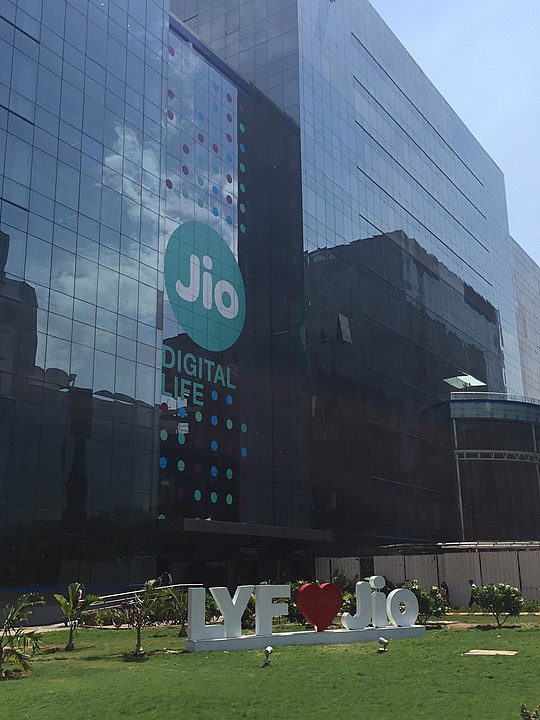
Tata Nano from Tata Motors could have been one, but it was so botched by poor positioning, marketing and brand communication that it was dead on arrival. It was a well-designed product, perhaps too basic even for the first-time car buyer what with it lacking side-mirrors and glove compartment! Jio Telecom from Reliance Communications did fire up the telecom market in India and grow the market significantly after the smartphone era arrived. However, it was more an innovation in pricing strategy than anything else and even bordered on predatory pricing in the industry. I have to say though, that extending the Jio brand across too many categories might become a problem for Reliance in the future. And surely the new Reliance-Disney merged media company needs to have a brand, while the streaming services have merged to form JioHotstar; never liked the Hotstar branding anyway! Air Vistara created a lot of preference in flying with its premium economy class of travel, but this now seems to be history.
In recent days, Mahindra & Mahindra are attempting to create quite a splash with their electric origin EVs. The vehicles seem well-designed, but I am afraid the brand communication is without a clear and differentiated strategy even if they are spending mega-bucks over it. Seems quite a waste of money to me, but maybe I am in the minority here and perhaps vehicle bookings are surging, who knows!
Anyway, the point I am making is that it is time companies and their marketing teams put their noses to the ground and really double down on innovation after studying the changed market environment and what the future holds in store for us. This is necessary across categories and even services companies such as banking and finance, insurance, technology companies, travel and hospitality, airlines, telecom and so many others need to focus on innovation for a real and new emerging need now and in the future. Other than the fact that more Indians are investing in mutual funds – and becoming rich quick – there is little to no innovation that is helping reignite consumer interest and consumption.
Sometimes I wonder if marketing teams at companies are operating in an information-vacuum, or is there enough good and reliable research and data available on the state of our middle classes, consumption patterns, and the market environment. One reads articles in newspapers, including The Economic Times, on various studies, reports, etc. often quoting even retail audit firms, but as I have written before they strike me as unprofessional PR agency mischief and provide a lot of noise on a daily basis, but whether they are grounded in any kind of reality and truth is another matter altogether. This cannot continue.
Companies and their marketing teams also seem to be too swept away by the digital marketing phenomenon and the short term, to invest in sensible and meaningful brand-building of the kind I have been referring to, in this article. I hope they turn on the innovation engine in their organisations, backed by solid and reliable data and understanding of the market. Otherwise, the inertia-induced slowdown might extend longer than what they bargained for.
India’s third quarter FY25 GDP will be announced at the end of this week, though as I say, headline GDP numbers alone never tell us the full story.

 Peripatetic Perch