

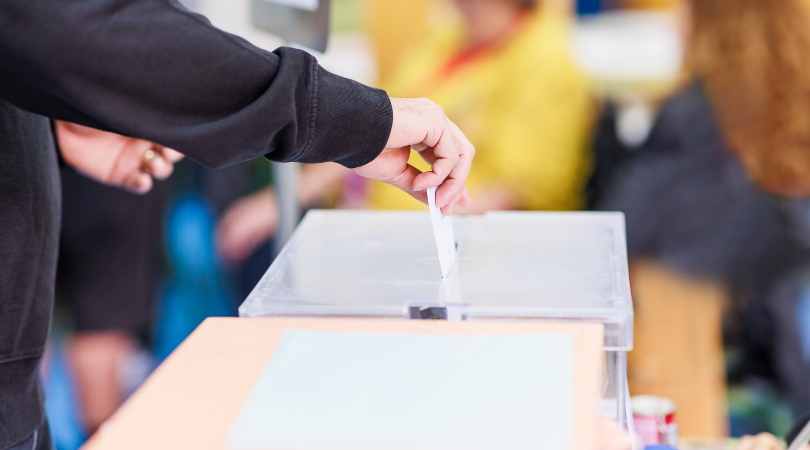
It was reported at the start of this year that around half the world would be voting in elections around the world in 2024! While this is in itself an interesting fact, I think even more fascinating would be the long journey that democracy has made over the past many centuries and decades across many countries. To this extent, the world has certainly come a long way from the days of monarchy and Empire as well as military rule. However, we still have a long way to go before democracy has put down roots in every country and people are free to elect their own political leaders.
I thought I’d take a look at the elections that were held around the world in 2024 and see what they might be telling us about the state of democracy. The most talked about one is the most recent presidential election held in the US and arguably the biggest one with serious implications for America and the entire world. I shall save this one for the last, since it is still very much in the news cycle and enough has been written about it already. Besides, if one wants to take a pulse check on democracy and how it’s doing, we must look at smaller and poorer countries everywhere, that usually escape our attention. In many poor and developing economies that emerged from colonial rule in 1960s and 1970s, as those in Africa, it must be a huge achievement to even be able to hold elections regularly in a climate that is free of fear, favour and reprisal.
Google served me a link to a website and organisation that I hadn’t heard of before called IDEA, based in Sweden, which at least made it easy for me to track all the countries and their elections in 2024 and I hope it is exhaustive. I decided to start with major countries in Latin America such as Mexico and Venezuela that both had elections this year. Here, I discover that both countries stayed with the same incumbent party, ideology and policies, except that Mexico elected a woman president, Claudia Sheinbaum who was previously mayor of Mexico City. Remarkable as this sounds, it remains to be seen whether she would take decisions independently of the former president, Manuel Lopez Obrador who still controls the party and couldn’t contest this time because of a two-term limit. In Venezuela, the elections don’t mean much since the dictator Nicolas Maduro still clings on to power even though the economy is in a shambles and millions of Venezuelans fled the country a few years ago. Mexico’s economy is in much better shape as it has become a major manufacturing country in recent decades, though what effect Trump’s tariff policies will have, is hard to tell right now.

Moving to the African continent, there are several pictures emerging from the countries that held elections in 2024. Algeria, Mauritania and Tunisia in northwest Africa saw their presidents return to power for another consecutive term. In Namibia and Mozambique in southern Africa, again, the ruling parties that have ruled over 30 years still get re-elected albeit with new presidents. In the case of Namibia, the former vice-president, Natumbo Ndaitwah, won with 57% of the vote to become the country’s first woman president. However, it still means that the ruling party, SWAPO, that has ruled the country since 1990 stays in power. Similarly, in Mozambique, the ruling party Frelimo that has ruled the country since it won independence from Portugal in 1975, won this time around as well with a huge majority (195 of 250 seats), though there is a new president, Daniel Chapo, who replaces Filipe Nyusi.
You could say the same for Africa’s largest economy, South Africa, where president Ramaphosa stays in power after a bruising election in which the ANC lost its majority in parliament and had to compromise by teaming up with its old rival, DA, in an alliance to form a Unity government. Not sure how long the alliance will hold together and how well it will work.
I am not sure any of these election results suggest political stability and economic growth or revival, with the same parties or the same leaders getting re-elected time and again. Especially when we know that many of these African economies are struggling to grow, burdened as they are by population growth, terrorism and mountains of debt. The fact that they are able to conduct regular elections is great, but it isn’t necessarily a ringing endorsement of democracy working well. In fact, I should mention here that as many as eight west African nations have suffered military coups between 2020 and now, with ECOWAS (the economic grouping of west African nations) having to intervene.
In Botswana and Senegal which also had elections in 2024, the ruling party was ousted with opposition candidates being elected to form a new government. In Botswana, what is particularly significant is that the ruling party which had governed for 58 long years was rejected in favour of opposition candidate Duma Boko in a landslide victory with a high voter turnout as well, of 81%. In general, though, in many of these countries, voter turnout tends to be low, except say, in the case of Botswana where it was 81%. More needs to be done to improve voter registration and participation in elections in these countries.
Turning to Asia now, Syria (which has just witnessed an extraordinary turn of events) and Jordan offer a study in contrasts of elections held this year. Jordan saw a clear shift from independents and tribal leaders in parliament to political parties winning more seats this time, thanks to electoral reforms passed in 2022 to facilitate the greater participation of political parties. In Syria, on the other hand, there was a sham election in July 2024 to once again fill parliament with legislators from the Ba’ath Party. Both countries saw low voter participation of just around 30%.
Uzbekistan has been busy with constitutional changes and electoral reforms, but even so five political parties – all of whom are supporters of President Mirzoyiyev – contest and win seats. President Mirzoyiyev stays in power, and voter participation was high at 75%. Iran, a country always important to watch from the point of view of how it engages with its electorate as well as the rest of the world elected a moderate, Pezeshkian, as President, though voter turnout was low at 40% in both the parliamentary as well as the presidential elections. While a moderate Iranian President might augur well for the country and its relations with the outside world, the fact is that more hardline conservatives won seats in parliament, which could make governing tough for the new leader. Besides, we all know it is the Supreme Leader, Khameini and his decisions that still count in the Islamic Republic. Nevertheless, the fact that elections are being held regularly in the country and new leaders emerge as candidates and winners can only be a positive; voter participation needs to improve, as it suggests that citizens are not so engaged with the political process and that can’t be a good sign for democracy.
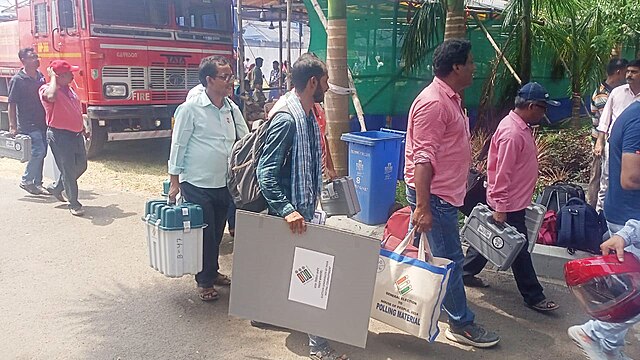
South Asia saw many elections in 2024, with India’s being the largest of them all. Voter participation was high and the result threw up a fractured mandate, in the sense that the ruling BJP-led NDA alliance did not win a majority on its own this time and is forced to work with a coalition government. In Sri Lanka, a left-leaning coalition of Dissanayake called the NPP (National People’s Party) won a huge majority for the first time putting an end to the country’s history with family dynasty parties and presidents. The Sri Lankan economy which has suffered a terrible crisis since 2022 was the main election issue, though it could be a while until the country grows strongly again.
In Bangladesh and Pakistan, which have both witnessed crises of different kinds over the years – economic and political – deeply entrenched power bases and partisan politics make both countries flawed democracies. Bangladesh saw a farce of an election in 2024, in which the main opposition party did not contest. Pakistan held elections which threw up a fractured mandate and the most extraordinary results in that Imran Khan’s party PTI’s loyalists and supporters won the most seats in parliament as independents, even as their leader was in jail, the party denied a symbol and for all practical purposes banned from contesting the elections. As it turns out, old prime ministers and leaders are back in a power-sharing coalition between the PML(N) and PPP, with the focus having to be squarely on Pakistan’s economy. Plenty of scope for democracy to be strengthened in South Asia, but there’s no denying that the populous region remains vibrant politically and maintains its democratic ideals with high voter participation.
In southeast Asia, Indonesia held elections in early 2024 for both parliamentary and presidential elections and both saw a high voter turnout of 80%, with former military strongman, Prabowo Subianto, winning 57% of the vote. Hopefully, the country will maintain its economic momentum and growth. Elsewhere in East Asia, South Korea is in the news for all the wrong reasons with its president announcing martial law and then withdrawing it, only to face an impeachment vote which he has survived. As I said, never a dull moment in Asia! Anyway, President Yoon who has under three years still in office is under pressure with his People Power Party having lost by a huge margin to the opposition DPK Democratic Party in the country’s election held in April 2024. And in Japan, we had the Prime Minister announce snap elections, in which the governing LDP has lost its majority in parliament, amid allegations of corruption and financial scandals.
Shifting to the West, many European countries held elections and there was the European parliamentary election as well. Far-right parties had made gains as expected, but the centre-right EPP party managed to maintain its majority and Ursula von der Leyen won her second term as President of the European Commission. Yet all is not well in Europe, and prompted by the sudden challenge from the far-right National Rally in the EU elections, President Macron called snap elections in France, which I have written about on my blog. The results of that election are still being felt in Paris, with the French Prime Minister Michel Barnier just losing in a vote of confidence over the French budget which pledges to cut as much as €60 billion in public spending. Germany’s coalition government has collapsed and a fresh election has been called for February 2025. Neither of the two leading economies and powers of the EU have a fully-functioning government at the moment. Meanwhile, in Austria, the far-right Freedom Party has returned to power, in a string of such far-right party gains across Europe. Poland is the only country that recently reversed this trend. Bulgaria and Romania that both held elections this year are similarly in political turmoil, the former having had seven elections in four years and not able to form stable coalition governments, and the latter seeing a far-right trend exacerbated by Russian interference due to which Romania’s highest court had to annul the presidential election result in the first round. I must mention, of course, that Russia too had its election in 2024, a sham one for the most part.

United Kingdom has seen a change of government after 14 years, with the Labour Party winning a huge majority. And the United States too saw a stunning victory for the Republicans with Trump winning a second term, albeit not a consecutive one. In these countries, there seems to be a general dissatisfaction with the way the economy is growing, with high inflation and with immigration. This, though the US economy is on a strong wicket and is likely to maintain its growth momentum for a while, though what Trump’s economic policies might do to jeopardise this growth remains to be seen.
Looking at elections around the world in 2024, it appears that democracy faces different kinds of challenges in different countries. Poorer, developing countries in Latin America and Africa need to generate greater voter participation, find ways to hold free and fair elections as well as develop an institutional framework for protecting democracy and nurturing it. Countries in Asia especially South Asia have vibrant democracies in terms of holding elections but need to strengthen democratic institutions, including an independent judiciary and media. Countries in south-east Asia and East Asia might be taking their electorate for granted and leaders here have been taking strange decisions; they perhaps need to course-correct and connect better with their citizens, considering many of them are too close to big business. Western democracies are all facing the backlash of people who lost out on education and upskilling that globalization and the rapid progress of technology need, and are blaming immigration and other countries for it. It appears that the centre is holding at the moment, but only just; political leaders and the intelligentsia everywhere need to think hard about the steady progress of the far-right and find sensible ways to manage it.
Finally, of course, democracy is about much more than holding elections though this would be the minimum ask for a country to qualify as a democracy. It ought to be about human rights and civil liberties, laws and democratic institutions, respect for women and equal rights for them, as well as aspiring for an egalitarian society. Few countries would pass such a strict test, which explains why Nordic countries top most international rankings and indices of democracies around the world, year after year.
It is clear at the end of the huge election year 2024 that democracy is still a work in progress. However, there is nothing greater than individual freedom and democratic rights worth striving for.


