


It’s been at least a couple of decades that we have been hearing about the falling circulation and readership of print publications in India and around the world. We know it is largely due to the arrival of the digital medium, and for many of the initial years, digital publications were free to read. Unfortunately, the prevailing wisdom that publications had to follow readers who were migrating to the digital realm and build their growth on the basis of subscriptions has not met with much success.
The first big casualty was, in fact, the fall in advertising revenue. Realising that publications were faced with falling circulation and readership, advertisers cut back on their ad spends on print. At the same time, digital editions still hadn’t taken off – at least not in a big way in India – and advertising revenue from digital adverts wasn’t compensating for the fall in print advertising.
People predicted the same for TV advertising: that advertisers would shift larger spends to digital and social and TV channels would suffer. It is probably true that many of them have seen advertising revenue shrink, what with the sheer proliferation of TV channels (especially news channels) and viewership becoming fragmented with the arrival of digital as well. As a result, I have noticed that weekend programmes on news channels in India are increasingly sponsored content, and that news telecasts themselves feature advertising on the screen simultaneously along with the news! Both are terrible ideas in my opinion, with the former being paid-for PR, and the latter an unnecessary intrusion in news. It speaks of how desperately media organisations are trying to improve their advertising revenue.
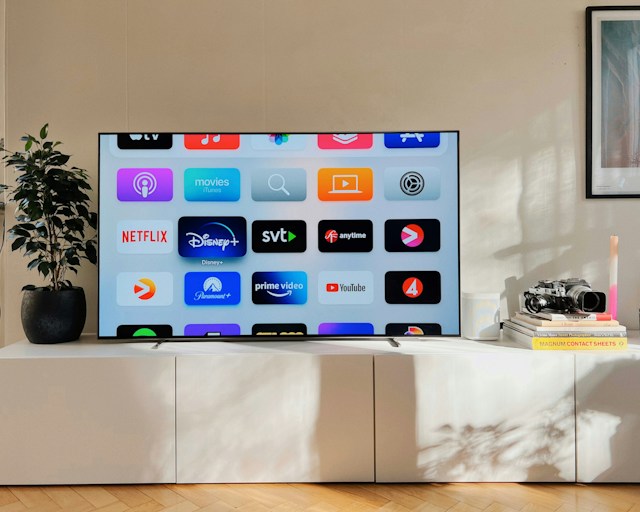
The advertising vs subscription-based business model debate is even more glaring in the streaming or OTT realm. Thanks to increased competition in this space, leaders such as Netflix have been forced to rethink their business model and consider an advertising-based tier of viewership. This is playing out internationally as well and was actually triggered by the Covid pandemic. During the pandemic lockdowns, people had nothing better to do than to stay home and watch TV shows, which is when Netflix and Disney+ notched up impressive viewing and subscriptions. Post pandemic, it was a different story; people weren’t watching so much TV or streaming shows as before, and I suspect that with higher inflation as well many consumers might have reconsidered their priorities and expenses. Besides, the competition hotting up in the streaming and media space has made media companies seriously evaluate their business models.
All this has left media, advertisers and consumers in a state of flux. With consumers not willing to spend as much as earlier on media and entertainment consumption, and with advertisers cutting back on ad spends as well, or shifting some of it to digital, media houses are in a quandary.
In the meantime, take a look at where social media, search and e-commerce companies are going. Almost without an exception, they are all following advertising-based business models, and doing extremely well of late. It is instructive that traditional media in its digital avatar, is still struggling to earn reasonably good revenues and profits, while its digital and social cousins are flourishing.
Think why. Traditional media companies and even their streaming counterparts are in the business of providing news and creating content, all of which costs money to produce effectively. Advertising income helps to defray most of these expenses, and to earn a decent income at the end of the day. By the way, advertising even helps to subsidise subscription prices for the consumer, which the generation of millennials and Gen-Z might not be aware of. Yet, these are the new, influential groups of consumers – digital natives, all – who media companies and advertisers of all types are happy to chase.
In fact, I have heard it reported so often that these are the same consumer cohorts who dislike and even positively hate advertisements, and employ ad-blockers to filter them out. Well, looking at much of the digital advertising, and how terribly intrusive and lacking in ideas they are, I am not surprised if this is indeed consumers’ reaction. I have been writing on my blog about my thoughts on digital advertising and how it fails to enable brand-building in its current form.
I think the entire advertising vs subscription debate is wrong-headed. For years at least traditional media companies have known that it takes both to be able to run a business well, and to provide consumers high-quality content, while keeping subscription prices reasonable. Now, their digital cousins from social media such Facebook and Instagram, from search such as Google and video sites such as YouTube, and e-commerce such as Amazon know this even better and are beating the traditional media companies at it. Just a few days ago, Walmart announced how its advertising business is doing really well and that they are acquiring Vizio, a video communications company to beef up their business and offer advertisers greater value. This, when these new-age internet companies create and produce no content of their own; they merely use the fact that millions of us spend our time on social media and online shopping, in order to attract advertisers and reasonably big advertising money. And while all the content is user-generated or shared, guess who is laughing all the way to the bank.

Clearly, this nonsense cannot continue. I think whether it is the traditional media format or the new digital media one, media companies ought to seriously consider a combination of both, advertising income and subscriptions, just as in the past. This way, they can focus on doing what they are meant to do, in the best way possible. News organisations can hire the best talent and send them out to report and bring us news in the finest manner possible. And still keep subscriptions reasonable and attractive, in order to bring in more subscribers. Similarly, streaming video and entertainment companies can focus on producing the finest content possible, and attracting new subscribers with reasonably priced subscriptions. A fine balance must be maintained between editorial/entertainment content and advertising, in terms of page/screen space and air-time, so that readers and viewers are not put off by too much advertising, since they are there to consume media first, and watch adverts later.
In the absence of this, what we have and what we will see more of is a steady decline in quality of content. If CNN or BBC wish to attract more viewers of a better profile on a continuous basis, they will have to produce better news content for which they will have to hire the best talent and spend on reporting and production costs. This will not be possible with subscription fees alone, and they will have to attract the right kind of advertisers on their channels. Advertisers follow viewers/readers who follow better content, and this circle ought to be a virtuous one.
A recent example of what I consider a decline in news journalism is from New York Times. It’s another matter that I haven’t been able to read the paper at all for almost three years now, since they always tell me that I have exhausted my quota of free articles! This when I subscribe to their free Book Review newsletter. And they were also inundating me with emails asking me to subscribe, for monthly rates as low as Rs 600/-, which have now stopped.
However, I have been reading about how they have notched up an impressive growth in subscribers, especially to their digital edition, and it is often cited as a success story in transitioning from print to digital. On examining their performance more closely, one finds that NYT has managed to attract new subscribers through bundled subscription offers, especially through two new publication sites they have acquired, Wirecutter and Athletic. Besides, they also seem to be aggressively promoting NYT cooking, NYT puzzles and games, etc. These are obviously attempts to attract younger readers to the NYT. However, they have ignored their core business and their core product, which I think is news. It was evident to me when I visited their website recently after more than a year, of just how much they have compromised their news reporting abilities, in order to gain a few thousand more subscribers. They haven’t spared their opinion section either which is worse, because one of the things NYT used to pride itself on is the list of columnists who write for the paper. I don’t know if this new strategy is being inflicted only on their digital edition, or whether it is across the board.
And I am not sure that NYT is shunning advertising yet, because they famously devoted an entire issue of the print newspaper to announce the recent launch of GE Healthcare as a separate company. This is the other extreme, where a newspaper sells itself to an advertiser caring little about editorial news content and what readers might think of the gimmick.

I think publications and TV channels ought to stop seeing advertising as their enemy merely because millennials and Gen-Z supposedly dislike advertisements (on the digital medium, that is). Instead, if the digital medium focused on how it could create an advertising format of its own with its own rules, language and grammar, different from print, outdoor, TV, and radio, it might help. And if they can do this without relying on cookies, even better.
If anything, advertising pays for good journalism. It helps news and media organisations invest in the finest journalists, and makes reporting from all corners of the country, or the world, possible. In other words, advertising is a force for good; not only does it make consumers aware of new products and services, build brands for advertisers and keep the economy chugging along, it supports good journalism and helps media stay many steps ahead. In this sense, advertising helps media remain an important pillar of democracy; I have already written on my blog on how vibrant democracies are also vital to building brands.
Let me conclude this piece with my thoughts on some of the important ways media and advertising can benefit from a better relationship and how consumers too can gain.
- Advertising doesn’t just compensate for the shortfall in media sales/subscriptions, it subsidises the cost of media for consumers. More reasonably priced subscription rates are possible.
- Media companies can focus on the quality of their reporting, editorial content and entertainment content, and raising the profile of their readers/viewers which is what every media organization ought to aspire for.
- Media content that is entirely subscription-based will tend to weaken and ultimately sever ties between media and business. Think how hard that would make life for business and financial media organisations in particular, and indeed, for all of media.
- If digital is where the problem lies, then media companies ought to find better ways to engage with younger readers. Chasing younger and newer subscribers, though, at the cost of your core readership is always a terrible strategy. After all, this is also where media companies differentiate their own brands – on the basis of their readership profile.
- I still think it’s important for media organisations to find ways to engage with younger readers and audiences, because they could be your core readers tomorrow. To think of them as youngsters who are only interested in music, movies, gaming and sports, is to dismiss an entire generation without even so much as making an effort to serve them intelligent, thought-provoking content. No country wants a wasted young generation that cannot engage intellectually with issues of the day.
- Finally, as an advertising professional, I can see how media can be put to good and meaningful use in categories and industries where advertising might be strictly regulated, e.g. the wines and spirits industry in India.
- Advertising for social causes and in the public interest is also an area in which media can partner advertisers.
Chasing subscriber growth alone is not the solution. In many cases, one sees massive subscriber growth, i.e. the New York Times and The Economist, accompanied by a precipitous fall in editorial content and journalism standards.
The logic is simple and elegant: it takes time and money to create something good and of value, on a continuous basis. Subscribers alone cannot support such an endeavour, while advertisers can and have always shared the costs. If media companies can accept this reality graciously and instead focus on how to make their content more relevant and thought-provoking, everyone will be better off. Media organisations and their people, the world of business and millions of consumers will all benefit immensely.
In the case of the alternative, everyone loses. Let advertising renew the virtuous circle.

 Peripatetic Perch