


It is by now a well-worn cliché that India’s rich cultural heritage lives in her handicrafts. The skills of millions of artisans from all across our vast country go to make some of the most beautiful objects, or more accurately objét d’art. Many of these are prized, rare skills that go back several generations. A lot of what they create is exported to appreciative buyers and collectors all around the world.
Could it be that consumers overseas appreciate these handicrafts more than we Indians do, and are willing to pay a much higher price for it? For how else can we explain the sorry and dismal state of millions of our artisans and craftsmen and women who hardly eke out a living from it? I happened to read a piece about an artisan whose livelihood was so badly affected by the Covid-19 pandemic that he is now advising his children to take up some other occupation. If this isn’t an isolated incident, but more commonplace, it means we will soon lose many of our treasured and time-tested artisanal skills and techniques. Art forms that are handed down generations.
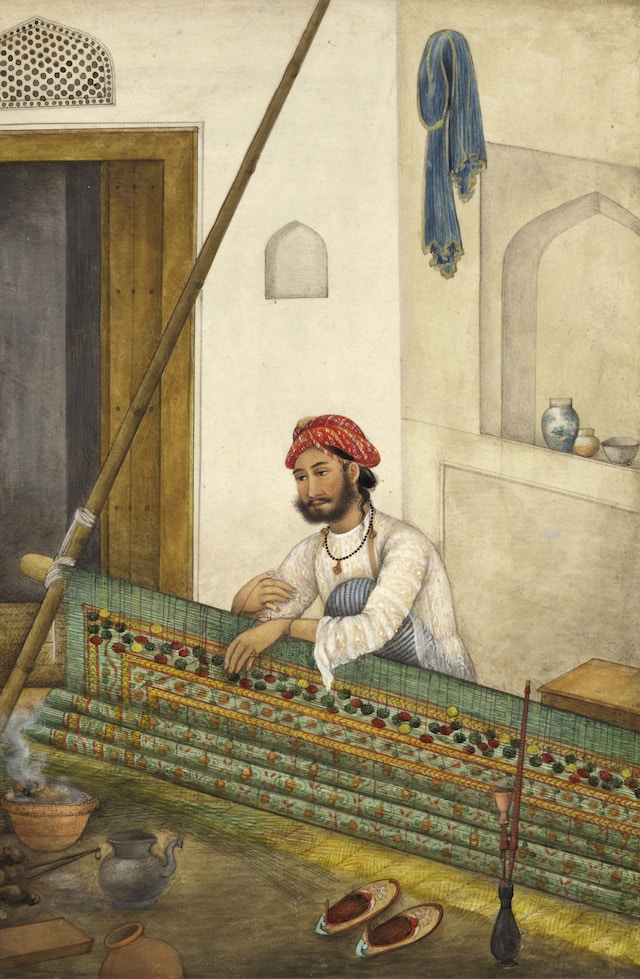
I began thinking about how India can formalize and scale up this small-scale cottage industry in India, to reach the buyers of premium and luxury goods. There is such a natural connection between handcrafted elements and luxury. Both are based on a rare and treasured set of skills. Both are made in small batches, not mass-manufactured. Both speak of attention to detail and an appreciation of beauty. However, the luxury or lifestyle industry demands much more, in order to truly be luxury.
In the specific context of our handicrafts, I think elevating it to luxury would first and foremost require artisans to work with better quality materials. Fine quality materials and tools are not easily available to the small-scale artisan or the handicrafts maker. Then, in many types of handicrafts, the design skills and tastes of the artisan might not be to the standard of a luxury goods maker who caters to a different market from the regular handicraft buyer, whether in India or overseas. That said, the skills and techniques that the artisan employs are unique and valued and must be encouraged to flourish and grow.
This is where I think, the Indian government and private sector players can intervene and chalk up a plan to boost the skills, potential and markets of our handicrafts industry. The idea is to open up a whole new market for handicrafts and handcrafted elements, in the premium and luxury goods and services industry. Whereby, handicraft makers become suppliers and contract manufacturers, albeit on a small scale, to the luxury industry. They would need to be supplied with the finest raw materials to work with, design specifications, and perhaps funding help to procure better tools and manufacturing equipment for their workshops.
The Indian government has always been supporting handicraft makers, as they form a very significant part of the semi-urban/rural population who live and earn by their unique skills and also create jobs. It is reported that after agriculture, small scale handicrafts sector is the next biggest employer for the Indian rural population. The government’s development commissioner for handicrafts says that as many as 7 million people are employed in handicraft making, of which 56% are women. Besides, it appears that as many as 52% of these workers are from OBC (other backward classes) category, which means it is a vital source of livelihood for vulnerable sections of our society. What’s more, what they produce is a significant part of Indian exports and earns valuable foreign income for the Indian exchequer, while also being admired for their rare and exotic beauty. Indian exports of handicrafts in 2022-23 were lower by 20% over the previous year, coming in at US $ 3.58 billion.
From what little I have read on the subject, the government support is usually in the form of financial assistance, setting up of bazaars or exhibitions for them to display their wares, and also finding buyers and markets for them. Looking through some of the government websites for data on handicrafts, I have to say that the quality of data and its presentation is appalling, with mischief being done through charts vs tables and colour codes and sometimes even the unit of measurement missing! It reflects a careless and lackadaisical attitude, prompted no doubt by the mischief-makers at Perfect Relations, the unprofessional PR agency that I made the mistake of joining in Delhi ages ago.
However, all this is nearly not adequate to keep millions of handicraft workers in India gainfully employed, and earning a good and regular income. It has to be a sustainable source of livelihood for them, and I don’t just mean in the eco-friendly sense which, it turns out, handicrafts more than delivers on. It is one of the cleaner industries, from an environment point of view. What the Indian handicrafts sector ought to aim for is to scale up and become self-sustaining in such a way, that many are encouraged to set up new businesses of their own and create more jobs. This formalization of what is essentially a cottage industry is what will also help many self-employed and small entrepreneurs see it as a viable and profitable business, with a promising future in it.
I am not for a moment suggesting that the handicrafts sector give up its traditional markets, both domestic as well as exports. What I am recommending is that in addition to these avenues, we open up the luxury and premium goods sector to them, where their skills and techniques find new uses and applications. The Indian handicrafts sector already operates in clusters, with many towns acting as hubs for these artisanal goods. They are based on factor conditions, of labour skills availability as well as raw materials availability. What they will now need additionally is access to better buyers and markets, as well as funding to help them scale up.
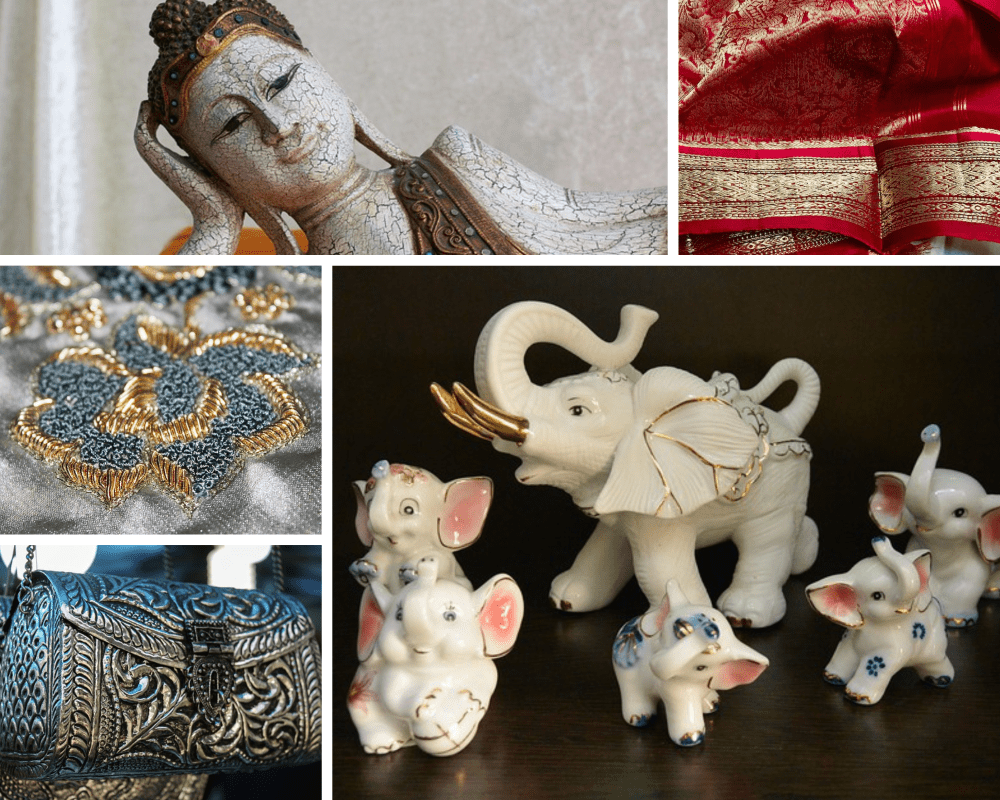
India’s premium and luxury goods and services industry will also need to upgrade its products and services to be able to incorporate artisanal and handcrafted elements. They will now have to imagine new lines of products and businesses, using these handcrafted elements as embellishments, enhancing the beauty and value of their finished product. From designer and luxury apparel, to jewellery, home furnishings and home decor, leather goods, luggage, furniture, lighting, carpets, luxury car interiors… the possibilities are many. And buyers needn’t always only be companies making luxury products; they can be luxury hotels as well as airlines.
I can already imagine metal inlay work such as Bidri being used in lighting fixtures and lamps, as well as in fine wooden furniture. Similarly, with marble inlay work or wood inlay as well. I can imagine zari or Zardozi work being incorporated into fine leather handbags, the kind made by Hidesign or Da Milano. I happened to discover handpainted leather handbags made in India by a company I had never heard of, called Anuschka Leather, started by an Indian couple now based in the US and UK. I can see the various embroidery styles from different parts of India in home furnishings, linen and decor, the kind sold by Fab India or Good Earth. As well as in ethnic chic apparel and sarees, using the finest of fabrics. High-end luggage using appliqué embroidery techniques or embossing designs on them. And all this achieved with a high degree of elegance and sophistication.
It is really up to private luxury and premium labels to innovate and integrate India’s age-old crafts skills and techniques in a contemporary and refreshing way. Giving new expression to India’s heritage as well as a new lease of life to India’s artisans. They will need to provide contemporary and better design specifications, come up with new ideas and find new markets.
Decades ago, Indian Khadi fabric was looked down upon as not premium; today’s blends of Khadi as well as Khadi silk are some of the finest and many Indian designers use Khadi in their creations. Which brings to mind Mahatma Gandhi and his vision of building India’s village economy which, he believed, ought to be based on local village crafts. Then, it seemed naïve and simplistic as an economic idea, but if you consider it in today’s context, connecting these village crafts and artisanal skills to contemporary lifestyle and luxury goods and services is the way to provide these handicrafts workers with a more viable future and new business opportunities. It is also another way to strengthen the rural-urban economic connections in India, where rural populations with craft and artisan skills can choose to stay where they are and earn better incomes and build growing businesses. After all, it is still the silk weaving families of Kancheepuram who supply Nalli and others of their kind even today.
Time to give our age-old rich handicraft traditions a modern twist. To interpret them in contemporary and stylish ways that create a new design aesthetic for today’s India and the world. Our high-end and luxury artisanal products and brands should do exceedingly well at department stores such as Liberty London, Harrods and Selfridges in the UK as well as Bloomingdales, Macys and Nordstrom in the US. We should aim for that day, when foreign companies come to India in search of our prized artisanal skills and materials, the way the world goes to Italy for leather designs and workers, or to France for lace-making, or to Scotland for knits and plaids. Perhaps foreign companies already in India – who have to source 30% of their produce from India – can also start to incorporate some of these traditional artisanal elements in their merchandise, both for domestic sale as well as for exports.
India’s handicrafts and their makers are ready to join the luxury lifestyle industry. All it needs is loads of imagination and ideas from the private sector and political will on the government’s part. New York, London, Paris, Milan and Tokyo are calling.
The image of zardozi embroidery in the photo collage is by Zarood CC by SA 3.0 on Wikimedia Commons.
The featured image at the start of this post is of a display of Indian artifacts at Kochi Muiziris, an art biennale held at Cochin, India by Mohnish Landge on Unsplash.

 Peripatetic Perch