

As part of my work on Brandology I had already intended to explore corporate brands’ connections with individual brands. On my blog, you will find some of my thinking reflected in my work on Pernod Ricard and its brands, as well as in Tata Motors/JLR and its brands. However, when I saw the new corporate brand identity for PepsiCo unveiled last year, I thought I must explore this line of thinking further.
I have already shared my thoughts and ideas on a new drink for PepsiCo that helps to replace the flagship carbonated cola beverage, Pepsi, as the Company works towards a healthier product portfolio in the future. In that blog post and strategy document, I had written about the importance of Pepsi’s brand links with PepsiCo the company, as the latter was founded on the former, and they share a brand name link as well.
PepsiCo’s new corporate brand identity is a literal interpretation of the company’s various product lines – foods and beverages – and the end benefit, smiles! It lacks the energy, vitality and contemporary spirit that the Company, PepsiCo was founded upon and that the cola brand, Pepsi, also embodies, although the company’s website says that the new design captures the energy, optimism and ambition of the company. The new corporate logo looks like the logo of any foods company, from General Mills and Kraft Heinz, to Nestle, in that it has lost the Pepsi identity altogether. PepsiCo doesn’t quite belong in the foods company category; it is primarily a beverage and snack company. PepsiCo also needs to remember that its chief competitor in the industry is still Coca-Cola, even if the latter is a pure-play beverage company.
The AdAge article I have cited said that the decision to change the corporate brand identity was based on the fact that only 21% of consumers could name any other PepsiCo brand besides Pepsi. I think this was completely unnecessary; why should consumers have to spontaneously recall any other PepsiCo brand, especially when the Company has made no effort to integrate them. And should PepsiCo integrate them at all?
These are some of the questions, I will be probing in this piece.
What does PepsiCo impart to its brands?
Let’s start with examining what the corporate brand offers its product brands. In the case of PepsiCo, it would be the following:
- A large global marketplace of millions of young consumers and the chance to cater to different tastes and palates
- A massive research and innovation capability that can create new products, test them and bring them to market
- A huge team of young, bright and energetic minds that understands changing consumer tastes and lifestyles, and can deliver to their needs
- A company with a history and track record of meeting consumers’ expectations and challenging competition, with Pepsi.
Therefore, there is an umbilical connection between PepsiCo and Pepsi which should not and cannot be broken.
Besides, PepsiCo in many ways imparts all that is good and great about its flagship brand, Pepsi, to its other products and brands as well. This is because many of PepsiCo’s corporate brand values tie in with Pepsi’s brand values.
And this should also be the aim of the Company: to diffuse and transfer as many of its corporate brand values to its product brands, and vice-versa.
Understanding Pepsi’s brand values
Pepsi was born a challenger to Coke and there is no getting around this. Its brand therefore, stands for the alternative and opposite of Coke. Some of Pepsi’s core brand values are:
- A bubbly, youthful effervescence
- An exuberant and optimistic never-say-die spirit
- Strong sense of individuality
- Anticipating the future and forward-looking
- Adventurous when it comes to trying out new tastes and activities
I would imagine that these very values helped Pepsi to be launched as the drink that was positioned as “the choice of the new generation”.
How many of PepsiCo’s brands share these values?
First, we must acknowledge that it is Pepsi’s brand values that gave PepsiCo its corporate brand values, and both grew and developed together.
Next, although I haven’t had the chance to delve deeper into understanding each of the other brands in greater detail, I can say with conviction that almost all of the main brands of PepsiCo reflect some or all of these brand values in different combinations. All, except one, that is. Quaker Oats. We shall address this in a bit.
Whether this happened by careful planning and design, or whether PepsiCo merely lucked into these favourable conditions, is hard to tell. I hope it was the former, both on the part of PepsiCo’s marketing teams and their advertising agencies. But these are very favourable and good conditions for any brand and company to be in, to have the corporate and product brands well-aligned in terms of brand values, consumer profile, etc.
In such a context, that PepsiCo wished to change its corporate brand identity because most consumers couldn’t name any other brands of theirs, is curious indeed. This isn’t necessary and there is no need, in my considered opinion, for PepsiCo to integrate and force-fit its brands together. They are already linked and connected at a deeper and more subliminal level through similar and common brand values.
What is to be done about Quaker Oats?
I think that for a young company such as PepsiCo with a range of products that are also meant for the young, having a product that caters to a different kind of target audience such as Quaker Oats does, is always going to be a problem.
The challenge is for PepsiCo to align Quaker Oats better with the rest of its product portfolio. I think this is possible by reimagining a new life for Quaker Oats. Instead of it being an ordinary oats product that needs to be cooked into a porridge or breakfast cereal, what if Quaker Oats was a crunchy, nutty delicious cereal like the rest of them in the market today such as Kellogg’s Muesli and Granola? And what if it also came in energy bars, that promise a good energy boost during the day as a healthy snack. I have never seen any advertising for Quaker Oats, and its packaging has very old-fashioned and traditional cues including the image of the Quaker that features prominently.
I must admit that I have been buying Quaker Oats in Goa, but only my aged parents consume it. And I am not young by any standard! But if even someone in her sixties such as I doesn’t feel like trying Quaker Oats, you can imagine the extent of the problem. Besides, there are several other oats brands available in India and many of them are made with masalas to suit the Indian palate.
While on the subject of Quaker Oats, let me also address a few recent acquisitions that PepsiCo has made. The most recent one being Poppi. As yet another carbonated drink, albeit with prebiotics, Poppi doesn’t do nearly enough justice to PepsiCo’s strategy of producing healthier beverages for consumers who are themselves opting to shift out of aerated drinks, especially in the US and in western markets. Another odd acquisition is SodaStream, when PepsiCo needs to exit the carbonated beverages category quickly and lead consumer preferences in this direction.
The one acquisition that PepsiCo made decades ago, Tropicana Fruit Juice, was absolutely in line with PepsiCo’s stated strategy and yet the company seems to have decided to sell the brand. I still see the brand being made and sold in India by Varun Beverages (one of PepsiCo’s big bottlers and manufacturers in India) with the PepsiCo branding on the pack. These are confusing signals by the company, though I would urge PepsiCo to hang on to Tropicana and contemporize it for today’s consumers.
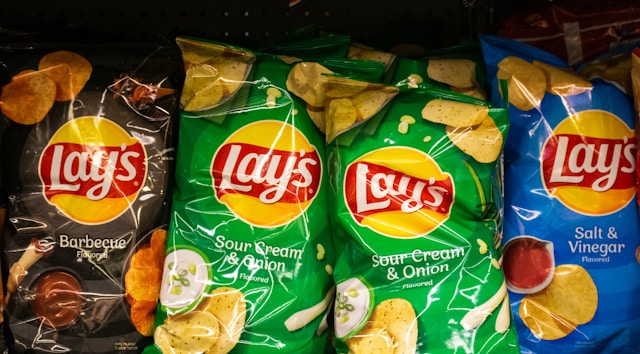
Coming to the snacks category, PepsiCo’s main brands appear to be Lay’s, Doritos and Cheetos and all of them seem to reflect similar PepsiCo brand values so there is no cause for concern here. The only problem that PepsiCo needs to guard itself against is too much reliance on the snacks category for growth. This is on account of the following reasons:
- PepsiCo needs to be careful about encouraging over-snacking as a habit, which is already a problem in America on health concerns
- PepsiCo should not become a snacks and foods company, which it is increasingly becoming by expanding its snacking product portfolio, and acquiring dips and sauces brands as the website seems to suggest
- On the other hand, PepsiCo needs to examine the future of the drinks and hydration market which might grow in importance and size, given extreme weather conditions and changing consumer preferences and lifestyles
Therefore, PepsiCo ought to strive for a better balance between snacks and beverages in the future.
PepsiCo’s strategy going forward, should be to create brand franchises
Now that we know that PepsiCo enjoys reasonably good connections with its product brands, let us explore how these can be strengthened. I think it might help if PepsiCo thought of its brands as franchises, as this would strengthen consumers’ connections with the brands as well as the company’s.
If PepsiCo took just its main power brands such as Pepsi, Mountain Dew, Mirinda, 7-Up, Gatorade, Aquafina, Lay’s, Doritos and Cheetos and treated them as franchises, it would help to create greater brand affinity with consumers. The marketing teams for each of these, ought to explore thoughtful line extensions where possible, create intellectual brand property including through compelling brand communication, and celebrity endorsements as well as merchandising opportunities in order to market them better.
The product categories in which PepsiCo operates – beverages and snacks – offer plenty of possibilities for connecting better with consumers through engaging brand communication, sports and entertainment content, celebrities and merchandising ideas that it would be a pity if PepsiCo didn’t pursue them. These franchises would have to be well-thought, planned and executed so as to avoid one-offs and ad hoc ideas and they must build upon what already exists so that the franchise and its main idea are preserved and it goes from strength to strength over time.
This is tough to do in the age of digital media, as it is so fragmented. However, PepsiCo brands have to be present in the digital and social media because their consumers are there. Still, thinking of brands as franchises makes most sense for PepsiCo and it is therefore, worth pursuing it.
- For consumers, it would expand the world that each of these brands inhabits and allow for more ways to connect with them
- For retailers and the distribution channel, it would make PepsiCo brands more worthwhile to stock and sell
- For PepsiCo the company, there would be more ways in which to express and share their corporate brand values
PepsiCo’s sustainability programme
PepsiCo’s sustainability programme, Pep+, is a great initiative and since it is central to PepsiCo’s strategy as well as its brands, it too could work to improve PepsiCo’s connection with its various brands.
The biggest area of concern in the world of CPG brands today is sustainability in packaging, and PepsiCo must do more in the area of sustainably sourced and produced packaging. While PepsiCo’s work in water conservation and in sustainable agriculture are good and essential, they needn’t be the focus of advertising and brand communication; there is too much emphasis on this in PepsiCo’s website right now, when PepsiCo’s brands and new innovations ought to be centre-stage.
Sustainability is best communicated through PR and editorial coverage, that too when the company has received an award or recognition of its efforts. And the company’s ESG efforts ought to be reported in the Company’s Annual Reports.
That said, PepsiCo can and must communicate its Pep+ initiative in an interesting way through its packaging itself, with a QR code that consumers can scan and read more about Pep+ on the website.
Some thoughts on new product innovations
I would seriously urge PepsiCo to consider exploring the new, non-carbonated, sparkling drink that I had recommended on my blog, which could replace Pepsi at some time in the future. It is meant to fulfill the company’s commitment to innovate and produce healthier food and drink options for consumers around the world.
I also think that PepsiCo’s snacking products should be baked and not fried wherever possible – in Lay’s, Doritos and Cheetos. Also, how about a Fries innovation from Lay’s that is once again baked, not fried? All this, with my overall recommendation to maintain a good balance between food and drink so as to not encourage too much snacking.
The category that might grow fast in future is water and hydration, as consumers shift to healthier beverages, become more fitness-conscious and adapt to global warming and extreme weather conditions. PepsiCo ought to focus on product innovations in this space in the years to come, and should also market its Aquafina better. Perhaps, with new fruit flavours, addition of mineral salts, etc. Incidentally, adding Gatorlytes (electrolytes under Gatorade) to water and calling the new brand Propel is not a good idea, in my opinion. And on Gatorade, can we do away with the chunky, clunky G and create a sportier and sleeker icon instead?!
A quick observation on PepsiCo’s corporate earnings. The company’s website features earnings reports only from 2019 onwards, and there are the Covid-pandemic years to consider. Besides, they do not report earnings by segment (snacks and beverages separately). However, it appears that the volume growth in both snacks and drinks is mostly in negative territory in North America in recent years and growth seems to be coming from APAC, LATAM and Europe to some extent. Also, prior to the pandemic, PepsiCo seems to have seen revenue growth of around 4%, which jumped to 8.7% in 2022 on account of higher prices, I would imagine. After 2023, revenue growth has started to taper and even operating profit margin – which the company doesn’t report – has also been weakening. From 15.6% in 2018 to 12.1% in 2025. I don’t know what “cost of sales” represent and why they are so high, almost 40%-50% of net revenue. I am not a finance professional, but these are areas of concern and PepsiCo must address the issues of volume growth in North America – especially if it has to do with consumers’ tastes and preferences changing – as well as improving operating profit margins.
PepsiCo must grow institutional sales
While PepsiCo’s brands are targeted at individual consumers and households, the Company must focus on growing institutional sales as well. It is true that for several years now, both Coca-Cola and PepsiCo have focused on increasing at-home consumption with larger pack sizes, in order to grow depth of consumption.
However, the time has come for PepsiCo brands – especially the drinks – to be seen and served at the right places for them to enhance their brand image and to recruit new consumers.
PepsiCo needs to boost its sales with hotels, restaurants and bars, cafes, airlines and rail networks, etc. in order to boost out-of-home consumption of its brands and to gain new consumers, who can then be converted into regular at-home consumers.
Back to the future then, for PepsiCo.
The featured image at the start of this post is from PepsiCo’s website, and I wish they would feature more images of their products in their media gallery on the company’s website.

Post script: I must add that the new corporate identity for PepsiCo as well as the new website strike me as the mischief and meddling of unprofessional PR agency idiot bosses from India who ought not to be in the industry.
I must also mention that food, drinks and smiles is too close to an old advertising campaign for Thums Up in India. Sometime in the 1990s, Thums Up ran a “Food, Friends and Thums Up” advertising campaign in India which depicted yuppie friends getting together over food and Thums Up. It might have been created to raise the image profile of the Thums Up brand as a drink for cool folks that they can proudly consume at home and out of home. It did not feature any celebrities.
Besides, food, drink and smiles doesn’t make for a differentiated corporate brand positioning – and strapline – for PepsiCo.
 Peripatetic Perch