


It was too good to be true. China’s economic growth powered by its exports sector delivered annual rates of real growth between 10% and 14% for years together in the 1980s and 1990s. Something the world watched with awe and admiration, as the Middle Kingdom surged to become the world’s second largest economy in GDP terms. The recent travails of the Chinese economy since the 2008 Financial Crisis and the Covid-19 pandemic have put the brakes on its economic growth, and perhaps some of it could have been avoided.
The 2008 Financial Crisis was terrible for China’s economy, as global trade and international investment stalled before starting to grow again. However, since the Chinese government was investing hugely in building domestic infrastructure, this momentum kept the economy chugging along for some more years at around 8%-10% annual real growth. China became aware that it needed to focus much more on growing its domestic consumption and also its services sector since its economy was too manufacturing and exports dependent.
In 2015 or so, the Chinese government embarked on a China Industry 2025 programme of economic growth that would be driven by massive investments in new and promising areas of technology across various industries, as also a concerted indigenisation plan. These were China’s way of building the nation’s capacity and reducing its dependence on the rest of the world, particularly, America. Having benefitted from globalization and export-led manufacturing which brought in a lot of technology as well as investments, China could now decide to grow on its own steam.
Over the years, China built a large and formidable domestic state-owned industrial sector, before allowing private companies to operate. And when it came to multinational corporations operating in China, they had to set up joint ventures in collaboration with local businesses and allow technology transfer. This combination of state-owned enterprises and private enterprise worked like gangbusters for several years, because most state-owned companies focused on core and strategic industries of the time, while private sector companies were focused on export and on growing domestic consumption. Many multinational companies were, in fact, in China for its huge domestic market not only for exports.
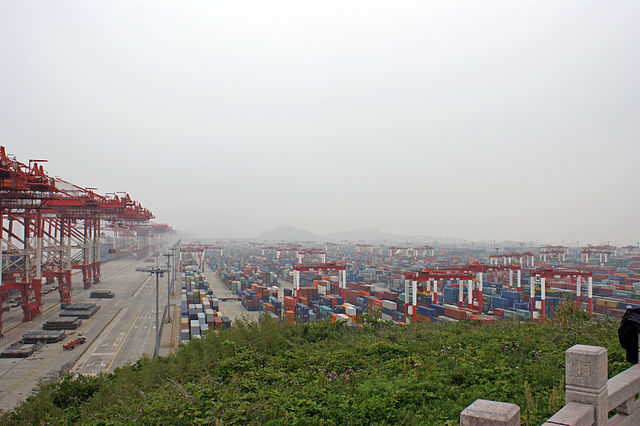
Things began to change in Trump’s first term as American President when the US took a decidedly tougher stand against China for what it called unfair terms of trade. And launched a tariff and trade war with the Middle Kingdom. Actually, many years earlier, American leaders were already calling China a currency manipulator for artificially keeping the yuan low, so that its large export sector would reap the gains. The growing distrust between the US and China – with its UK and European allies also joining in on the US side on many occasions – led China to undertake its massive indigenisation programme which is reported to have delivered results for China on most parameters. Meanwhile, the new Chinese regime under Xi Jinping decided to crack down on corruption in local governments as well as in the corporate sector. This took the bizarre turn of even attacking tech giants such as Alibaba and going after Jack Ma and other wealthy businessmen. I remember reading about all this in The Economist and elsewhere and thinking this can’t be good for Chinese business and for the economy.
Now, after the Covid-19 pandemic, Xi has mended fences with China’s business community and has even reached out to encourage Chinese tech companies in particular to innovate and help grow the Chinese economy. However, the same regime has also increased its level of intervention in business in China, with the Chinese Communist Party (CCP) actively participating in the management of companies in the country. I couldn’t believe this when I first read about it. As an Indian professional one is used to a large public sector in India as well, and we too have a mixed economy – a combination of state-owned companies and the private sector – operating in our country. But the government in India stays out of the management of private sector businesses for the most part and this is how it should indeed be. It was strange to read that local officials and members of the CCP in China sit in on management committees of companies and obviously influence key business decisions.
The reason I bring this up is because China is reported to be experiencing cut-throat competition in recent months as companies engage in vicious price-wars and it is taking a toll on companies’ earnings and profitability. According to this recent article from Bloomberg, this is the latest addition to China’s overcapacity problem when they were churning out high-tech products in large numbers and dumping them overseas, from 2023 onwards. This export-led growth once again came to China’s rescue as the reopening of the Chinese economy after the Covid-19 pandemic didn’t go as planned. There was the Evergrande crisis, only the tip of the iceberg of China’s housing crisis, that sent domestic consumers into a collective sulk and domestic consumer demand fell to unprecedented lows.
The housing crisis is itself only a symptom of China’s problems with the state sector, and the root problem needs to be addressed. Therefore, it is worth pondering over whether China’s model of economic growth – through its own unique form of state capitalism – is causing more problems now. I can’t claim to know much about China, but from what I have been reading and observing of its economy from India, it strikes me that perhaps the state control of business is creating more problems now than providing solutions. And I must tell you that as an advertising professional, observing China and how it is developing its consumer economy is fascinating to say the least.

I am inclined to think that state control of the economy is alright to the extent that the Chinese government was setting up its large public sector businesses and also pumping huge investments into infrastructure building, including the building of new cities. The problem arises when the state tries to intervene directly in the management of private enterprise, as is the case with Chinese CCP participating in company meetings and the like. Reading about what the Chinese government is doing to curb the price-wars, it is strange that they think that relying once again on state control will solve the problem. The problem has been created in the first place by unrealistic targets being given to local government officials who then turn to companies to crank up the overcapacity. When all that is required is for companies to cut production of the goods gradually, so that inventories are depleted over time and prices get back to normal levels. At a time when domestic consumer demand in China is weak, this is the best course of action for their companies to take.
Besides, instead of the Chinese government warning companies engaged in predatory pricing of strict action, it would be much better for their competition commission or an antitrust body to generally regulate against monopolistic and unfair trade practices. I am not sure if China has an independent competition authority to ensure there is healthy and adequate competition between businesses, but it is clearly time for one.
This brings into focus, the main areas where China needs to undertake structural reforms. The Chinese economy is said to be considerably decentralised, contrary to what most of us believe about the country. However, this decentralization appears to be only in terms of execution and implementation, with centrally planned goals coming from above. The decentralization of the Chinese economy doesn’t allow for local provincial governments to even raise their own taxes, which is where most of their problems begin. China’s housing crisis, for example, is a result of this as I have written before on my blog. The fact that local governments have to set up what are called LGFVs (Local Government Financial Vehicles) in order to generate income, and rely on real estate and infrastructure projects, is responsible for the real estate sector amounting to as much as 30% of the Chinese economy. These days it is said to have reduced to 25%, but that is not saying very much.
I think that the Chinese government ought to allow local governments to raise their own taxes and share some of it with the central government. And instead of setting targets or goals for the local provinces, they should allow them to compete for business and investment, as states do in India and in many other countries around the world. This would naturally improve the competitiveness of local governments and provinces in China.
On solving the weak consumer demand in China, the Chinese government seems to still be resorting to subsidies for trade-in of appliances, but as I have written earlier this has very limited value in the short term. They need to resolve the housing sector issues so that consumers feel confident enough to shop and consume as before. And, of course, I have also written about the need to reform the Chinese hukou system which would automatically increase the urban consumer base in the country. Finally, there is the need for companies to expand to smaller cities in the hinterland of China and not stay confined to large cities, such as Beijing, Shanghai and Guangzhou.

China’s economy grew 4.8% in the September 2025 quarter over a year ago, slower than the 5.2% growth it registered in the previous quarter which was better than estimates. However, it appears that the growth came mostly from exports yet again, and fixed asset investment which includes real estate contracted -0.5% in the year to September, from the corresponding period last year. Private investment is reported to be weak; with consumer demand weak and overcapacity in industry especially in high-tech goods, it is not surprising that private investment is weak. On the other hand, with price wars and overcapacity, it is perhaps better that private investment in new fixed assets remains weak until prices stabilize. Retail sales growth at 3% was also weaker in September than in August, while industrial production rose 6.5% from 5.2% in August 2025, possibly fueled by exports. And consumer price inflation in China continued its deflationary trajectory, contracting by a smaller -0.3% in September 2025 even as core CPI at 1% was the highest since February last year.
Returning to the government, it needs to create a framework of policies for businesses to be able to operate within, but refrain from actually interfering or intervening in the running of business. There ought to be clear policies and an enabling environment for companies to operate anywhere, and I think the time has come for China to create its own set of such policies. A competition authority is one such necessity, as China grows its economy and its businesses grow larger as well. There must also be the rule of law when it comes to doing business in China, which would benefit both Chinese companies as well as multinationals as the world of business grows in complexity.
China might have chosen the path of indigenisation over the past decade, but I doubt this means that the Middle Kingdom is walling itself off from the rest of the world. As the world’s second largest economy China has yet to exert its influence on the world stage, and its time is now. It needs to create a set of policies that will help businesses to continue to invest in the country over the long-term and not take flight at the slightest pretext.
Time to give the Chinese concept of “socialism with Chinese characteristics”, a whole new meaning relevant for the era of capitalism that China is very much experiencing. One that will remain relevant for the next few decades at least. If the 2025 Plenum of the CCP which concluded recently is any guide to the future, it appears that China plans to double down on boosting domestic consumption and also focusing on self-reliance in technology, according to this CNBC article.
However, as I said earlier, China’s emphasis on self-reliance must not be mistaken for isolationism.
The featured image at the start of this post of the Shanghai skyline in a fog is by Ralf Leineweber on Unsplash
 Peripatetic Perch