


When I read about the latest tranche of Vodafone Idea equity stake that the government of India is going to have to acquire, as spectrum auction dues get converted to equity, the first thought that occurred to me is “Oh gosh! Soon it will become a PSU!” And we all know the fate of our PSUs, especially the many loss-making ones, most important of which was Air India. The circumstances are different, but it would be equally tragic if one of India’s leading mobile service operators was to go entirely into government hands.
Since the late 1990s, when mobile phones started to make an appearance in India, our country is believed to have come a long way. In fact, it is often said that India has been experiencing a quiet mobile revolution especially for the past decade or more. When you consider how many people in India are now connected via the mobile phone, and are active users, the widespread usage almost makes the mobile phone a necessity and perhaps even a commodity.
Of course, most of the revolution has taken place among prepaid mobile phone users, and also in feature phones, which is what makes mobile phone usage in India ubiquitous. The reason for this is that our mobile tariffs are said to be the lowest in the world, making the service accessible to everyone who needs it. However, there has been much turmoil in the industry for decades, and it all comes down to government policy. From the days when mobile services were introduced city by city, or circle by circle, the government mandated that there must be at least two operators in every circle, in order to ensure fair competition. Then the industry exploded with scores of new entrants – many of them overseas companies – as the government liberalised the industry to allow much-needed investment. However, in what has now come to be called the 2-G scam, the Supreme Court quashed most of the licenses that were given out, deeming them illegal and in no time at all, the industry whittled down to just a few companies, most of them Indian with the exception of Vodafone.
I am not very familiar with the mobile telecom industry as I have never worked on it even during my career in advertising, and I do not wish to go into details of why India went from opening up the telecom sector to sending many new companies packing from the industry in this article. I am trying to understand the fate of Vodafone Idea as it stands, what implications this has for the company and the brand, and what it means for telecom policy in India going forward. In the course of exploring or understanding the telecom policy, I realise I would have to delve much deeper and this article might not allow for it. If there are any gaps or lacunae in my information which has come from doing some online reading, I hope you will forgive me. In fact, from what little reading I have been able to do online on this subject I find that there isn’t much clarity, as policies have been changing frequently and the media hasn’t always kept up with it. Then, there was the problem of government sites that Google served me not loading at all, which I suspect was unprofessional PR agency mischief and meddling.
Anyhow, as a mobile phone post-paid subscriber in India for almost 25 years or so, and mostly with Vodafone starting from its Hutch days, I have been observing and reading news about this company as well as its competitors. Besides, Vodafone was a client of Ogilvy Advertising in India and globally for many years. Vodafone in particular has gone through many changes in ownership in India, starting out as Hutch with Hutchinson, based in Hong Kong, which is what led to another bizarre case of capital gains tax being slapped on Vodafone sometime around 2008-10. Eventually, the Supreme Court had to step in and order that no capital gains tax was payable by Vodafone as it was acquiring a company, not selling stake.
The merger with Aditya Birla Group’s Idea Telecom was perhaps the turning point in the history of this company in India. I think many of the problems with Vodafone Idea can be explained by the past decade. When the merger with Aditya Birla Group took place sometime in 2018, I thought that perhaps Vodafone was preparing for a quiet exit in the near future. With the industry facing uncertainty thanks to policy, underinvestment despite millions of rupees being spent on spectrum purchase, and low tariffs, Vodafone might have considered exiting India and investing elsewhere where they might have gotten bigger returns. To their credit, I must say that they persevered and have shown great patience with waiting for the Indian mobile telephony market to mature and come into its own.
In fact, I was surprised to read that after the latest round of dues are converted to equity to be held by the government of India, Vodafone Idea will be almost 49% owned by the government. The media says that management and control is right now with Vodafone and Aditya Birla Group promoters, but for how long is the question. What is even more surprising is that of the remaining stake, Vodafone owns 16% while Aditya Birla Group owns less than 10%. The reason I bring this up is because I think that the company needs capital, which needs investors to be assured and confident in the future of this company as a viable private sector company. I think Aditya Birla Group would do well to raise their equity stake as a confidence-building measure, perhaps through a fresh issuance of equity capital.
In my opinion, the merger of the two companies that took place in 2017-18 ought to have been managed such that the merged entity benefitted from the strengths of the two companies and brands. The newly merged company Vodafone Idea ought to have chalked out a new strategy for itself, because remember, Reliance Jio had launched its mobile service in the meantime. And, there was the old player, Airtel, still going strong even though it too was impacted by the Reliance Jio entry. I haven’t researched the mobile service operators’ earnings, or markets shares, etc enough, but it strikes me that there were two ways the merged company could have built its new strategy.

First, the strengths of the two brands, Idea and Vodafone needed to have been studied in detail and based on this, the company could have decided to segment the mobile market significantly in two ways:
- Used Idea as the telecom brand for the smaller cities and towns, as also for low-to-middle class customers, while Vodafone stayed the brand for the upper-middle to affluent customers with a focus on metros
- Used Idea as the pre-paid telecom brand, and Vodafone as the post-paid brand across all markets.
The company ought to have studied Reliance Jio’s strategy better and if, as I think was the case, Reliance Jio netted in the biggest haul of pre-paid users initially, what with their rock-bottom tariffs and free data offers, etc, Vodafone Idea’s strategy could have been to devise a competitive plan for Idea and gone to town with it. It seemed to me that both Jio and Idea were targeting the same market/customer.
Unfortunately, the company made the mistake of merging both their telecom brands and then didn’t communicate at all! I can tell you that as a subscriber I was terribly confused myself as to what the hell Vi! was! I also learnt later that it was meant to be pronounced as ‘we’! And just recently, I saw a terrible TV advert asking customers to be the ‘we’ in someone’s life! Yikes, if this isn’t cheesy, I don’t know what is! I don’t know which advertising agency is handling the Vodafone Idea business now, but I hope it isn’t Ogilvy that is responsible for the merged brands and the communication, or the lack of it.
I am not sure if Vodafone Idea’s woes are entirely due to only the mistake of merging the brands as Vi, or if there were other management issues at the company as well. As it happened, the telecom industry turned a corner only when Airtel decided to take the tough decision of raising tariffs, irrespective of Reliance Jio’s rock-bottom fares, and I think Vodafone Idea followed suit. Airtel is performing much better now, but Vodafone Idea is still in the doldrums and this must mean that the company still needs to have a well thought-through and differentiated brand strategy for the future. The sooner the better, because at the rate they are losing subscribers it is an issue of survival.
And to think that the same Vodafone Idea has had the gumption to meddle with my mobile connection in Goa and not allow me to make or answer calls on my phone for the past many months, despite my repeated complaints at their Vasco office/store. This, I am sure is the work of unprofessional PR agency idiot bosses who have no business meddling with me.
The other very important aspect that needs immediate attention as much as the raising of equity stake by the Aditya Birla Group promoter, and a new strategy, is the reconstitution of its company board. Drastic as this may sound, tough times call for drastic measures. With the government owning almost half the company, it is likely that they have their representatives on the board of Vodafone Idea. To provide balance and expertise in managing competitive private sector companies, perhaps Vodafone Idea ought to draw in the finest and most experienced directors from across industries to steady the ship and set it on a new course forward. This too would be immensely helpful in boosting confidence in the markets, among investors and creditors as well as customers. It would also provide the much-needed direction for the company to turn itself around and become a viable and profitable company once again.
I think there is no time to lose in putting all these measures in place. Enough time has been wasted already, while we all watch this slow-motion train wreck, or shipwreck if you prefer. Even if Vodafone Idea becomes a state-owned PSU soon, there must be a plan to turn this company around and return it to the private sector – either to the same promoters (Vodafone and Aditya Birla Group), or find a new buyer for it. There is no way that this should be allowed to go the Air India way, which is to remain a loss-making PSU and a sinkhole for taxpayer money. In fact, I was also wondering why Vodafone Idea has not been put through the IBC process, now that we have one, and restructured to become a commercially viable company.
Now, let me address a few policy issues. Like I said, I haven’t really delved deep into our telecom policy, but from merely observing and reading about the industry for decades as well as doing some online reading now, I think there is a serious and urgent need for the government and the telecom industry to revisit policy. I think that the Indian government (no particular one, but all) has been using the telecom industry as a profit maximisation machine for itself, when it ought to have been encouraging and facilitating growth in the industry. The telecom policy ought to be based on what the country’s and industry’s objectives are over the next 10-15 year horizon. According to Statista, India will achieve 86% mobile phone penetration in 2026. Now that India has achieved almost 100% penetration of mobile phone usage across the country, among all income and social classes – though this has come at a price, of keeping tariffs low – what are the new objectives we can set going forward.
I also think that the new telecom policy ought not to be focused on charging mobile service operators fees, levies and surcharges at every step of the way, as this makes it difficult for companies to innovate, reinvest in the business and grow the industry. In my opinion, if the government sells spectrum to mobile service operators, the money raised at the spectrum auction ought to be the only charge on companies. After that, the only money companies in the industry owe the government are taxes, both GST and corporate taxes. From what I have managed to read, the Indian telecom policy earlier had a spectrum auction as well as an annual license fee. Because the annual license fee was too steep – no idea why it should be so – this was changed to a revenue-sharing model in which 8% of a company’s revenue is payable to the government of India. This 8% itself includes a Universal Service Obligation Fund as well as a license fee of 3-5%. In addition, there is a Spectrum Usage Charge or SUC of 5%. All of these charges on telecom companies trying to operate their business profitably, are arbitrary and ought to be done away with. If a company has purchased spectrum worth millions of rupees, the government should not be charging them a license fee every year, on top of which also a charge for using the spectrum, and then a share of their revenue as well. None of this is fair nor reasonable and I think the industry as well as the government ought to find a way to formulate a new telecom policy – one that encourages innovation and growth, frees the industry from usurious charges, and allows companies to regularly make investments as it is a capital-intensive business.
If the Indian telecom industry was once a magnet for investment, including by foreign companies, it is now characterised by huge barriers to investment. From an industry with several players – even if the process of issuing licenses to them was suspect – we now have a duopoly, because Vodafone Idea is not even able to compete to survive. I haven’t touched upon the government and the telecom regulators looking the other way when Reliance Jio launched with rock-bottom tariffs, engaging in predatory pricing. The government only believes in capping prices, never setting a floor; the only time it sets a floor is in the spectrum auctions where it makes windfall gains! This cannot be healthy for the industry when there is little to no innovation, because there is not enough competition.
The fact that there is always some dispute or the other, some disagreement over charges, AGR dues, additional time sought to make payments, and on even the definition of “core business” in the context of telecom suggests that there is plenty of room for improvement and the need for a policy rethink is an urgent and critical one.
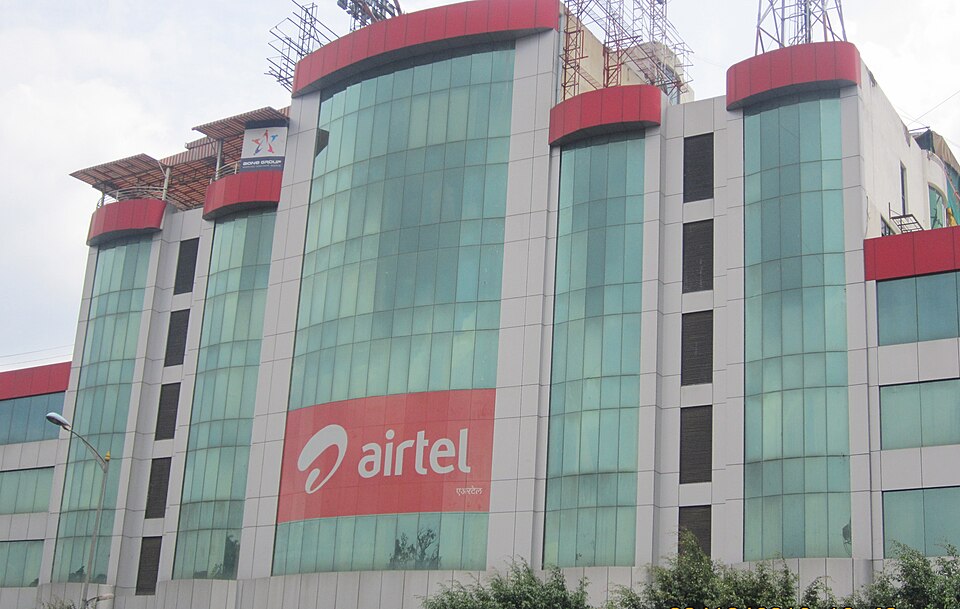
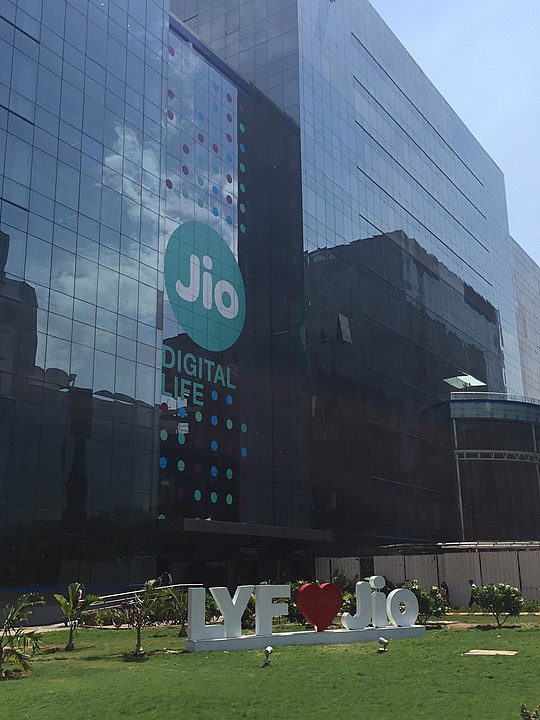
At the moment, both Airtel and Reliance Jio are doing well – the former focusing on premiumisation and adding on services as well as enterprise solutions for businesses, while Reliance Jio appears to be focused on the volume game, adding on new subscribers each month. Both have also been able to invest and build their broadband fibre network and internet services businesses. The problem with Vodafone Idea is that it is still in that sense a pure-play mobile service operator, with no diversified or allied businesses. Just a few days ago, The Economic Times reported that Vodafone Idea had launched its 5G services in Mumbai and this would be followed by a larger roll-out across the country. I wondered what launch it is without any proper advertising and brand communication behind it.
These are what I mean by serious bottlenecks in some industries which the government and India Inc ought to resolve soon. Telecom is certainly one and civil aviation or commercial airlines is another. How strange and ironical then, that I should mention both Vodafone and Air India together in my headline for this article; it is symptomatic of the policy paralysis that impedes progress and growth in certain industries.
Time to set Vodafone Idea right, and then to set it free. The sooner, the better.
The featured image at the start of this article is by Chuttersnap on Unsplash

 Peripatetic Perch