


Regular readers of my blog would know that I have been writing about the need for policy reforms in our airlines and telecom industries, as I think they both suffer from serious bottlenecks and are unable to grow at the rate at which they should be growing. Commercial airlines are important for a fast-growing economy and they are potential brand builders for countries. I have already shared my thoughts on how we can improve the state of our airlines industry domestically and internationally and I have also written on what the merged Air India of the 2000s could have been.
In this blog post, I’d like to share my thoughts on the telecom industry in India – by which I mean mobile telecom services, of course – as this industry too is beset with problems that can be addressed through policy changes. I have never worked on the telecom business in my long career in advertising and brand communications in India, and therefore I had to familiarize myself with a lot of history and background as well as technology-related issues before putting down my thoughts. I must say that I could hardly find any sensible or comprehensive writing or information on the industry online, and I have had to make do with what little I could find and read. Of course, like all of you, I too have been reading for over two decades about the industry in the newspapers and listening to TV news, and I will not go over much of the past history of the telecom sector except to mention the turning points in the industry.
You will find that much like the airline industry, the mobile telecom industry too has had its periods of quick and wild expansion, followed by troubled times and we are now down to just two major telecom companies in the industry, Bharti Airtel and Reliance Jio, along with a third, beleaguered Vodafone Idea that the Indian government has had to acquire a large stake in. More than the expansion and contraction of the industry in the past two decades, it is the policy changes, lack of clarity and constant disputes requiring even the Supreme Court to step in from time to time, including the major ruling it gave in 2010 when it cancelled most of the telecom licenses issued saying they were illegal and did not follow due process. We are familiar with all of this, but are still unable to explain why the industry which began with a couple of companies swelled to several only to shrink back again to a duopoly and a third company under the weather.
Problems related to telecom policy in the country
The telecom industry is a strategic industry in most countries and so it was in India as well, dominated by a large public sector undertaking, BSNL, for most of its history. The advent of mobile telecom in India is when it was opened to the private sector to operate in and a minimum of two circles in every city/town was stipulated to ensure that there was competition. From what I have been able to read online, it appears that the initial license fee set was too steep for most companies, and so on popular demand, the license fee was set as a share of the adjusted gross revenue or AGR – the much bandied about term in the industry – in 1999. The other problem was that the telecom license was clubbed with spectrum, which was later separated. I couldn’t find any information on what the original steep license fee was, but it was changed to 8% of AGR, payable every quarter. This 8% of AGR as License Fee in turn comprises 5% as USOF (Universal Service Obligation Fee) and 3% as Spectrum Usage Charges.
This was considered reasonable at the time. However, when you consider that the telecom industry is hugely capital-intensive, and that mobile service operators were having to also shell out fortunes to acquire spectrum, you can imagine the financial stress it already placed on companies. Besides, I think the regulators had also set some kind of tariff cap in order to ensure affordability for the masses, and telecom service providers could not raise tariffs as they pleased initially. While, on the one hand, these low tariffs helped usher in the quiet mobile revolution all of us in India talk about today with almost 90% mobile phone penetration in the Indian market, they have taken a huge toll on the industry and its health. And if it carries on in this same fashion, it could even impede investment in the industry, of which it requires considerable amounts in order to upgrade technology regularly and to expand coverage, services offered, etc.
I think the time has come to review and revisit India’s telecom policy and make it ready for the 21st century. India has achieved near-total mobile coverage given its large population and vast geographical area, but at what price? We cannot continue to have our telecom industry hamstrung and struggling to grow profitably, while the Indian government has been on a revenue maximization spree, both with spectrum auctions and with exorbitant license fees and spectrum charges. Therefore, the time has come to alleviate the telecom industry from the pressure of too many fees and charges being imposed on it.
Having achieved universal coverage across India through mobile telephony, why do we still need a USOF, for example? Its purpose initially was to build the ecosystem of interconnectivity between operators and networks, from what I understand. Assuming that interconnectivity is now fully established between telecom networks across the country, it might be a good idea to drop USOF now. Then, I always thought it ridiculous that after companies pay a fortune to acquire spectrum at these massive auctions, they are required to also pay a charge or fee to use it! This makes no sense, whatsoever, and I think spectrum usage charges must also be dropped. In fact, I remember reading a few years ago that the government had agreed to drop spectrum usage charges, but I find that companies’ corporate earnings and annual reports still mention license fee and spectrum charges as an expenditure head, and it does amount to 8% of revenue from operations. In my considered opinion, telecom license fees ought to be between 2% and 3% of AGR and payable annually, not every quarter. This would relieve the burden on telecom companies and allow them to invest, innovate and grow their businesses.
Speaking of companies’ financial statements for Airtel and Vodafone Idea, I must mention that I discovered that network services and depreciation and amortization charges are the largest expenses for telecom companies, the latter comprising around 40% of revenue from operations. I couldn’t find the financial statements for Reliance Jio Telecom separately, but I would assume that the picture is similar. This alone tells us how capital intensive and technology dependent the industry is. I also wondered how telecom companies always report a very high operating margin of 40%-50%, until I discovered from looking at their Annual Reports that this is before depreciation and amortization expenses; after accounting for this, the operating profit margin more than halves.
India’s telecom companies are also under a huge debt burden. As an infrastructure industry and a capital-intensive one, telecom service operators in India had piled up huge debt – for the massive spectrum auctions and for their operations – that after the bad loans problem of many infrastructure companies, including power discoms, telecom has been the next industry most under financial stress.
Therefore, the government and telecom policymakers need to better understand companies’ businesses and their needs, and create an environment which encourages investment, innovation and greater and better usage by consumers. In this context, I must state another very good reason for delinking spectrum from telecom policy. Today’s telecommunication technologies are not all based on spectrum; broadband fibre as well as satellite communications are the new technologies and are growing faster than conventional mobile telephony in many countries. This, even as India rolls out 5-G telecom networks and services across India. In fact, Bharti Airtel and Reliance Jio have been able to diversify their businesses to also offer broadband fibre services – both for internet connections as well as for streaming OTT content on televisions at home – and to cater to the corporate and business segment. This is the future towards which India needs to go and our telecom policy should, therefore, be technology-agnostic.
And, here is another thought for the department of telecom and TRAI to consider. Instead of TRAI regulating media since so much of it is digital and delivered via telecom nowadays, I would suggest that it permit telecom companies to earn a fee from media organisations, especially those that stream OTT content, as it is an important conduit for delivering media content. It would be similar to the carriage fee that they once paid to cable TV operators and that they also pay to DTH companies.
These are the kinds of policy and regulation that DoT and TRAI ought to be focusing on, in order to improve the earnings of telecom companies and to ensure fair competition in the industry.
Problems of marketing that telecom companies must address
When it comes to the health of India’s telecom industry, we must also consider the role of marketing and being able to service different customer segments. Here, we have had an awful experience, I have to say. Unfortunately, because of Reliance Jio launching with rock-bottom prices for packages that included plenty of free data and services, consumers in India have been spoiled for the past many years. It was predatory pricing and I am surprised that while the Indian telecom regulators were keen to cap mobile rates, they didn’t show the same concern for the floor-rate and for predatory pricing. It wasn’t until Airtel decided to raise tariffs that the industry moved to more sensible pricing. However, while prices corrected or improved, the marketing practices across the industry haven’t changed or improved very much. The subscriber still gets huge amounts of data as part of his or her plan, and several benefits, whether he or she uses them or not.

This is where I think the telecom companies themselves can make a huge difference, in order to improve and increase usage as well as the ARPU (average revenue per user) which is a key industry metric. I am not a marketing person but even as an advertising professional, I think that the fundamental and classical principles of marketing have been ignored and important marketing tools have been blunted in this industry. By offering plenty to the subscriber at the onboarding stage in order to gain subscribers, companies have robbed themselves of the chance to serve their subscribers better and improve and increase their usage over time.
Let me explain. I think companies need to research and understand their customer segments/subscribers better and employ better market segmentation while devising their packages and plans – both prepaid and postpaid. Then, there is the hugely profitable business and corporate customer segment, which telecom service operators must understand and target separately with better plans, tariffs, add-ons and benefits. And finally, I have always wondered why mobile telecom service operators don’t have a customer loyalty or rewards programme just like other service businesses such as credit cards, banks, airlines, hotels and even large retailers do. Therefore, the focus must not only be on customer acquisition, but on retaining customers and growing their usage of the mobile service brand over time. As a consequence, there is little brand-building in the industry, sadly.
Around the world, the telecom industry is quickly moving towards screen convergence and is the conduit for delivering myriad connections – from connecting with people over voice and text, and the internet, to accessing entertainment, news and media content as well as apps – no matter where we are. And India is such a vast market for telecom and the needs so varied across income classes, occupations, and geographical and cultural groups that a sensible and future-oriented telecom policy along with the right marketing efforts by companies ought to make this one of the most exciting and challenging telecom markets in the world.
We need to work towards a future where the telecom industry in India is positioned as one that speaks several languages, yet is connected to a bright and prosperous future. Let all the languages and colours of India bloom. Dial up for reforms now.
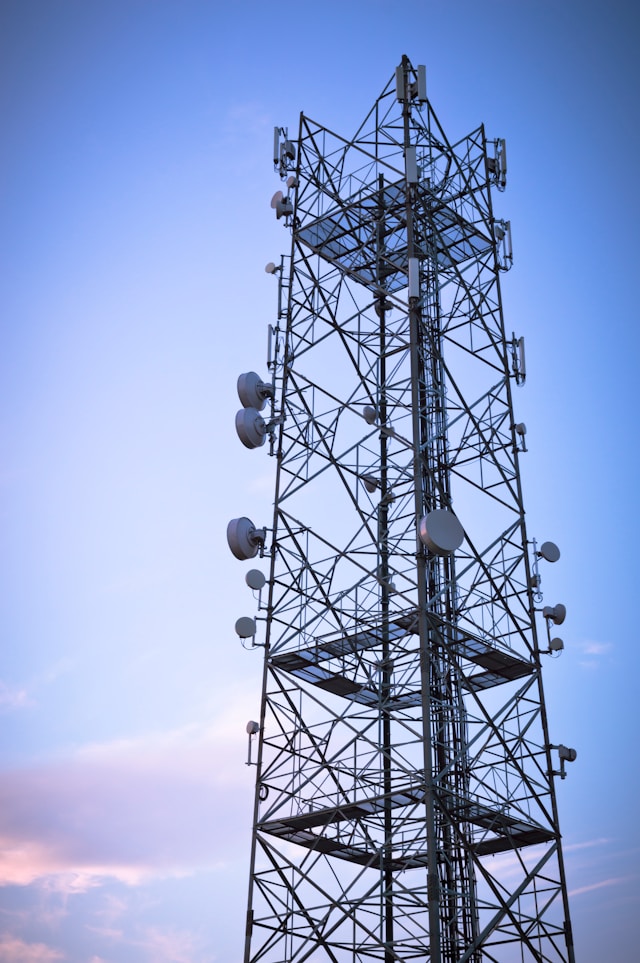
The featured image at the start of this post is by Akshay Srivastava on Unsplash

Note: In my next blog post, I will be exploring how Vodafone Idea can turn its business around and return to growth.
 Peripatetic Perch