

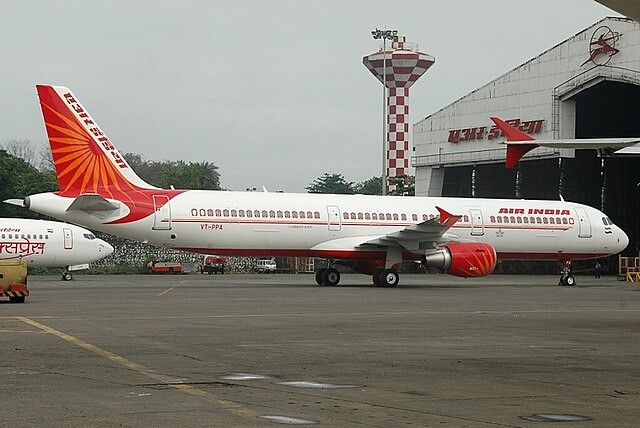
In line with my blog’s Brandology theme this year, I am writing about a brand that underwent a merger at the start of this millennium in India and is still languishing as the number two in an industry that is itself in serious trouble. In the previous blog post, I wrote about the problems facing the airline industry in India and how it can be remedied to allow airlines to grow profitably and sustainably over the longer term.
This time, I would like to examine the reasons for Air India’s merger with Indian Airlines two decades ago, why it was botched, and how it could have instead led to a merged Indian flag carrier that was capable of building Brand India.
First of all, we must accept that even at the time of the merger, Air India was not a well-performing airline even as millions of Indian taxpayer money was being poured into keeping it flying year after year. It had been a state-owned airline for around 50 years, after it was acquired from the Tata Group and nationalised. Soon Air India lost all the initial brand aura that it possessed – built through some good advertising and brand communications by the company and its advertising agency at the time, HTA (later JWT and now VML). That brand positioning for Air India was based on the national pride that India’s airline exhibited around the world, of which the Indian maharaja was the mascot. We must remember that this was in newly independent India and flying one’s own airline overseas was indeed a matter of great pride.
Let us now look at the position of Indian Airlines at the time of the merger. It too was state-owned and in a terrible state, even as it continued to transport millions across our vast country by air. For decades it was the only airline and despite enjoying a complete monopoly of the domestic air travel market, it did not grow fast nor perform well financially. Nor did it have the high standards of service that were later introduced by private airlines after economic liberalisation in 1991, most notably by Jet Airways. I am afraid I am unable to find any data and statistics on the airline’s performance as indeed I was not able to find for the airline industry in India as a whole while writing my previous blog post. This should have been available through the Ministry of Civil Aviation’s website. But we know from all that we have been reading in the newspapers and hearing on TV news over the past many decades that our main flag carrier airlines were performing poorly and were a huge strain on public finances.
In 2006-07, when the decision to merge the two airlines was taken, Air India incurred losses of Rs 4.48 billion, and in 2010-11, when the merger had presumably been completed, the airline’s losses ballooned more than ten-fold to reach Rs 699 billion, according to The Economic Times. Indian Airlines – badly rebranded as Indian – reported a loss of Rs 2.75 billion for 2006-07, the year the merger began. At the time of the Indian government’s decision to divest Air India, in 2021, it was reported that the airline had a total debt of Rs. 615 billion.
While the Indian civil aviation market improved somewhat after economic liberalization in 1991, through the entry of private airlines and the growth of both domestic as well as international air travel, the two state-owned airlines continued to be under pressure. I am inclined to think that the Indian government decided to merge the two state-owned airlines in the early 2000s in order to save costs, and not with any plan to grow the merged airline. It also made sense to merge the two airlines since they offered no distinct advantage or differentiated brand benefit to travellers except that Indian Airlines flew to only a handful of international destinations, while Air India was the international carrier.
If we agree, therefore, that huge costs savings were the primary objective of the government’s decision to merge the airlines, there are certain decisions that should have followed as a result of this. The biggest cost savings for the merged airline ought to have been in personnel and in fleet rationalisation as these are the two biggest expenditures for airlines. However, from what was being reported at the time, it appeared that the airlines had not merged their operations fully and successfully to avail of the cost savings.
Some of the reported problems with the Air India-Indian Airlines merger were as follows:
- New company NACIL (National Aviation Company of India Limited) was formed, but the two airlines continued to operate as separate brands minimising the chances of cost savings
- The back-office operations of the two airlines were not merged, including the computerized reservation systems and the like, which is where the merger should have been focused
- Ground staff as well as inflight personnel departments were not merged either, since the airlines continued to operate separately
- Both airlines had their routes quite independent of each other, with little duplication/overlap, and presented no competition to each other
- The merged entity placed huge orders for wide-bodied aircraft, all funded by bank lending, when they should have been leased
- Little to no plan for growth for Air India, as I said, while Indian Airlines was limited by domination of the domestic air travel market with little competition except for Jet Airways which took a sizeable share of the corporate travel segment
- There was no communication from the newly merged company about the airlines and no attempt to build the airline brand(s) with the result that customers did not know what to make of the merger
The only saving grace was that there were plenty of new private airlines operating in the Indian domestic market which benefitted Indian travellers for a few years until they started winding down as well because of industry-wide problems discussed in my previous article. Besides these industry bottlenecks, policy issues and constraints, what could the Air India-Indian Airlines merger have tackled differently, and what could it have achieved instead?
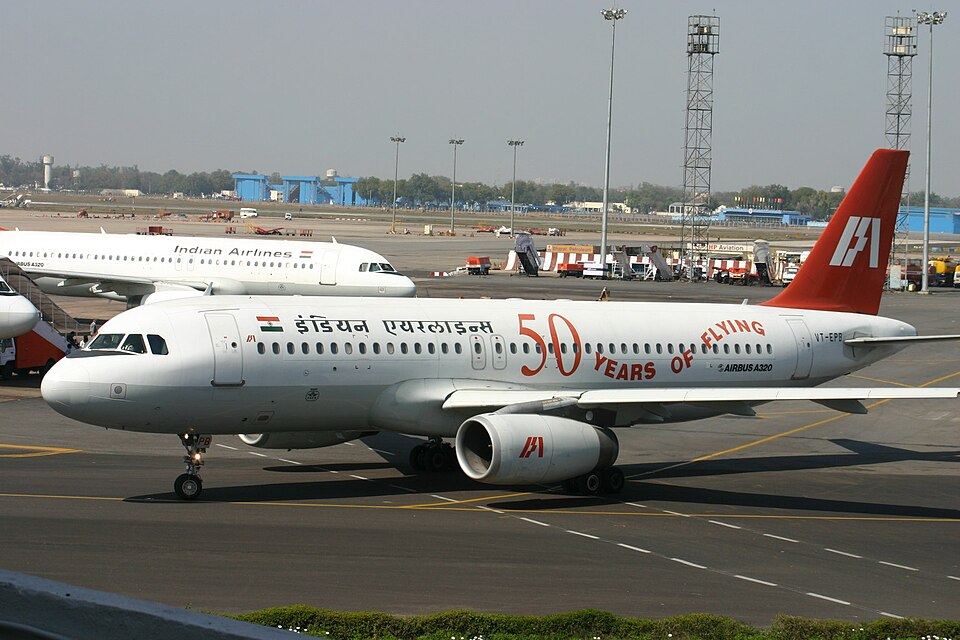
Here, I offer my opinion on what the problems with the merger were and some suggestions for what should have been done to make the merger work better. If the objective of the merger was cost savings, the government and the new company NACIL ought to have worked harder on integrating the two organisations and indeed the airlines as well. There was a strong case for merging the two airlines, on the cost savings front as well as devising a new growth plan for the merged airline.
However, the growth plan was completely lacking and the government did not do enough to merge the airlines, as discussed earlier. I think this could be because the government developed cold feet on going full steam ahead with the merger on account of the fact that the new airline would have to let go of many people across functions. Fear of industrial action and lack of staff cooperation is always a problem with state-owned companies. This could have been overcome, though, through an attractive VRS (voluntary retirement from service) package for those being eased out that took care of those concerns, as was later done by the Tata Group after their acquisition of Air India. Besides, if the integration had been done in the initial phases, there was still a good chance that many of the laid-off personnel would have found jobs with competing private airlines that were still growing and hiring at the time.
Expanding and upgrading aircraft fleet should have been done through leasing and not outright purchase, keeping debt at manageable levels. And, of course, there is the question of whether two airlines were needed. If the objective was to reduce costs, the solution would be to fly only one and retire the other.
While the two airline companies merged, NACIL ought to have flown only one full-service airline as a brand because only then would it have saved costs significantly. Besides, it made no sense for two airline brands to fly as India’s flag carrier, when one would have sufficed. Of course, Indian Airlines already had a low-cost carrier called Alliance Air which ought to have continued operations. This is where brand considerations play an important role in mergers, and it is an area I will be exploring more in future on my blog and hopefully in my work, as I would very much like to return to my career in the advertising and brand communications business as soon as possible. A twenty-year hiatus is too long, as it is.
Now between the two airlines, it is obvious that Air India ought to have expanded into the domestic air travel market, taking over from Indian Airlines. Of course, Air India was no exemplar in international air travel, but at least it had slightly higher standards of service than Indian Airlines. By allowing it to expand in the domestic air travel market, Indian travellers would have experienced a new, higher level of air travel within the country.
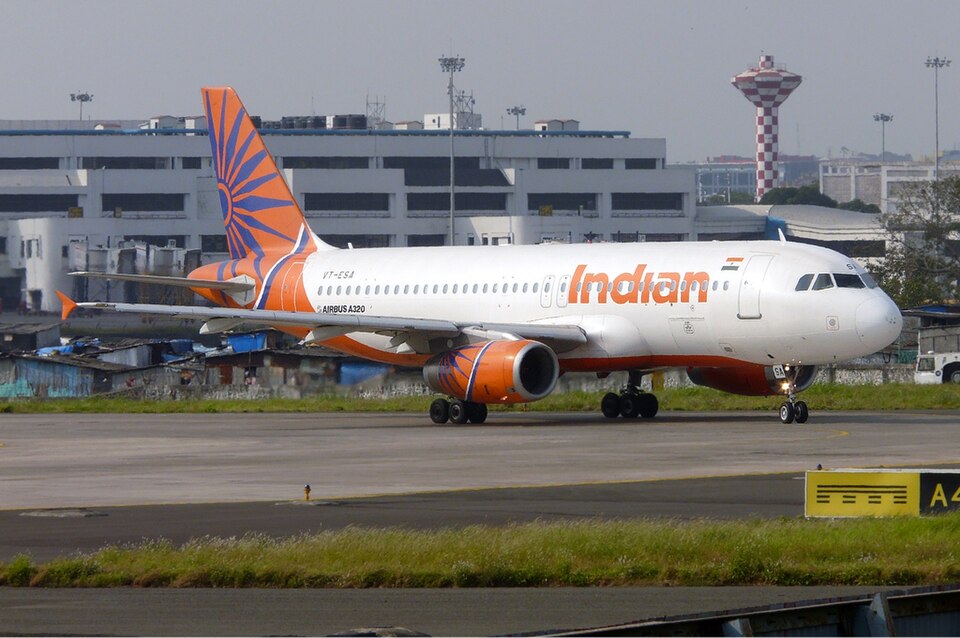
At the same time, there ought to have been a new business and brand strategy for the new Air India. Cost savings alone are not enough, and of course, there were none to be had, considering the way the merger eventually turned out. It needed a growth plan, which was lacking. The merger ought to have been the time to relaunch Air India with even higher levels of service and performance both internationally and domestically. Domestic air travel would have been raised several notches, through adopting best practices from Air India, which in turn ought to have set its sights higher in the international competitive framework.
This would have required a new vision and positioning for the airline. From a relaunch perspective, the context and time could not have been better for Air India. In the mid-to-late 2000s, the Indian economy was booming and also attracting foreign investment. India was beginning to go international and there was global recognition of this. Indian companies too were expanding overseas. Ours was one of the few economies in the world to face a limited impact of the 2008 Financial Crisis, and even in the aftermath, India continued to grow. Our smaller towns and cities were beginning to grow fast as well and it was essential for all modes of transport to connect these with the bigger cities and with overseas travel.
If you ask me, this was the opportune time to relaunch Air India as the airline of the new international India that was coming of age. The airline should have been the expression of the new India that was ready to engage with the world on its own terms. The vision and strategy of Air India as “the international India that you can experience in the skies” would have given everyone in NACIL – from the flight crew all the way to the CMD of the company – a tangible goal to work towards.
It would also have been time to set right a little old anomaly of Air India advertising and communication. As I have said in an older blog post on the airline, the early communication for Air India featuring the Indian Maharaja suffered from a small glitch in that it showed the Maharaja flying to various destinations around the world, when Air India should have focused on promoting India as the travel destination, as most flag carriers do. The idea is for airline brands to build the image of their home country, even as they fly to international destinations. To give the creators of the early Air India communication at HTA/JWT their due, however, perhaps it made sense then to show an independent and confident India travelling the world, rather than inviting the world to visit us!
To conclude this article analysing the botched merger of Air India and Indian Airlines, and providing an alternative of what the new Air India could have been after the merger of the two companies, I must say that now that the airline has been returned to its original founders and promoters, the Tata Group, one hopes that better days lie ahead for the beleaguered Air India. I am not suggesting that my strategy for relaunching Air India at the time of the merger should be their strategy now, though I can see that the airline is still struggling to find a way forward. Air India is still in search of the right direction, and it must find it in the context that presents itself today and for the next couple of decades ahead.

Post script: I am surprised that the newly merged company in the mid to late 2000s, NACIL (I thought the company was called NACL which sounded like common salt, or sodium-chloride!) has a limited at the end, when I do not think the company was ever listed in India.
Reminds me rather of unprofessional PR agency idiot bosses at Perfect Relations Delhi who gave me my appointment letter in November 2006 which said Perfect Relations Ltd.!
And is it any coincidence that Perfect Relations was also the PR agency for Air India when I worked with them in Delhi, although I had nothing to do with the business. This was very much during the merger days, and their Chief Account Planner, Devdarshan Chakraborty, was the key person on the account.
 Peripatetic Perch