


While the title of this article might shock many of you, this is clearly not my intention. The idea, rather, is to assess the state of India’s state sector in the economy over the past many decades and see how they are faring as well as how many are still required in today’s business and economic context.
India’s public sector corporations have a patchy and checkered history. They were originally set up at the time of independence to provide a strong foundation for India to develop indigenous industrial capabilities, since private sector was not up to the task at the scale required at the time. This was focused on certain core sector industries that much of the rest of the economy depended upon, such as iron and steel, cement, fertilisers and chemicals, oil and gas, etc. It was a sound decision at the time, and went along with the centrally planned economy that India embarked upon, based on five-year plans set by the Planning Commission chaired by the Prime Minister.
Looking at India’s public sector corporations 75 years later today, what does their performance and contribution to the Indian economy look like? While they did provide a strong base to the Indian economy and particularly the industrial sector, including manufacturing, around the 1980s or so, they began to lose steam and their way. Some of this might have been due to the private sector catching up and competing with the public sector, but I think certain state policies as well as the lack of adequate capabilities aggravated the situation. As if this were not enough, the government under Indira Gandhi went ahead and nationalised banks and problems related to this industry can be seen even today.
The economic reforms and liberalization programme of 1991 did help both public and private sector companies in being able to operate and compete more freely, raise capital and access technology more easily and fund growth and expansion of industry. This is also brought out by an SSRN research paper which I happened to find online and read, though from reading and following economic and business news for decades in India, one is aware of some improvements in the public sector performance. And here, I must clarify that we are mainly concerned with central public sector enterprises; there are plenty of state public sector corporations as well.
However, the fact that many large public sector corporations lag their private sector peers and many went under due to a variety of reasons in the 1980s and 1990s cannot be overlooked. The problem was so severe that the central government was forced to set up a board for industrial and financial reconstruction of these sick companies. Unfortunately, BIFR proved to be ineffective in reviving sick companies and later acquired the reputation of being the place where companies go to die! It is indeed surprising that India persisted with BIFR until 2016, when it was finally dissolved.
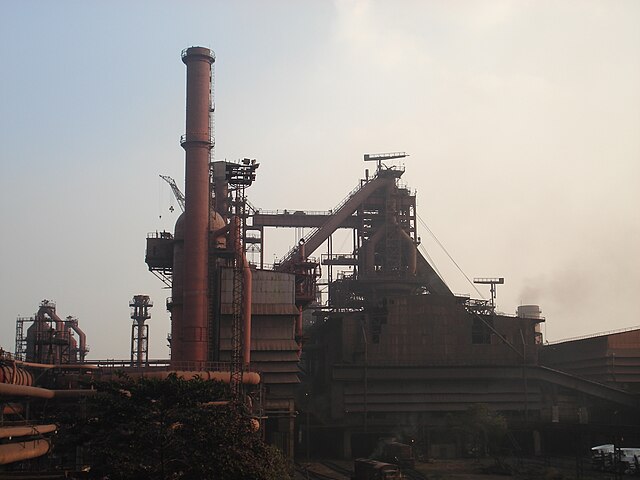
The more important aspect to consider is why public sector enterprises were underperforming so badly in the first place. And the reasons are many, ranging from lack of access to capital markets and the best technology, to lack of adequate managerial talent and expertise, not reinvesting in the business to innovate, and the government treating at least the better-performing ones as cash-cows for rich dividends. These have been written about and reported for decades. Just a few days ago The Economic Times reported record dividends that the government has earned this financial year through CPSEs at over Rs. 610 billion. However, I think it is also because many of these public sector corporations were in businesses that they shouldn’t have been operating in, and with no proper estimation of the market and its feasibility and profitability, these were always doomed to go under.
The government in recent decades has always talked of divesting or disinvesting in PSUs (public sector undertakings), but these have never gone beyond half-hearted statements and tiny stake sales (of 5%-10%) if at all. The same scholarly paper from SSRN shows us how much the government has targeted as disinvestment targets each year, and how much it actually manages to achieve, well below targets usually. Complete and successful divestments or privatization are few and far between: CMC, VSNL and Air India most recently to the Tata Group and BALCO as well as Hindustan Zinc to Vedanta Group.
The question to ponder over is whether India still needs public sector enterprises, and if so, what role should they play in the nation’s economic growth?
India, like many other countries, invested heavily in public sector corporations in order to build its industrial base. And just as in many other poor and developing countries, the government invested in what are called strategic industries, as well as in price-regulated industries since many essential goods and services were highly subsidized for the millions of poor people. It is another matter that for several decades, it was the growing urban middle class that benefitted more from these subsidies than the poor. And it is only in this millennium that a concerted effort to reduce wasteful subsidies and target them better is being made.
If we consider which are the strategic industries in which the state has a role to play and which are also the areas where public goods and services need to be provided to the poor in today’s context, I find that these are fewer and more focused than, say, 75 years ago. Besides, many public goods/services meant for the masses, such as telecom, are being provided better by the private sector. India has one of the lowest mobile connectivity costs in the world and people have been writing about the quiet mobile revolution taking place during the past 20 years or so. Added to the cheap mobile services, are a host of services from farm prices and advice to weather-related information and now also digital payments which are being used increasingly. The government certainly has a role to play in popularizing this and other new consumer-friendly technologies among the masses.
There appears to be nowhere that the government provides complete data for CPSE’s financial performance in a historical time series. Not even on the website of the Department of Public Enterprises, which is now under the Finance Ministry. From the reports (that are also called surveys, incidentally) for 2021-22 and 2022-23 that I managed to download and read, I am sharing a few broad observations. That CPSEs have only grown in numbers over the decades, contrary to what we might think, with a little over a third of them functioning as operating companies. Only a quarter of these are listed. The gross turnover of 248 and 254 operating CPSEs in 2021-22 and 2022-23 respectively, was Rs.31.95 trillion and Rs. 37.90 trillion. But here’s the more important statistic: 7 CPSEs alone generated 66% of this gross turnover in 2021-22, and 9 CPSEs accounted for 75% of it in 2022-23.
If we look at profits, only 188 of 248 operating CPSEs and only 193 of 254 CPSEs reported a net profit totalling Rs. 2.64 trillion and Rs. 2.41 trillion in 2021-22 and 2022-23 respectively. Here again, 10 CPSEs contributed most to the net profits, at around 60% in both years. It is to be expected that certain sectors such as oil and gas, petroleum, steel, coal and power are the biggest contributors to gross revenue and net profits, and the larger and better-known, listed CPSEs are the better-performing ones, such as ONGC, IOC, Coal India, SAIL, GAIL, Power Grid Corporation, REC, etc. Government’s investments in CPSEs on the other hand were Rs. 22.81 trillion and Rs. 25.35 trillion in 2021-22 and 2022-23, and the reports mention that most of these investments are in the form of long-term loans. One shudders to think what the CPSEs’ total debt obligations might be, if they are considered debt obligations at all, since the reports make no mention of it.
From the SSRN research paper too, it appears that while the overall performance of CPSEs improved after the economic reforms and liberalisation of 1991, it might again have been a handful of CPSEs that were contributing most to the improved performance. On metrics such as revenue to capital employed or profit to capital employed, CPSEs showed marked improvement after 2000 when some of them were accorded Navratna and Miniratna status, giving them greater autonomy.

However, when one considers that in the overall framework of CPSEs (Central Public Sector Enterprises), BSNL and MTNL recorded the largest losses in 2021-22 – accounting for 64.90% of the total CPSE losses – according to the government’s own report, it ought to be clear as day that the government ought to exit the telecom business and find a good buyer for it. In my view, MTNL and BSNL ought to have been merged long ago, which might have also resulted in lowering costs over the years. It is not too late to sell them as a merged entity to the private sector which might do a better job of reviving and running the business.
The Air India privatization which was long overdue and has finally taken place after sinking billions of rupees of taxpayer money, is a good step in the right direction. It will take a few years and a sharply defined business and brand strategy before the airline does well consistently both in domestic and overseas markets. And one ought to ask the same question of tourism and hospitality: should the central government be in the hospitality business, when it can be left to the states to manage? And some states such as Kerala and Rajasthan have indeed done well in this area. Looking at the kind of properties ITDC has across the country – many of them excellent – they would make a good privatization proposition and given that we also have excellent private sector hospitality companies in India, they might raise these ITDC hotels to even greater heights and really do India proud.
Industries through which the government still subsidises life for the poor such as LPG, oil and gas, power, railways and public transportation, agri-products, fertilisers etc. are perhaps best left with the CPSEs to manage for the next two decades at least. And in terms of strategic importance, the government ought to focus on areas related to defence – now that this sector has been opened up to private participation as well – space exploration and research, atomic energy, cyber security and AI, etc.
The second important consideration is how much of CPSE investment and performance is the best use of taxpayer money? With so many of them loss-making and many in industries that are not growing, is this the best allocation of public funds? These are not easy questions but require serious and deep thought all the same.
If in the initial years after independence, the public sector helped create a strong industrial base for India because private sector didn’t have the capacity to invest on a similar scale, it is equally true that in recent decades private sector is increasingly investing in education and healthcare, because the government – whose primary responsibility it is – is unable to. Times have changed and it is perhaps time to set policies accordingly. In this regard, an idea that makes the public sector itself a public good might be appropriate. From the divestment and maximum privatization possible, if the proceeds were used to create a fund that can be used for investing in improving access to better education and healthcare, it might help the government get back to its role as capacity builder and enabler. I am not a finance person, but an advertising and brand communications professional, and it occurs to me that such a fund – not exactly a sovereign wealth fund – but one that can further invest and earn on its investments to the extent that it can keep funding better healthcare and education investments across the country is an idea worth considering.
Instead of using divestment proceeds to close the fiscal deficit – as has been considered many a time in the past – setting up a new fund for social infrastructure is a much better use of privatization or disinvestment. Also, instead of charging various kinds of cess for education and never knowing how much is actually going to fund education and healthcare, this is a surer way of investing in increasing amounts over several years and knowing the outcomes. Of course, education and healthcare are not merely about how much is invested, it is also about the right social infrastructure and the best personnel, but this way of investing in it might be a start to raising the levels of primary education and healthcare across India.

As for public sector enterprises that are chronic loss-makers, that don’t have a future in terms of a growing market, and that cannot find good buyers, it would still be worthwhile to liquidate them, rather than sink more government and taxpayer money into these corporations. This brings me to the new bankruptcy and insolvency system that the Indian government introduced via legislation in 2017, and that is designed to be vastly superior to the old BIFR system. I wonder why the IBC isn’t being applied to public sector companies, in order to either liquidate them, or to restructure them as viable businesses. One reason obviously is that when the government has the option of pumping in more money into these, through state-owned banks, why would they liquidate or restructure loss-making or unviable companies. But this is short-sighted in my view. Having introduced IBC, and with Indian banks and financial institutions also gaining new expertise in asset reconstruction, debt resolution, etc. the time has come to put certain public sector corporations through these new processes and wind them down.
Another aspect for consideration is that perhaps more public sector corporations ought to access the capital markets via listing. It seems to me that many of the better-performing CPSEs are the ones that are public, and perhaps being accountable to shareholders through the markets is what spurs them to perform better. It is indeed very surprising that in 2021-22, out of a total of 248 operating CPSEs, only 62 were publicly listed, and while operating companies grew in the following year to 254, only one more CPSE was listed taking the total number of listed CPSEs to 63.
Clearly, there are many paths ahead for India’s public sector companies to take in order to grow India’s economy and also make better use of government resources and taxpayer money. It is perhaps time that the government gave these much more serious thought, backed by concrete steps in reshaping India’s public sector for a new tomorrow. Like the previous attempts in privatisation, more such action will be seen as bold steps in liberalizing India’s economy, whilst also giving the public sector a new, more relevant and focused role for the future.
The featured image at the start of this post is of the ONGC (Oil and Natural Gas Corporation) offshore platform at Bombay High off the Mumbai coastline, one of the few well-performing public sector corporations, to even make it to the Fortune 500 list decades ago. Image from Wikimedia Commons.

Postscript: While I was referring to the government reports on CPSEs, I also visited the MOSPI (Ministry of Statistics and Programme Implementation) website to search for statistics on public sector companies. I was surprised to find only Xcel documents and when I tried downloading one of them, I found it was entirely in Hindi!
Today, those documents are nowhere to be found on MOSPI’s website! I suppose unprofessional PR agency idiot bosses who have been meddling with and through the government had guessed this, and have had them removed or shifted elsewhere!
 Peripatetic Perch