
For the past few years that I have been blogging, regular readers of my blog must have noticed my lamenting the lack of anything intelligent or thought-provoking to read. Most of my complaining has been about books – old and new – that unprofessional PR agency idiot bosses and their cronies in RK Swamy/BBDO Chennai have meddled in, including those in my luggage that was in the packers and movers’ warehouse in Chennai for months in 2004. And those in my aged father’s possession in Goa as well, right under our very noses!
This time, I am going to write about what they seem to have done to newspapers and magazines, including literary journals. And they seem to take a certain delight in picking on all the good publications I read, for their interference. For the past few years, I have noticed a trend – and I hope it isn’t anything more enduring – of writers for these publications prying into other writers’ lives, in order to find something to write about. It is as if they have run out of subjects or ideas for articles. Anything from a writer’s childhood (the more troubled, the better) and marriage (troubled again) to their affairs and relationships, their houses, hobbies, and anything else of a particularly personal and private nature makes subject matter for an article.
The question to ask is does this make for good and intelligent reading and is it literature at all?
The target writers are usually women, as are the authors. This is hardly surprising, since they make soft targets for any kind of criticism if they even so much as deviate an inch from what is expected of them. That was alright in the old Victorian days in England. In today’s reading and writing world, I thought we had done away with the need for this degree of scrutiny and well, muck-raking, into lives of writers who have otherwise given us so much pleasure and provoked so much thought through their works.
What I find hard to understand is why any of their personal lives should matter, unless it is related to their works in some umbilical way. What does it matter if Virginia Woolf had a lesbian relationship with Vita Sackville West, as is presumed by most? Or that Sylvia Plath was a mental wreck and hugely dependent on her husband, Ted Hughes? Or that, even the fiercest feminist of her age, Mary Wollstonecraft (Mary Shelley’s mother, whose books I have written about on my blog) who is said to have led a promiscuous life according to her own husband’s biography of her, also had a lesbian relationship with a certain Fanny Blood, as is being alleged now?
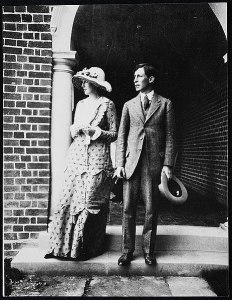
I think it far more important to enjoy Woolf’s writing, and also know about her and her husband’s efforts to band together like-minded intellectuals to form the hugely influential Bloomsbury Group. I think Sylvia Plath’s poetry opens pathways to understanding what goes on in our minds when we are alone. And yes, to the extent that her mental state (or illness) influenced her writing, we ought to be grateful for it. I think the world would benefit hugely from reading Wollstonecraft even today, especially her ideas on why and how women ought to be educated, and how women’s education must not simply lead to more of them walking down the aisle.
What do we really gain from reading articles like the few I am mentioning here? And why would online publications, including literary journals, accept and publish such pieces when they don’t really add anything of value to our knowledge or our appreciation of famous authors? More importantly, this phenomenon is also related to book publishing, since many of such articles are supposedly introductions to books, or to their new, updated editions!
If we wish to understand a writer or poet or playwright better, we have a host of various kinds of books to help us. There are biographies, and in some cases, autobiographies or memoirs that would shed better light on their lives and their writing. Of course, not all biographies are the same; some are considered the authoritative, definitive ones. In the days when biographers ruled the literary world, they gave us marvellous books like The Life of Samuel Johnson by James Boswell, which my aged father has had in his library for eons! It appears that in those days many biographers wrote about great people while they were still alive, and reading a book such as The Life of Samuel Johnson is actually like sitting in on a long, on-going conversation between the author and his subject, or even accompanying them on their travels, because they did travel together as well.
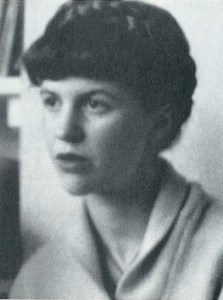
I know better than to read biographies of even writers I admire such as Susan Sontag, from reading reviews that claim she did most of the thinking and writing for her husband, Philip Rieff, even though she was just seventeen at the time! Or those about artists that are full of mischief, even though we can’t be sure if it was just the review that was vulgar, or if the biography also contained nonsense.
Then, there are the writers’ own journals, diaries and notebooks that we can turn to. Diaries are the current favourite of The Paris Review it appears, since I hardly ever receive a newsletter without a diary excerpt of some author. I suspect PR agency idiots’ mischief here, of course. Writers such as Virginia Woolf, Anais Nin and Susan Sontag all wrote dairies or journals and these are widely read. I haven’t read any diaries or notebooks, except perhaps Anne Frank’s ages ago and Jean Paul Sartre’s War Diaries, more recently. For some strange reason, I find reading someone’s diary or notebook feels like one is intruding into their private space.
Many writers have also left behind a wealth of correspondence and letters, a lot of which have been published as selected letters or correspondence. I have read a few of these and while these too can feel like an intrusion into someone else’s private space, they sometimes give us a glimpse of the writer’s social interactions and world view on important matters.
Finally, there is literary criticism, usually written more for scholars of literature than for the general reader. But there are essays by authors on other writers and their works that sometimes provide an insight or astute observation about a writer’s subjects, writing style, and language even to a general reader.
Speaking of writers’ diaries, The Paris Review published an excerpt from Albert Camus’ New York Diary which I received in their weekly newsletter that I subscribe to. It reads like nothing Camus could have ever written and there is even a deliberate American intonation to it – in words, if you can imagine that – as if Camus had suddenly caught the American slangy and staccato use of language on arrival in New York! It reads as if Camus was tongue-tied and at a loss for words, which is hard to imagine. I suspect it was sent more for the featured image that appeared with the article, of Albert Camus smoking a cigarette on a street in New York City, with a Camel Cigarettes sign in the background. Now as I tried taking a screenshot of the page, I notice they have changed the image, by removing him from the scene.

Another of Paris Review’s new favourites are articles about writers’ houses. Houses, not homes, please note. The authors of such pieces visit famous writers’ homes and then write about them. I don’t see how it makes for interesting reading. I have visited Victor Hugo’s home and have walked past Oscar Wilde’s home in Paris, but I never thought it a subject substantive enough to write about. I have written about Mozart’s home in Prague, though, on my blog. However, it isn’t simply an article about his home (or rather his friends’ home) but about how his stay in Prague gave him his operas. This obsession with houses is also PR agency idiots’ mischief, I am sure; remember, I have written about Kipling’s autobiography on my blog, in which he only recounts all the various houses he built and bought in America. That was my grandfather’s copy of the book which when sent for rebinding, came back as that version.
I have never been big on biographies, even though I have read quite a few, as I have written before on my blog. And speaking of women writers, I think Simone de Beauvoir’s autobiography in three parts is excellent reading for young girls and women, considering I read it when I was finishing high school and going into university in Delhi. Peter Ackroyd’s biography of Charles Dickens which belongs to my aged father is magisterial, as it is marvellous, and so is Bertrand Russell’s autobiography. Only recently, I read that an old, lost autobiographical novel by Simone de Beauvoir, author of The Second Sex, has been published. It’s called Inseparables and is about, well – if you haven’t already guessed – her relationship with a woman in her younger days. Know what I think? It is probably just another of Perfect Relations’ mischievous tricks in cahoots with their editor and publisher friends!
I enjoyed reading The New York Review of Books – where Susan Sontag once worked – newsletter that I used to subscribe to. It is a very different kind of publication from The Paris Review, focusing mostly on non-fiction books for review and essays, while The Paris Review focuses on creative writing. It is a pity that NYRB began locking their articles one by one, until it became pointless subscribing to their free newsletter. I think and hope they have maintained their high standard, and I look forward to reading it whenever I am back at work and can afford to subscribe to it.
While I said that I don’t particularly fancy reading diaries since it seems an intrusion, I read recently that Kafka’s diaries have been translated and published in English. I had always read that he left all his writings, letters and notebooks with his good friend, Max Brod, when he died. I am not sure he even wished for his diaries to ever be published. If true, I would like to read these only because I would like to better understand his life as a Jew and a writer, having visited his home in Prague. It is a tiny, dark and dingy hovel in the large shadows of the grand Prague Castle, whose doorways are so low, one has to stoop under them to enter.
Now, here’s a thought to end this piece with. How did Kafka and so many male writers like him get away without their lives being scrutinized with the same exacting detail and emphasis on minutiae – most of it irrelevant – as so many women writers never seem to be able to escape from? A Jew from a poor and humble family background who never married, and wrote some of the finest and most imaginative literature about the cruel absurdities of life. Lending his name to describe the type of absurdity: Kafkaesque.
Perhaps all credit should go to Max Brod his best friend and manager of his humble writing estate, who guarded his privacy as if it were his own.
Meanwhile, spare a thought for all the women writers in our world, whose lives can’t seem to escape the penetrating gaze of other writers, many of them sadly, women.
And spare a thought for us readers as well, who aren’t as interested in the details of people’s personal and private lives, as some people are. I think it’s time the media and publishing industries stopped doing a Bridget Jones on us!

 Peripatetic Perch